Nancy Street Old Hi-Fi Equipment
Click to see the Site Map
HomeInfoMusicGalleryPetsGeoHobbiesGeo
Site MapWhat's NewRecent ChangesContactsServer StatisticsSite Information Home « Music « Old Hi-Fi Equipment

Collecting a Hi-Fi System

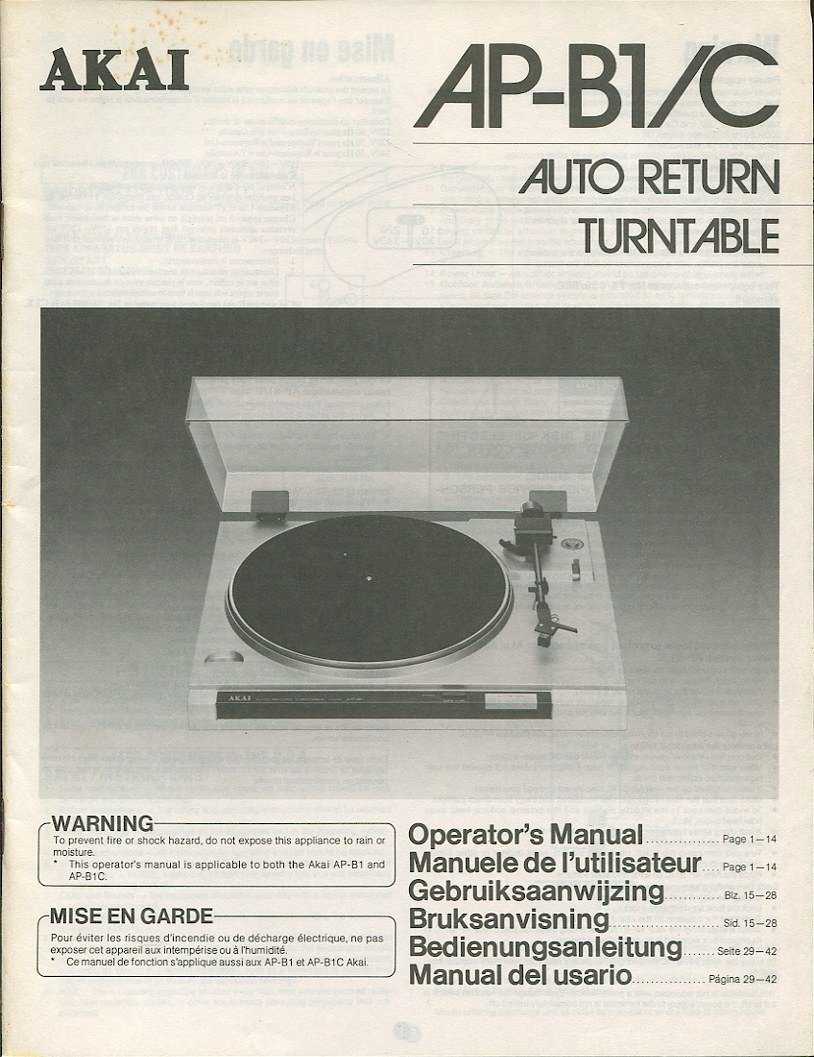
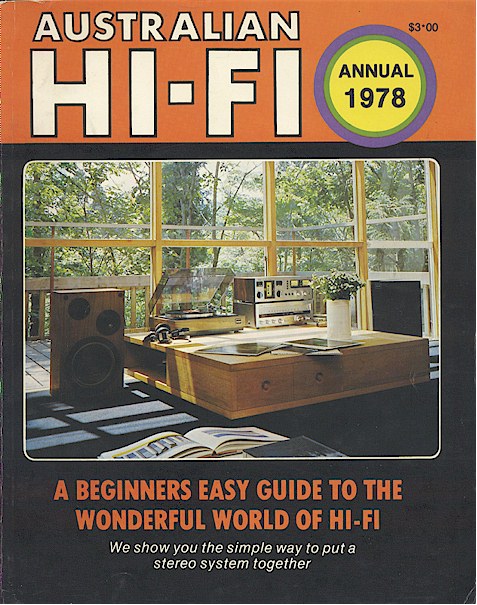
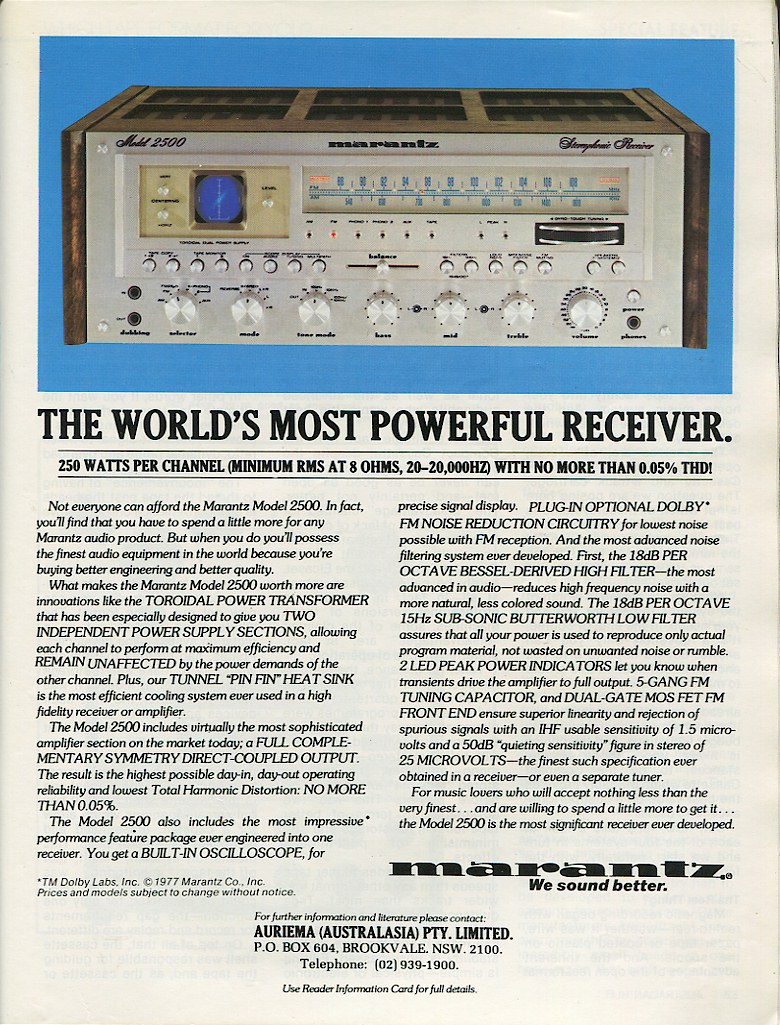
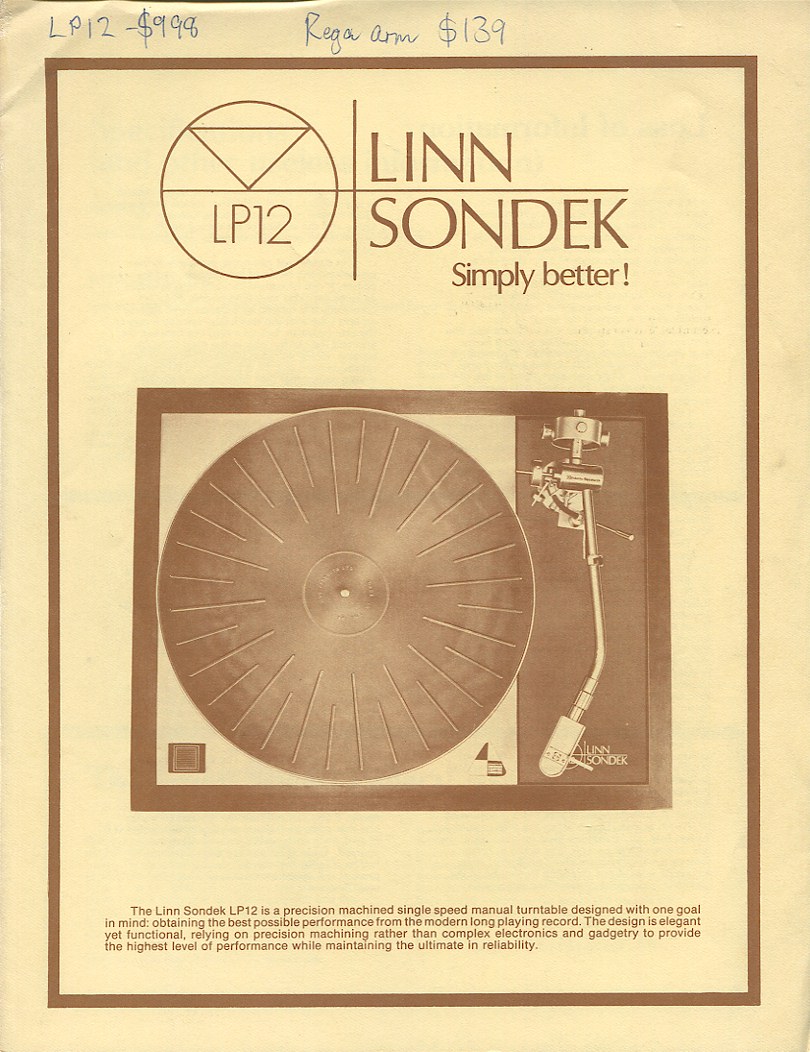
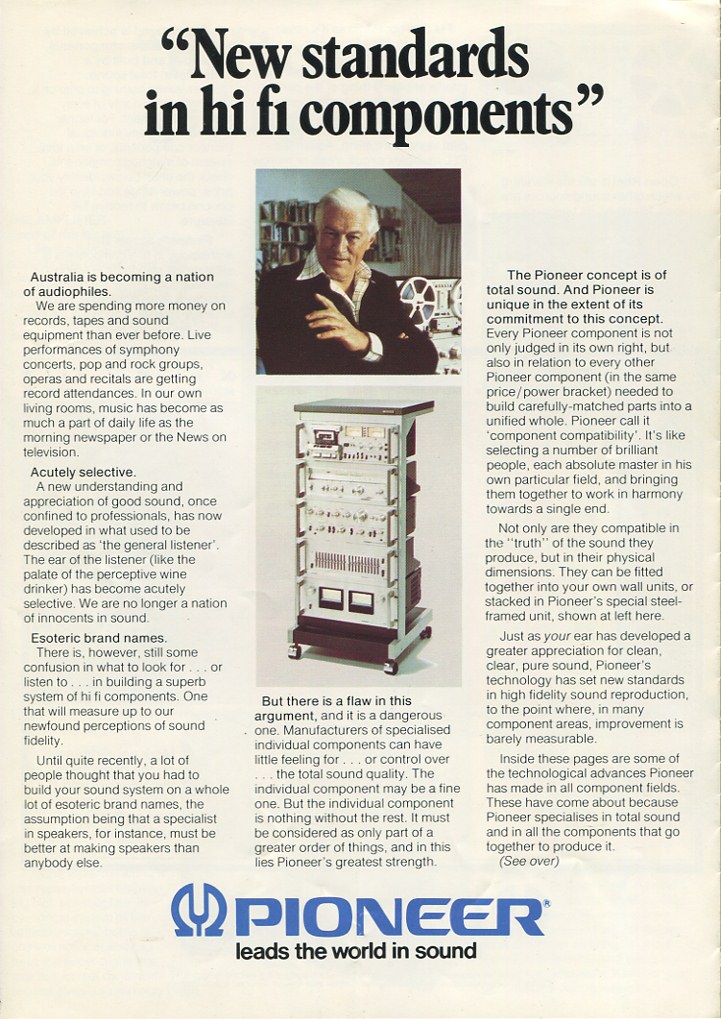
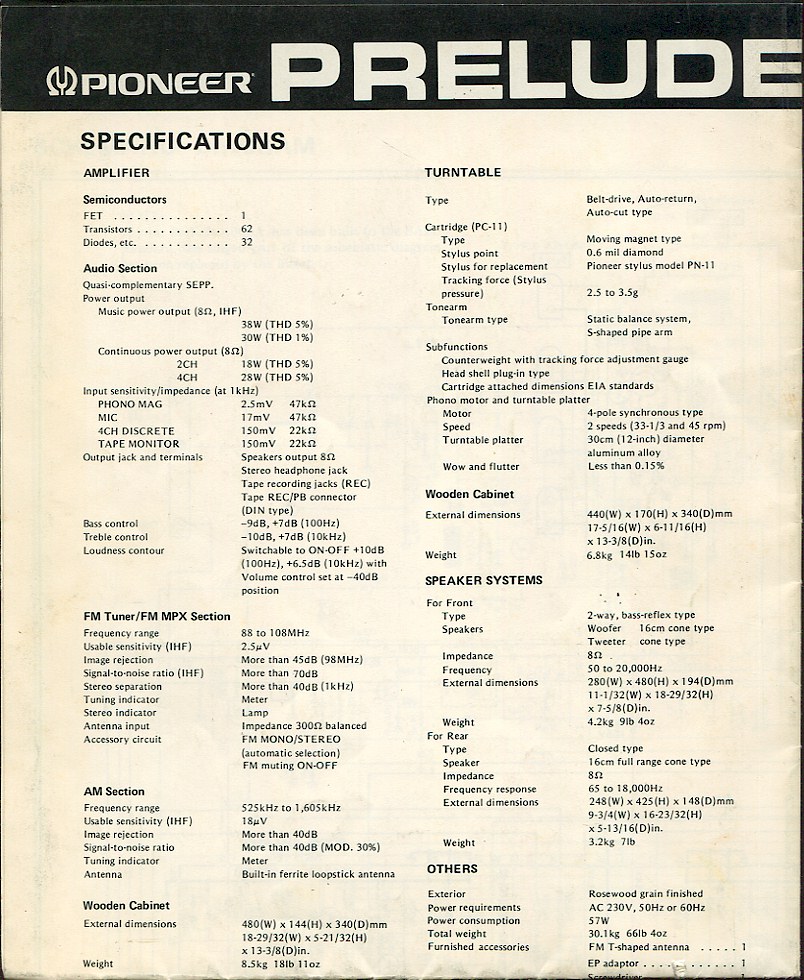
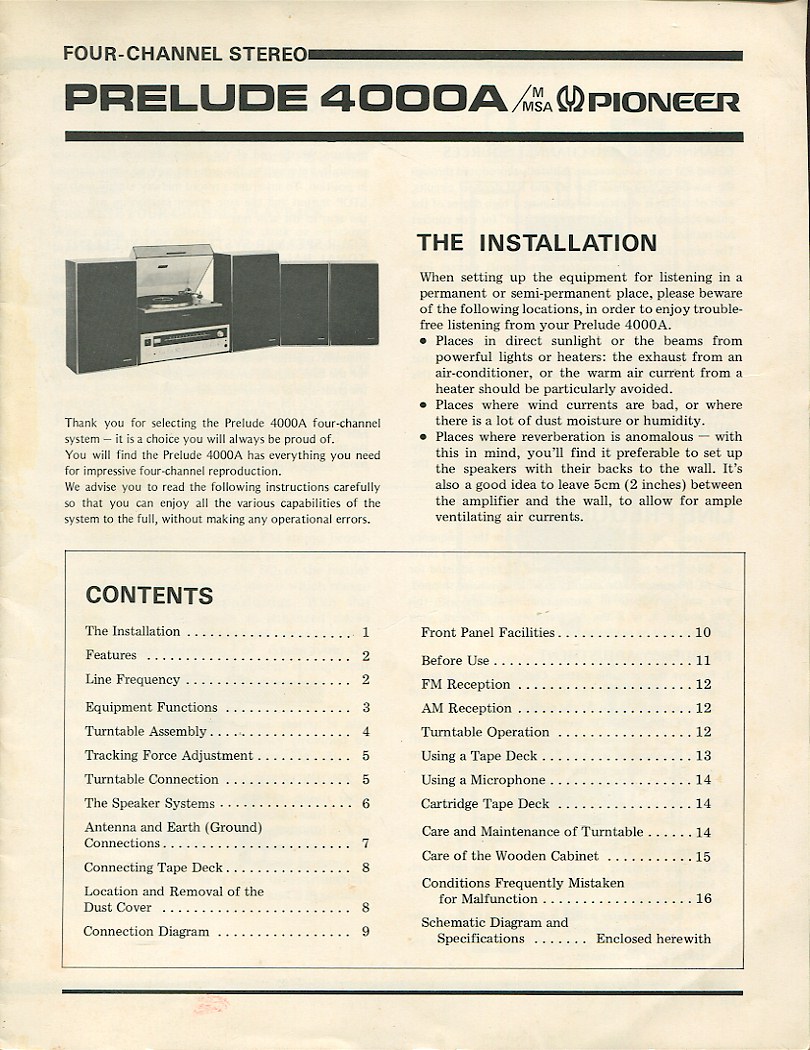
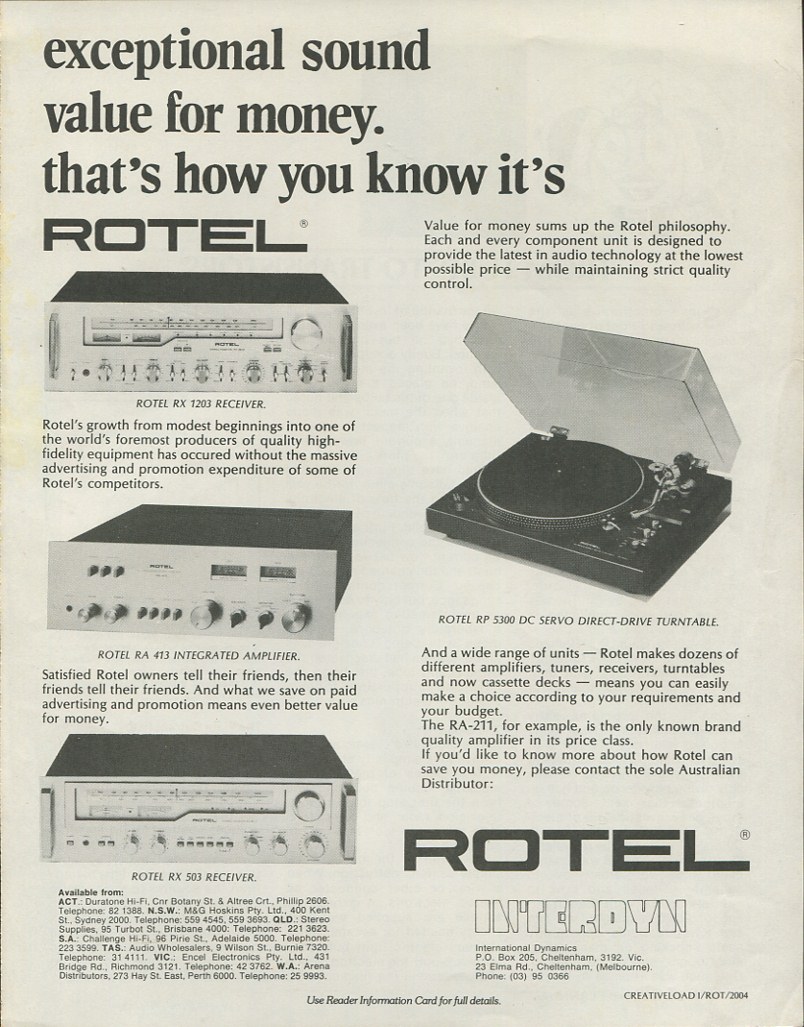
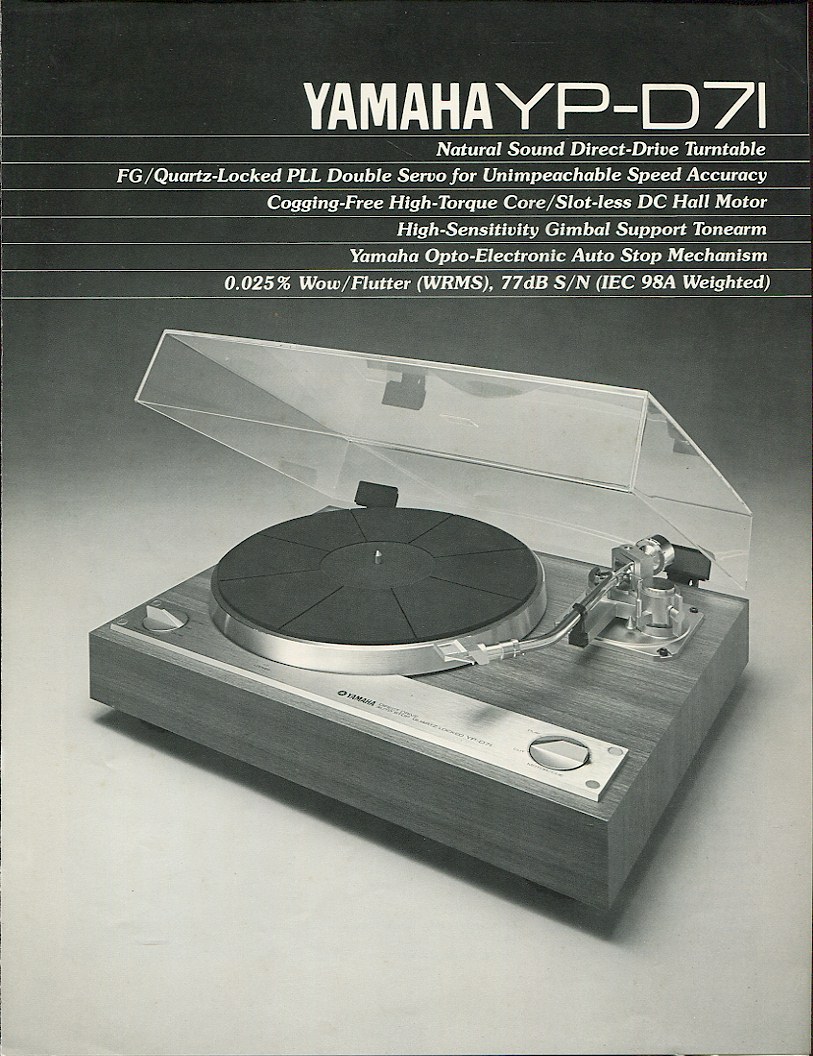
Upon getting my first job in April 1977 I put priority into using my wages to assemble a fine Hi-Fi system. It's just one of those things that boys do with their first money, usually pumping it into cars, parties and music. After many confusing and often contradictory discussions with audiophiles, and after examining countless magazine reviews and sales brochures I decided to assemble a Marantz system. In the late 1970s, Marantz was one of the big names in Hi-Fi along with Pioneer, Akai, Sanyo and Yamaha. Lesser known but more specialised and respected names included Denman, Rotel, Luxman, NAD, Sonab and Technics. At the time I preferred some of these later names, but I had a contact in the industry who could only get me discounts on certain brands. I can't remember all of the 4 brands I could chose from now, but one of the them was Marantz, and I picked Marantz because they had a great reputation and the equipment had an unpretentious and functional look. I wanted to own a Regar Planar turntable, but in the late 70s the price was almost $600, far beyond my limits. I settled upon an Akai turntable simply because I saw it on special in a shop one day. The preamp, poweramp, speakers and turntable were top priority to purchase, the tuner and cassette deck didn't arrive for another 2 years. Following is a gallery of the Hi-Fi components assembled during 1977-79 (click to enlarge).


Model 3250 Preamp control console

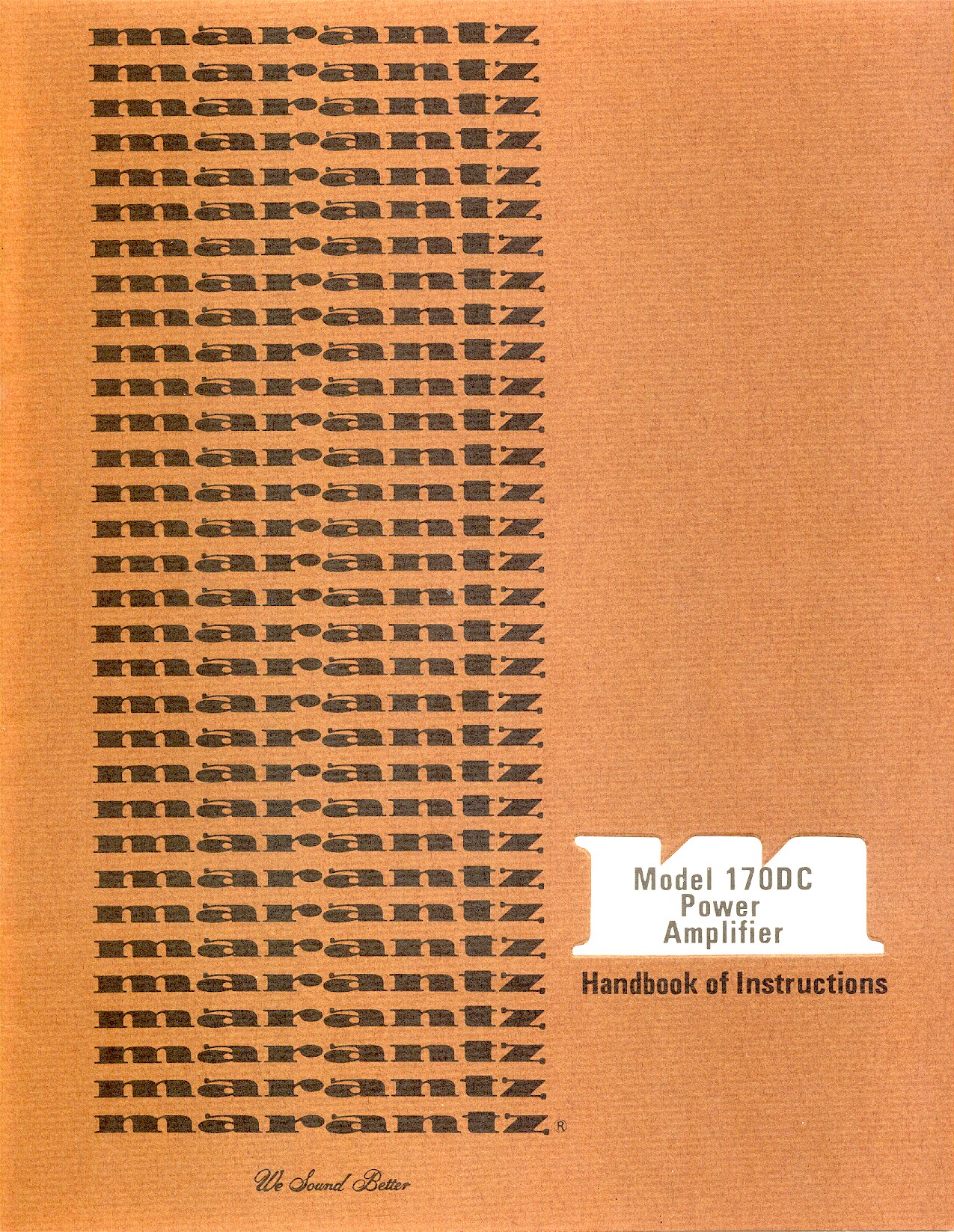
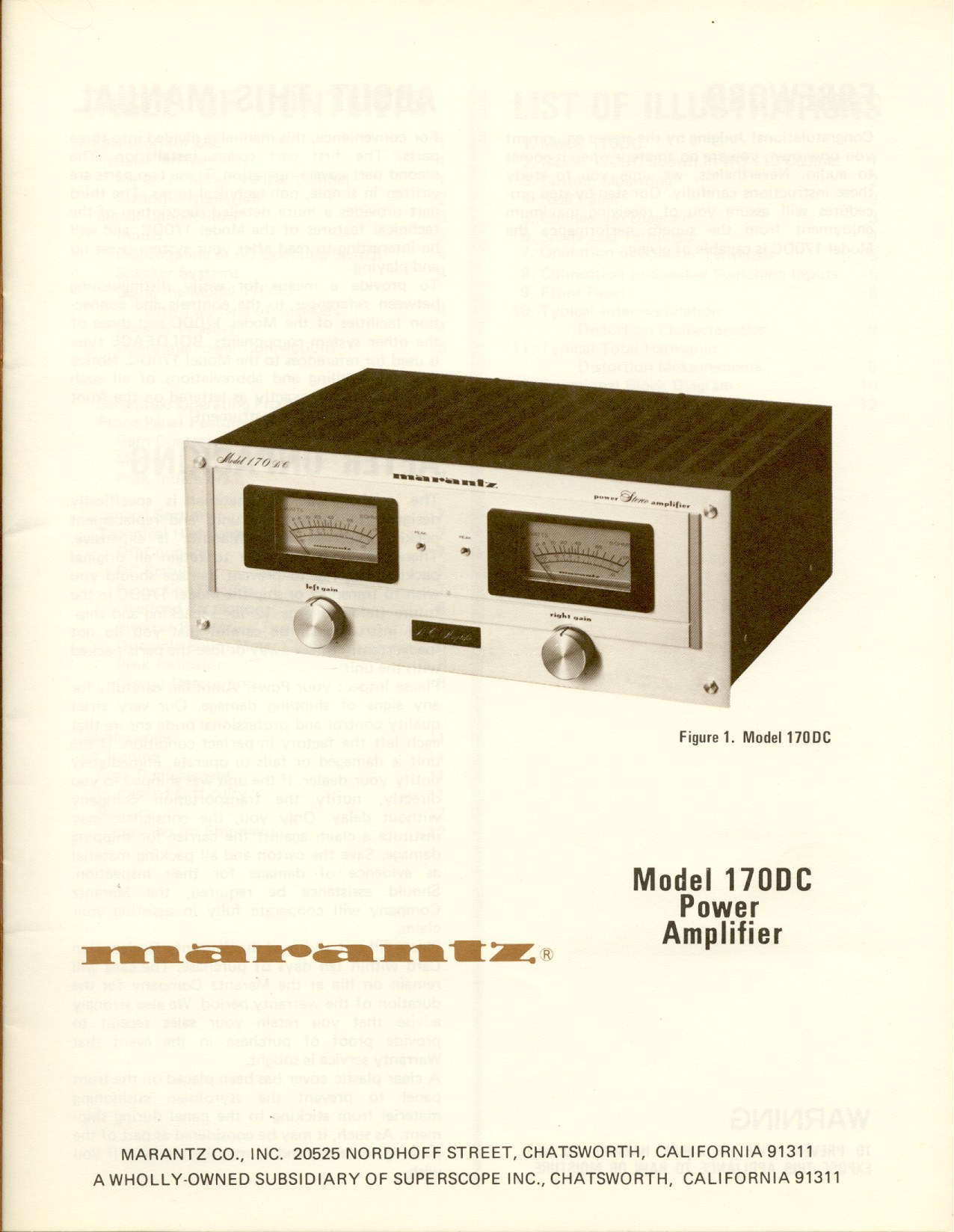
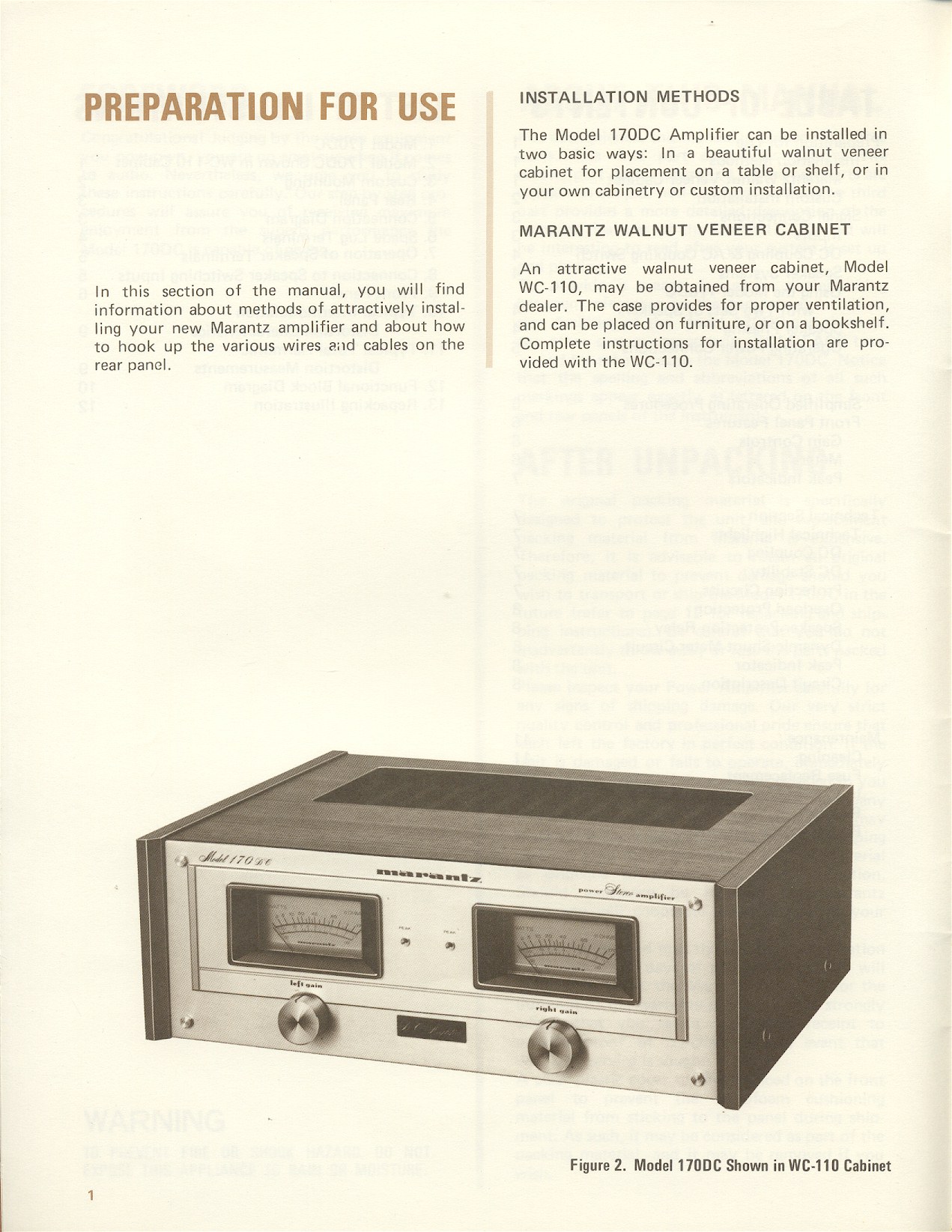
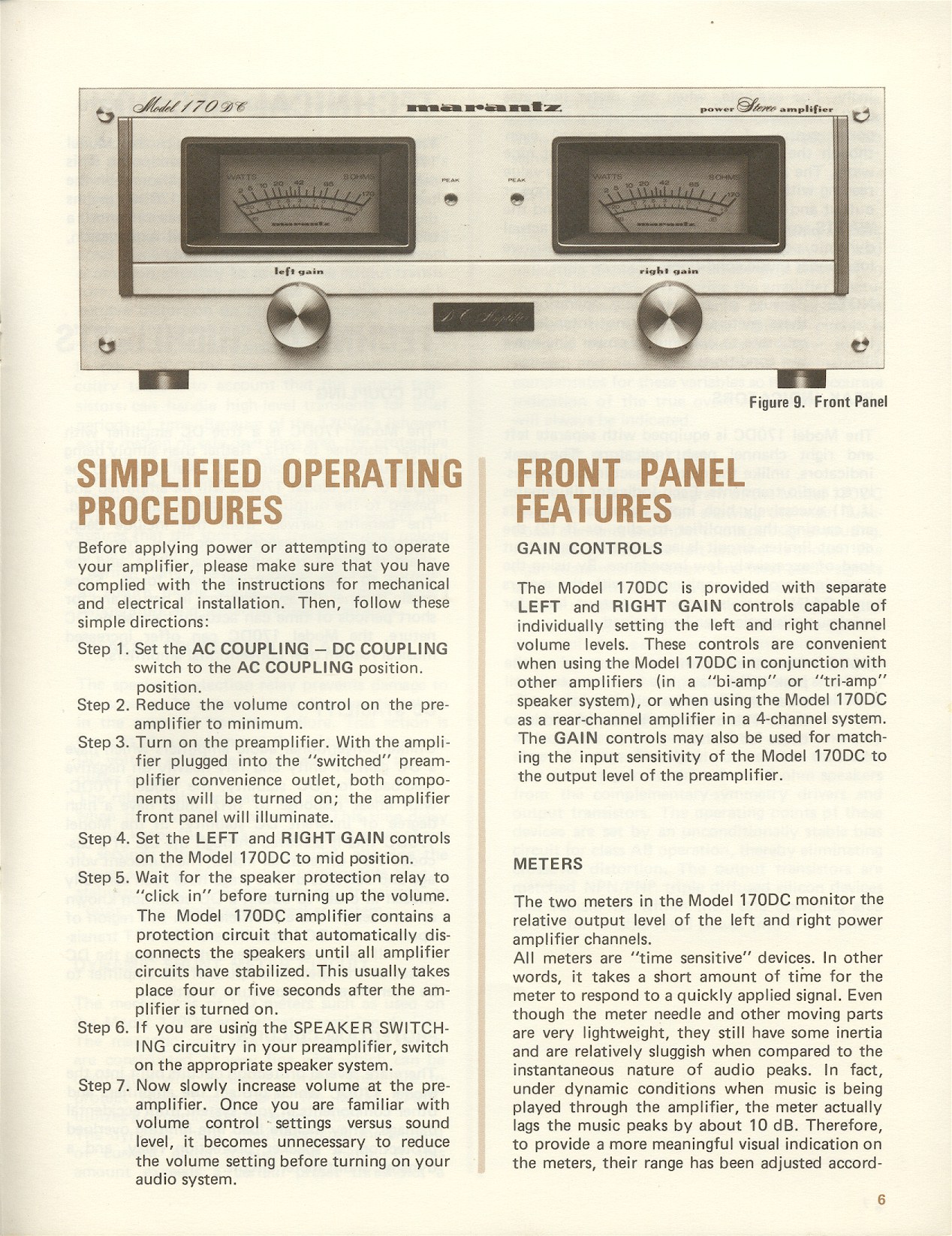
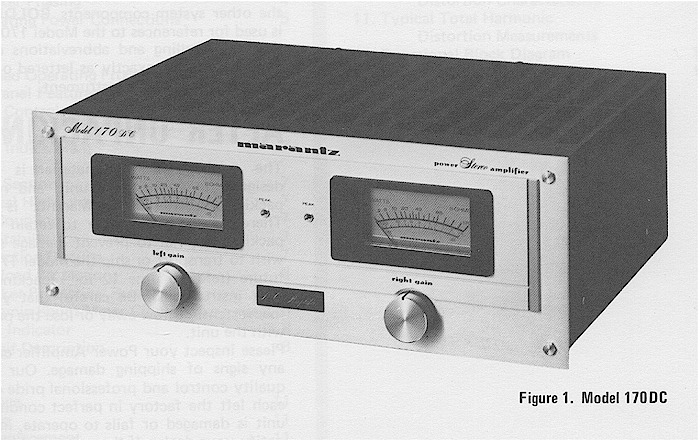
Model 170DC 90 watt power amplifier

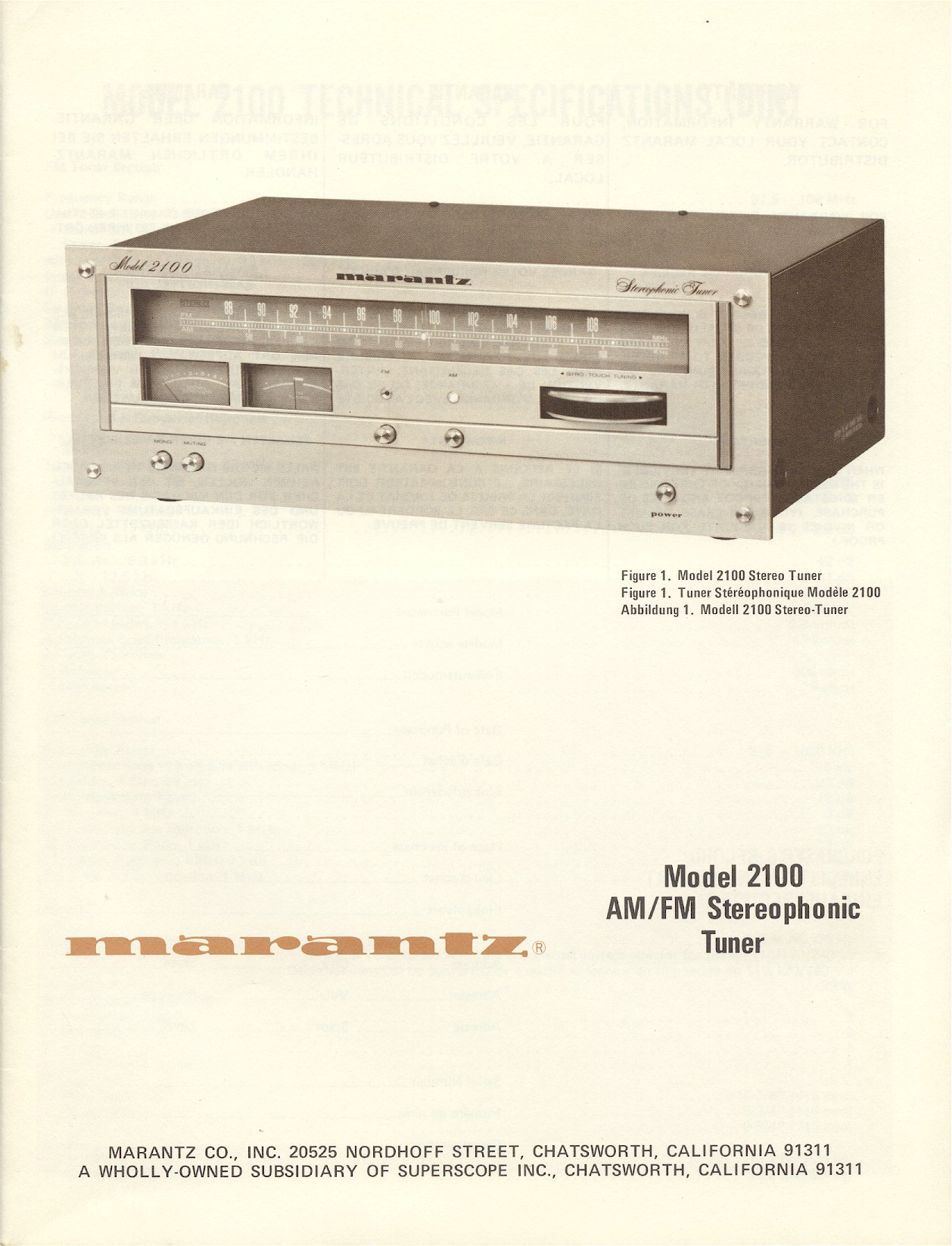
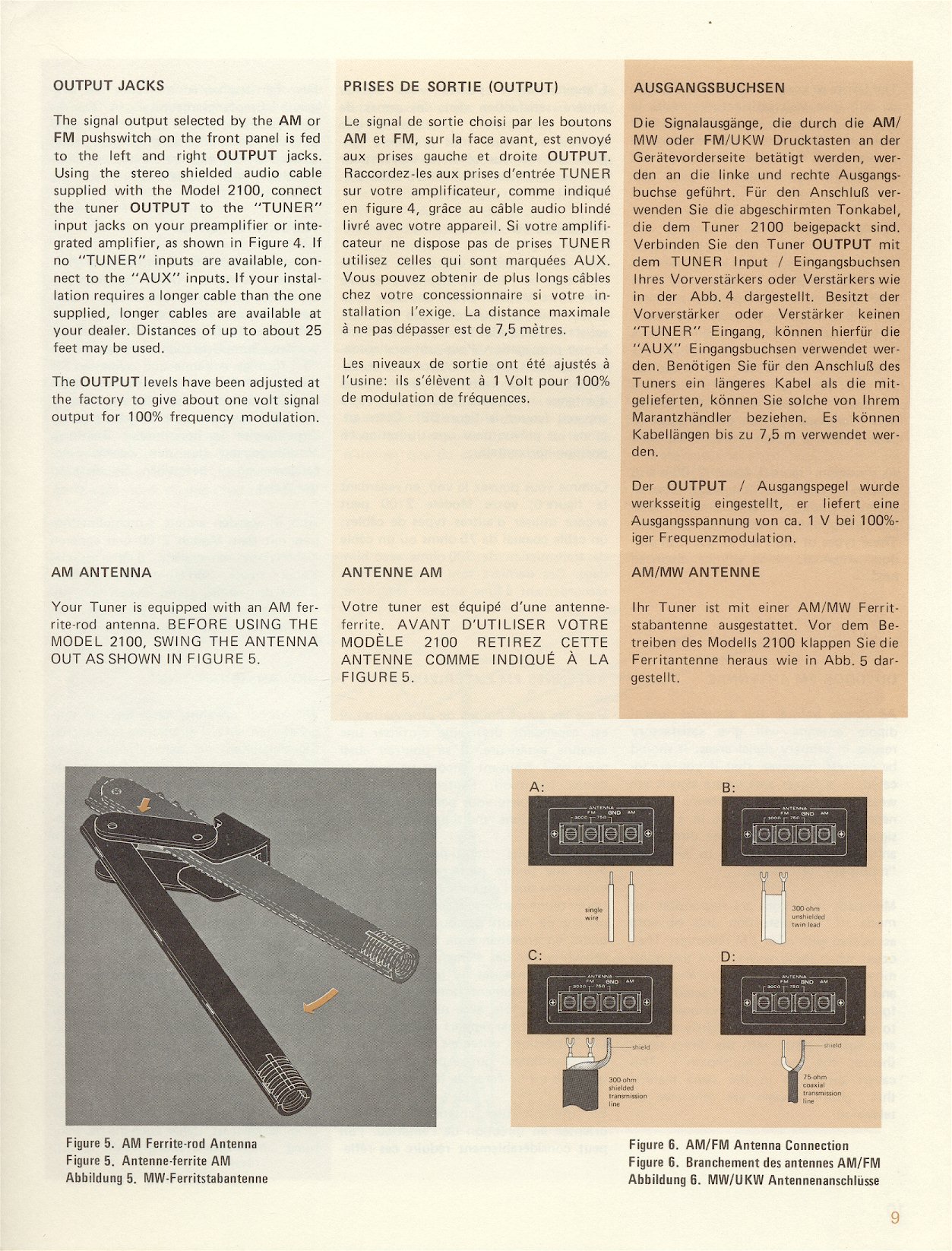
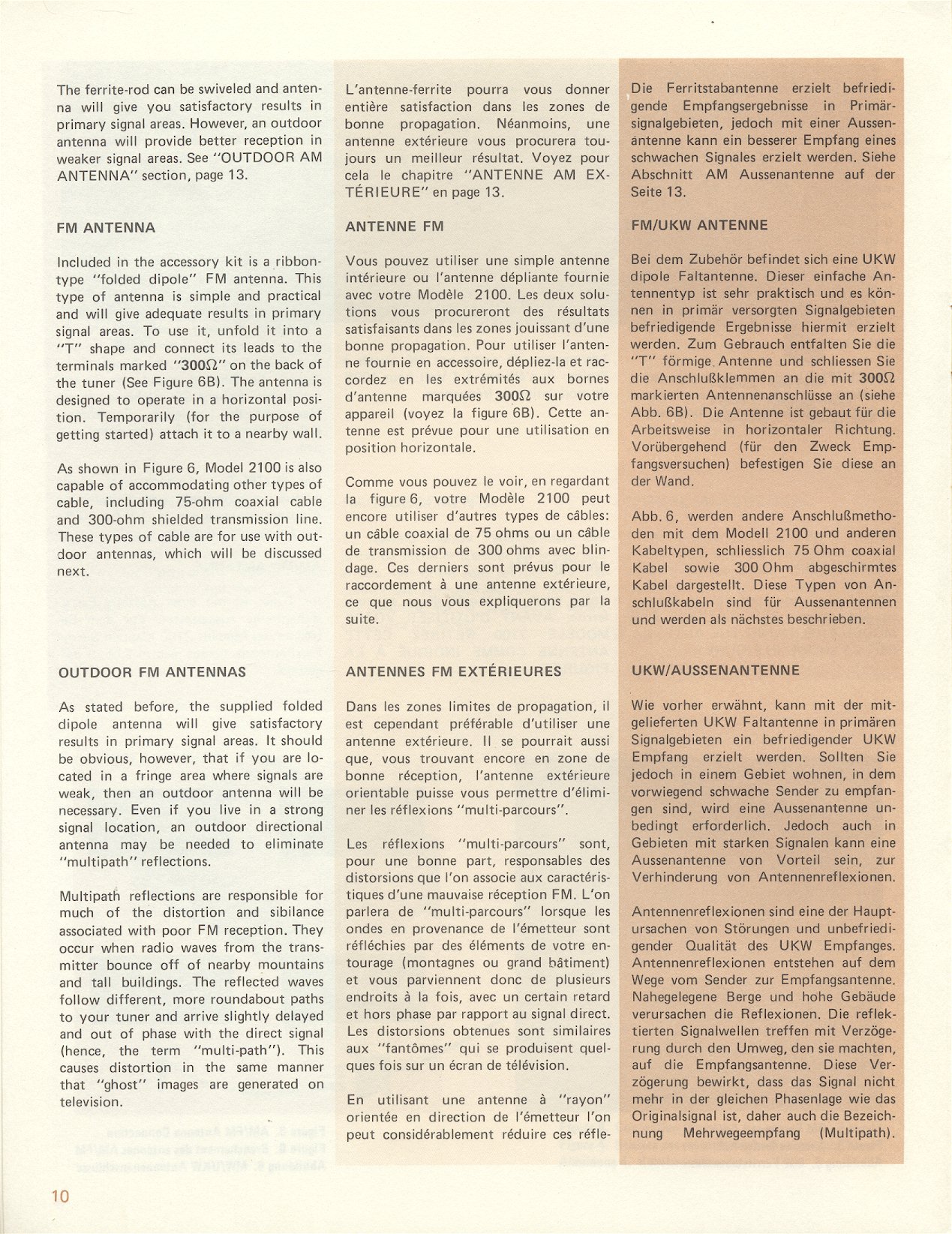
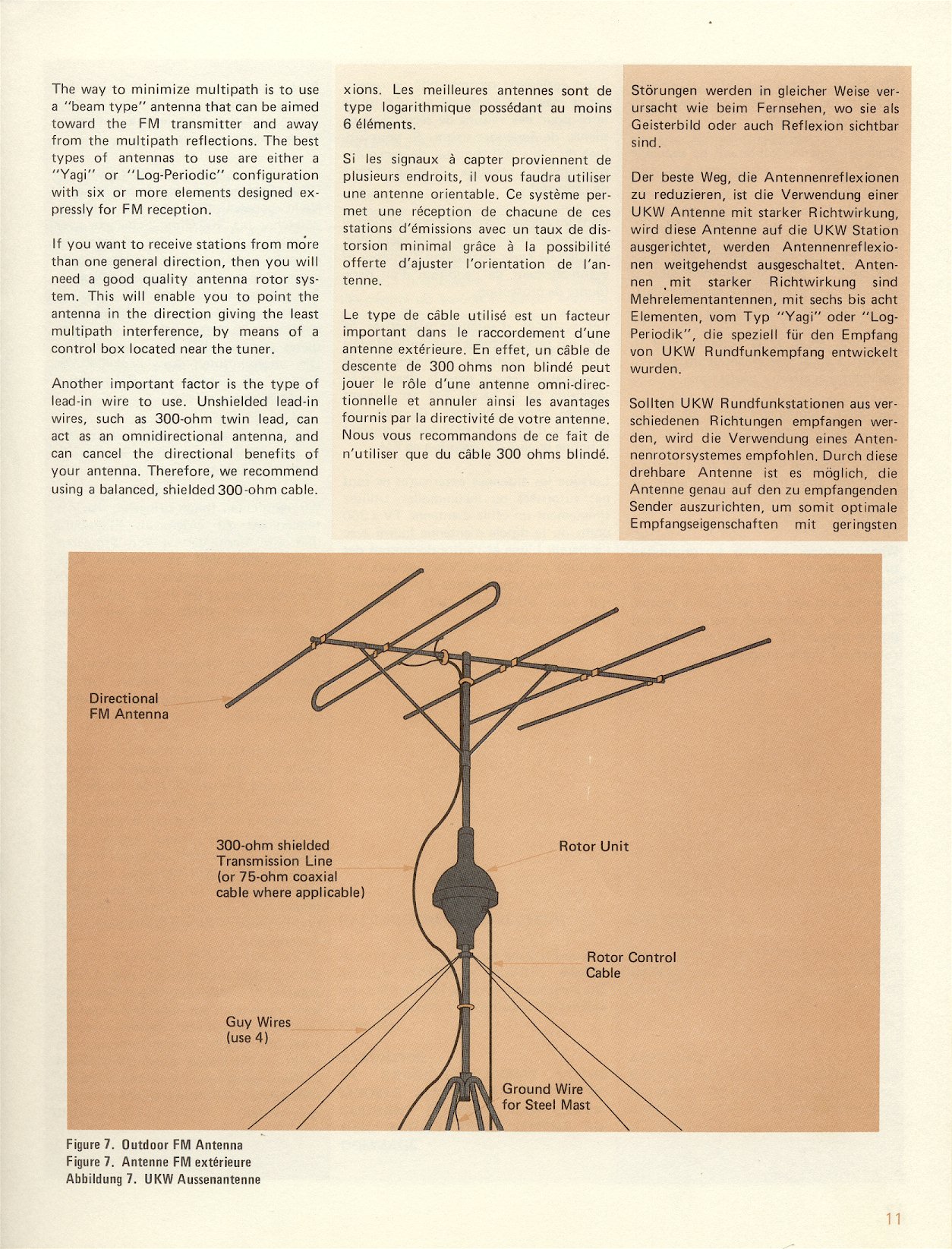
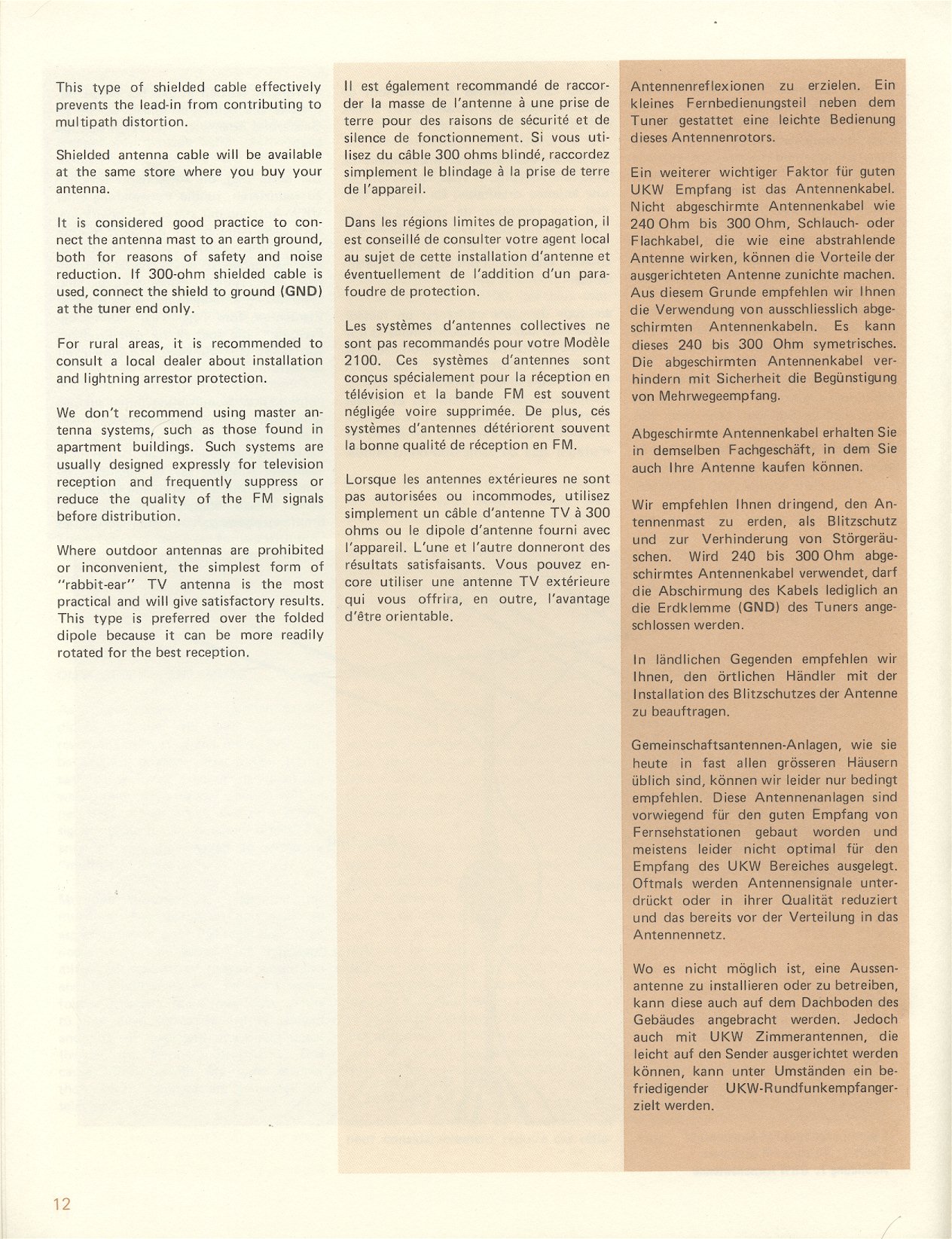
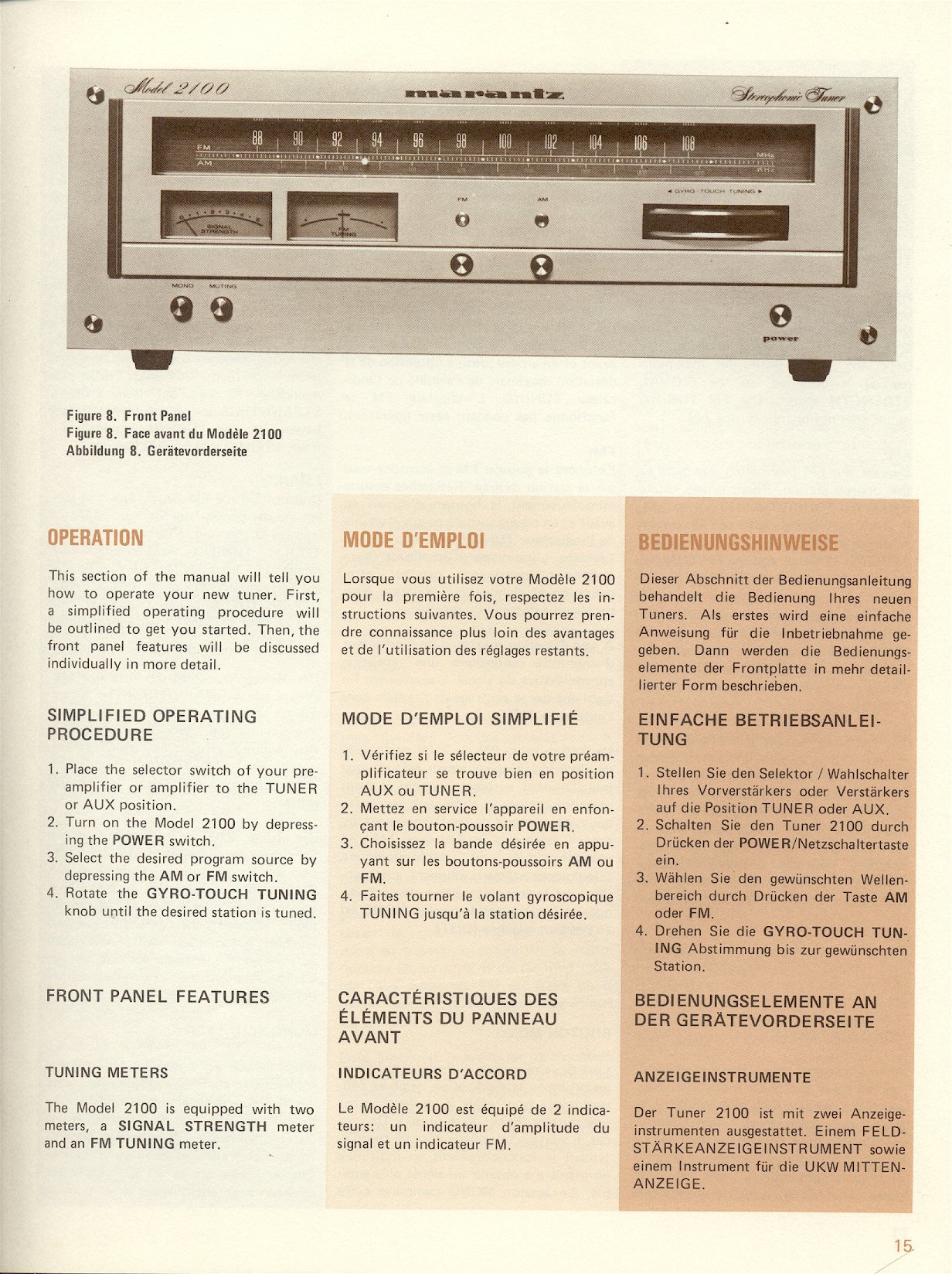
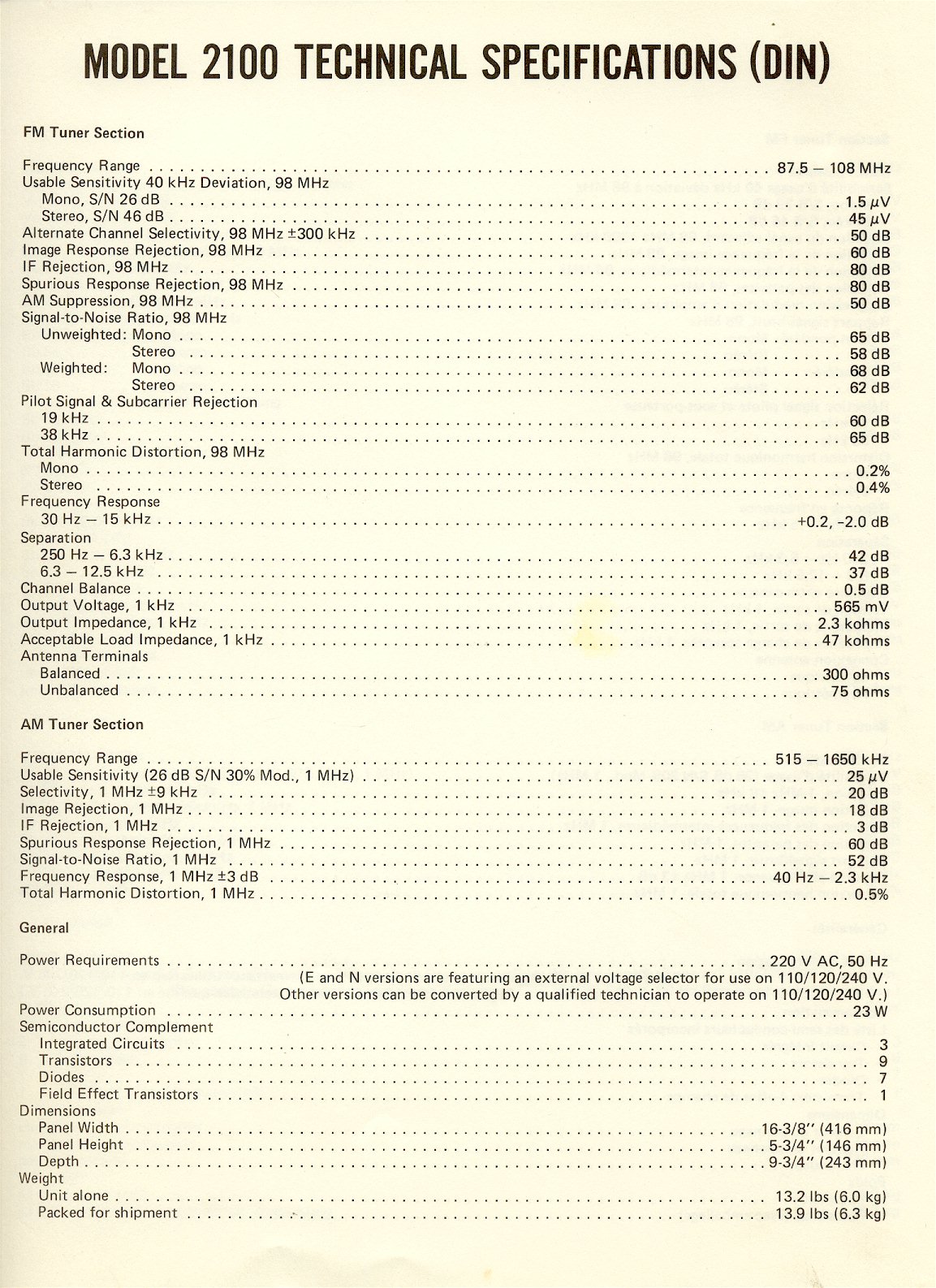
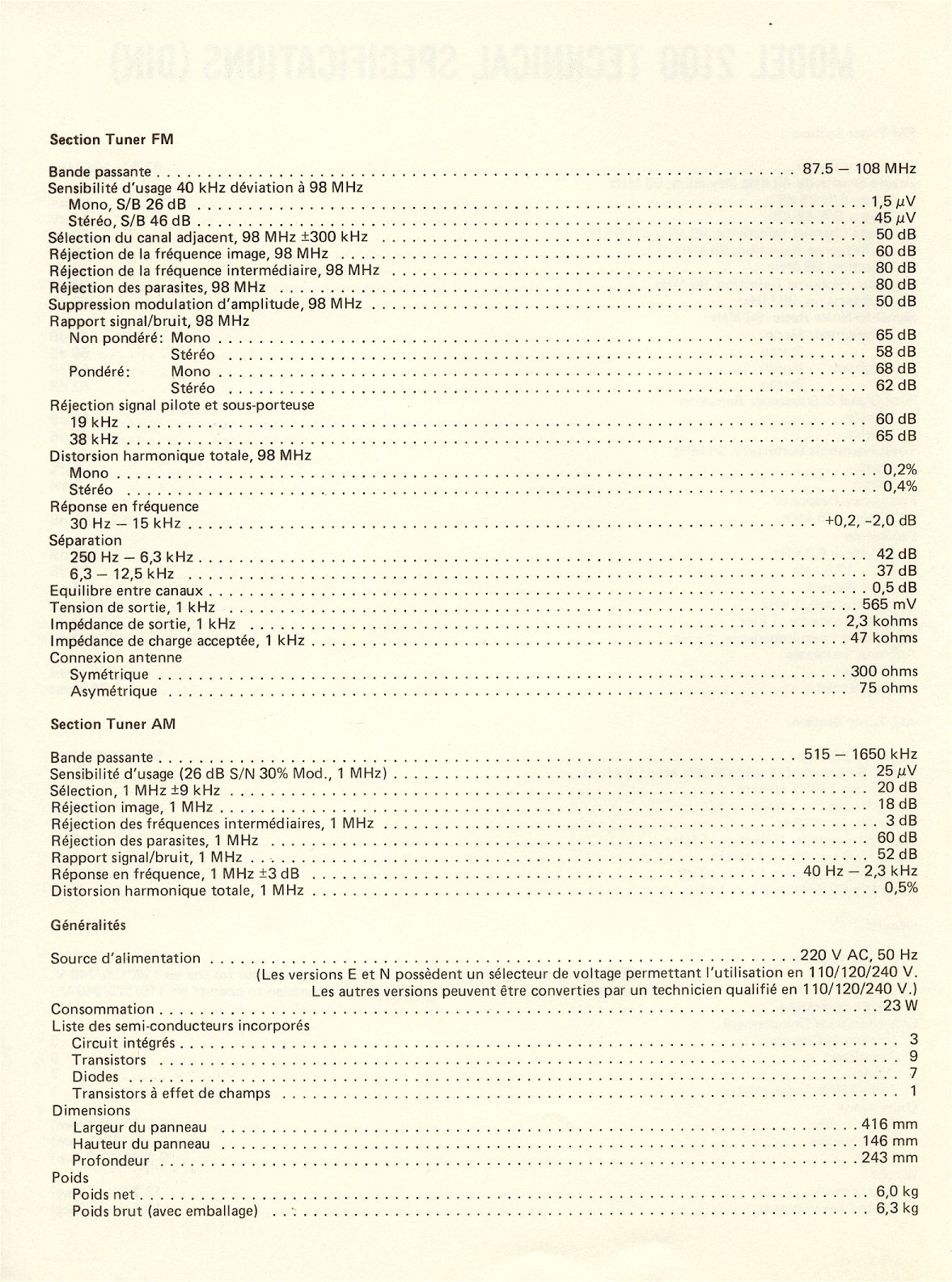
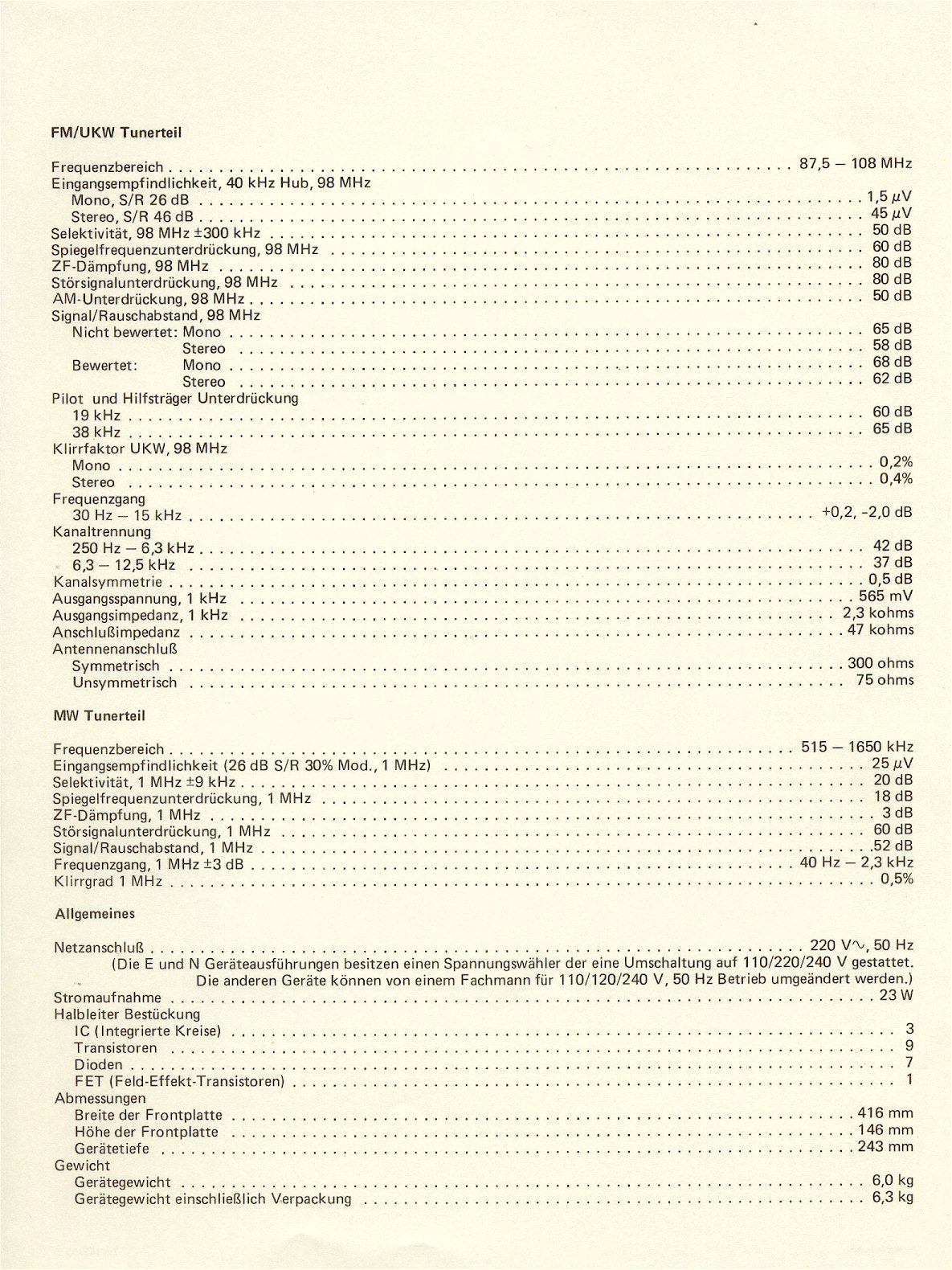
Model 2100 AM/FM Stereo Tuner

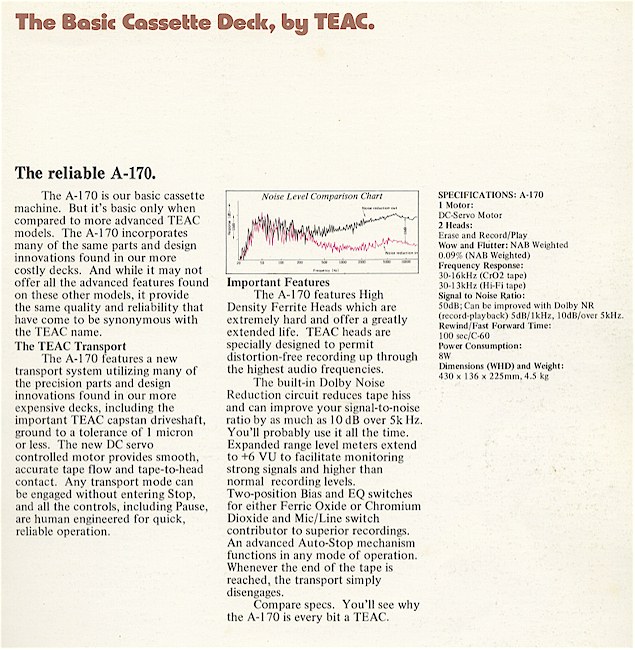
Model 5010B Stereo Cassette Deck

Akai AP-B1 Turntable
Not shown are the Marantz HD770 125 Watt speakers (I can't find the original brochure)

See also:
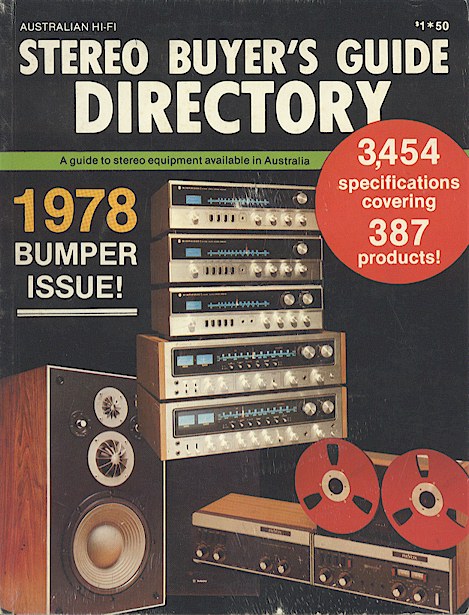
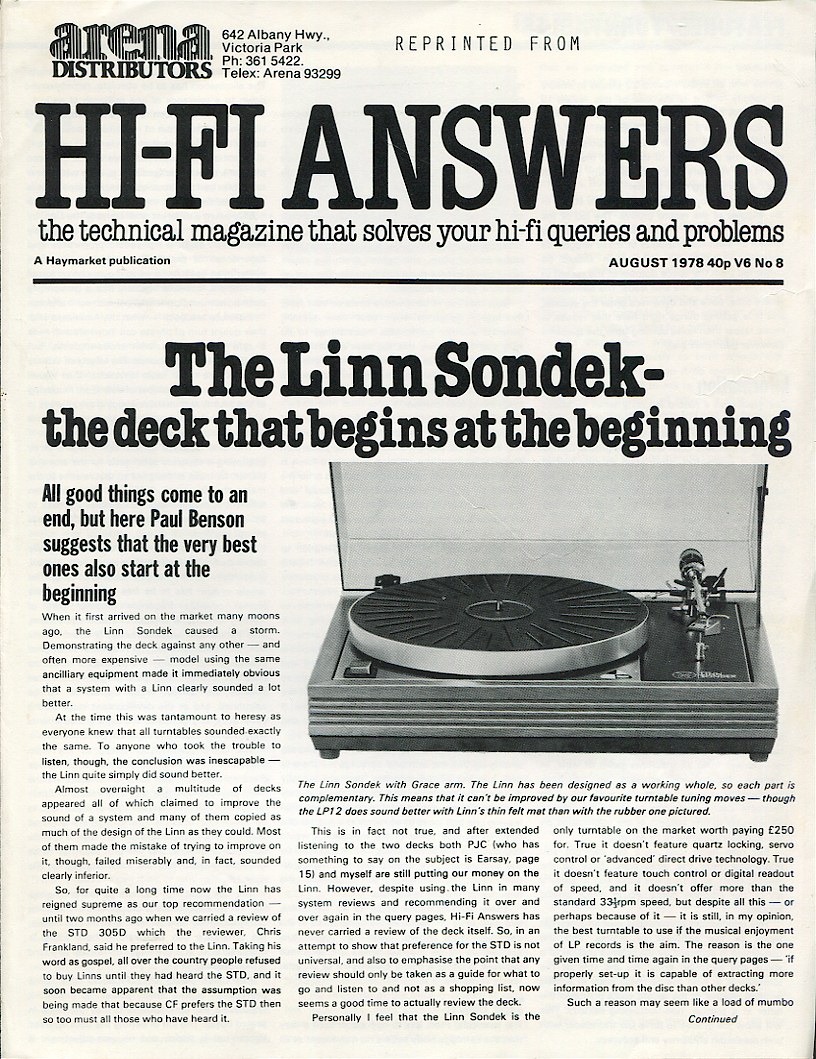
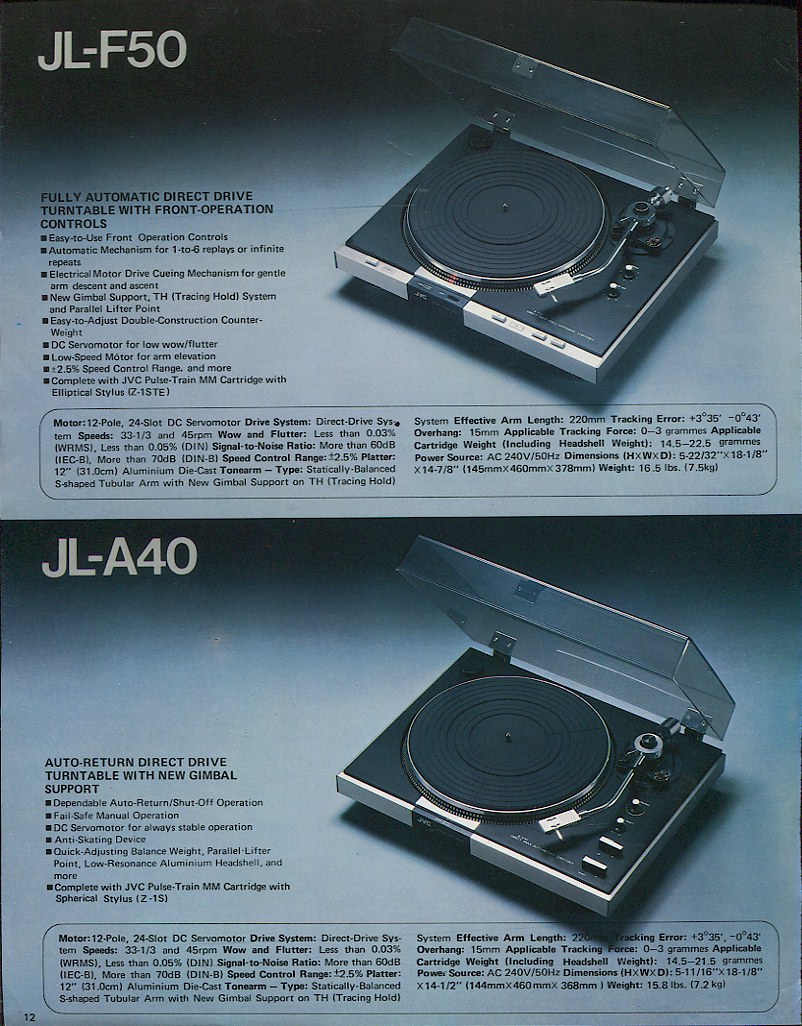
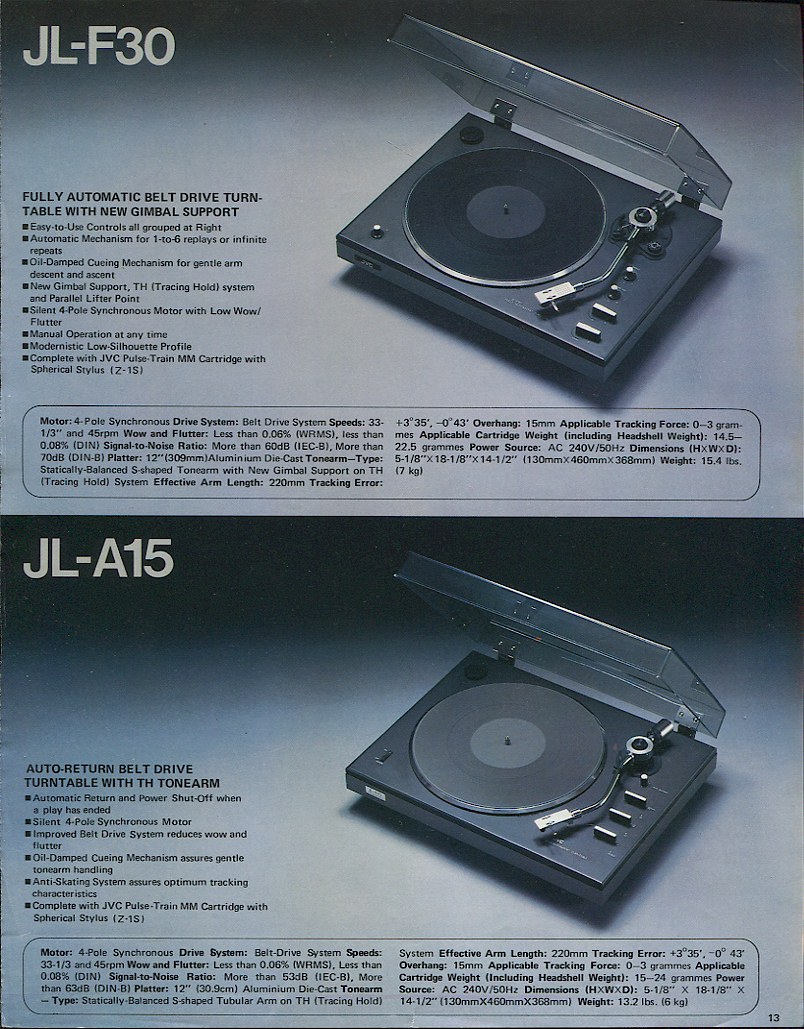
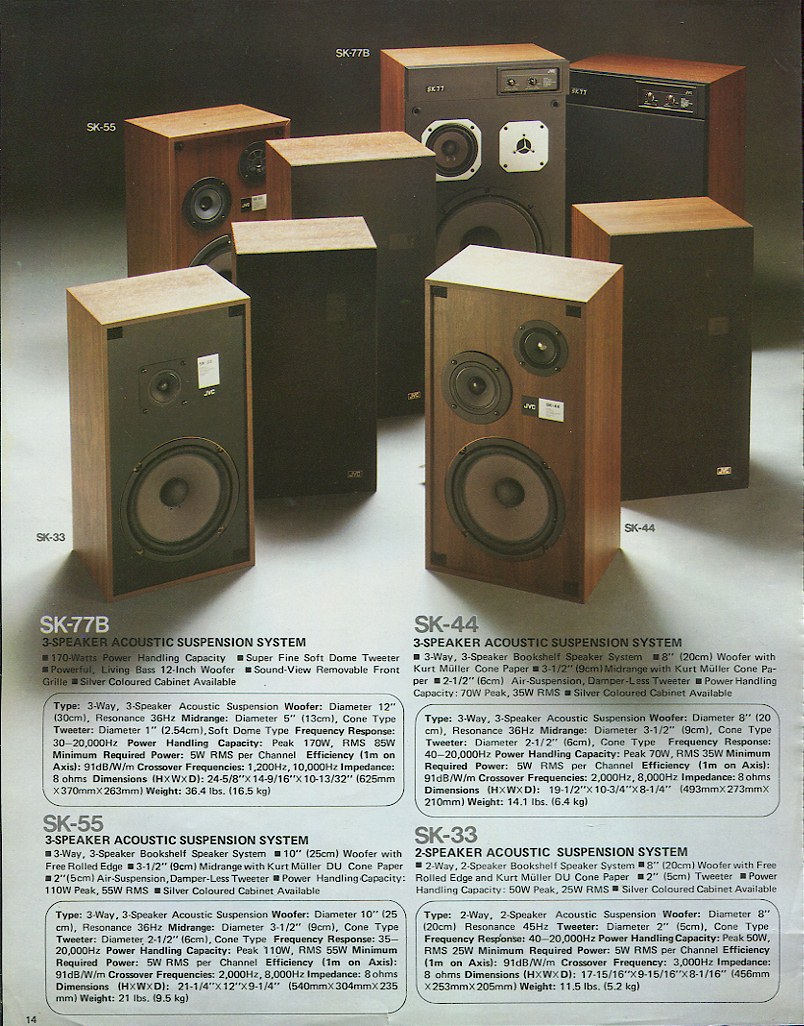
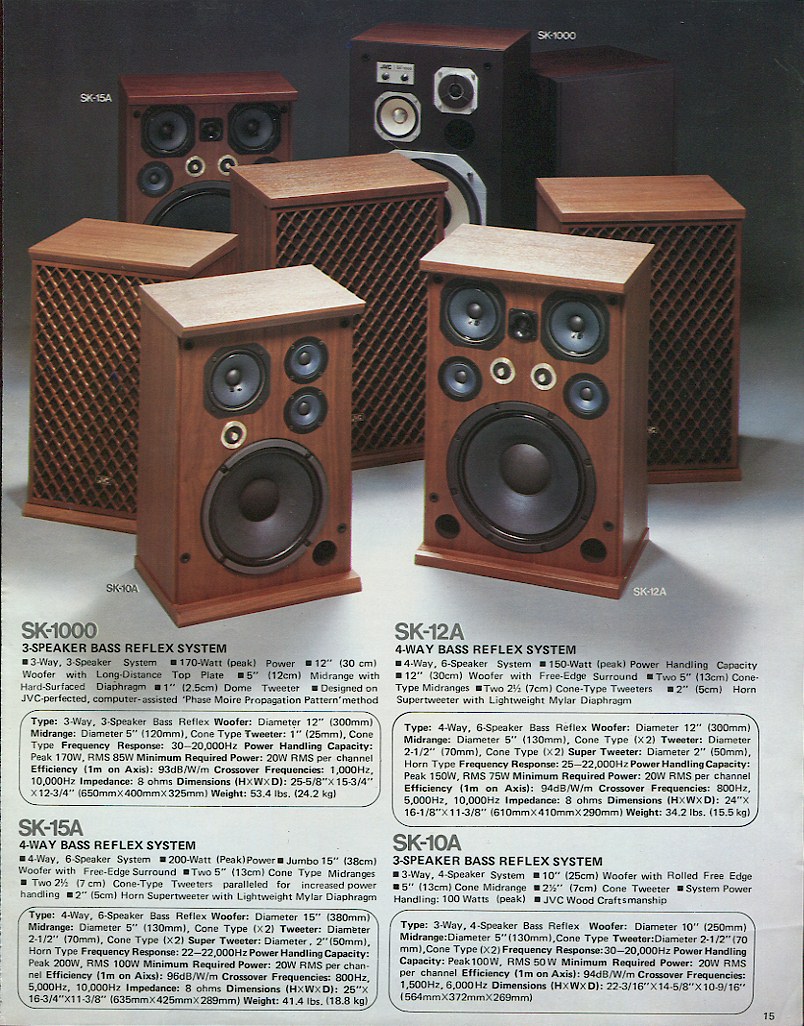
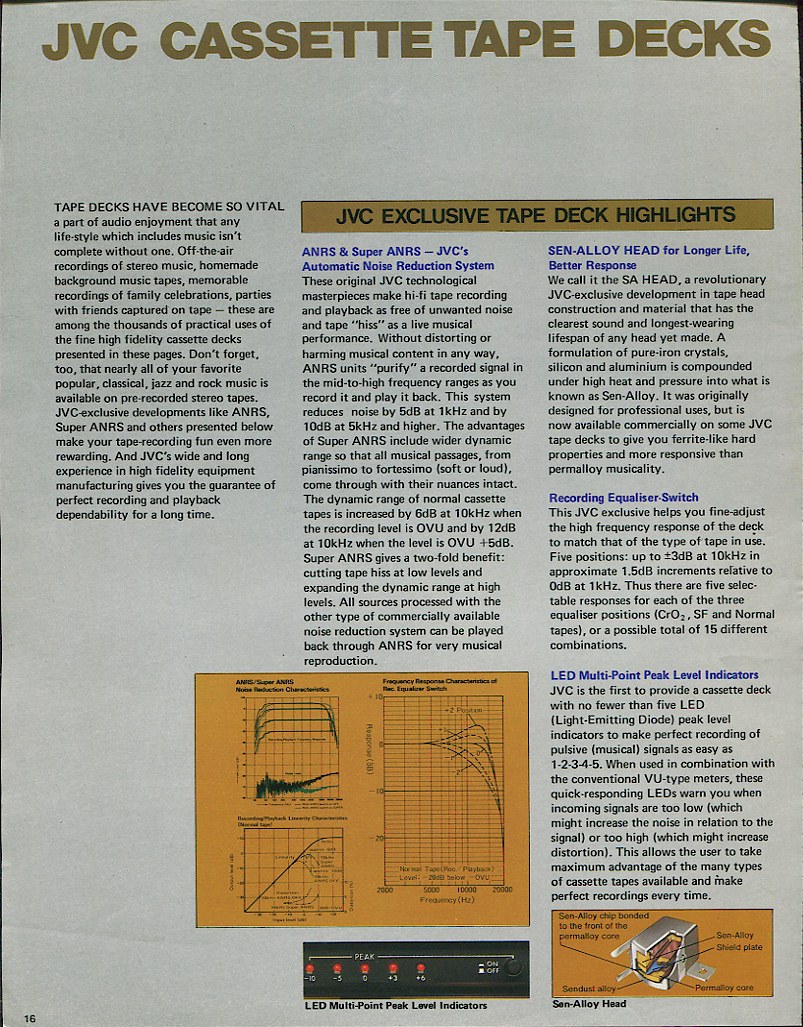
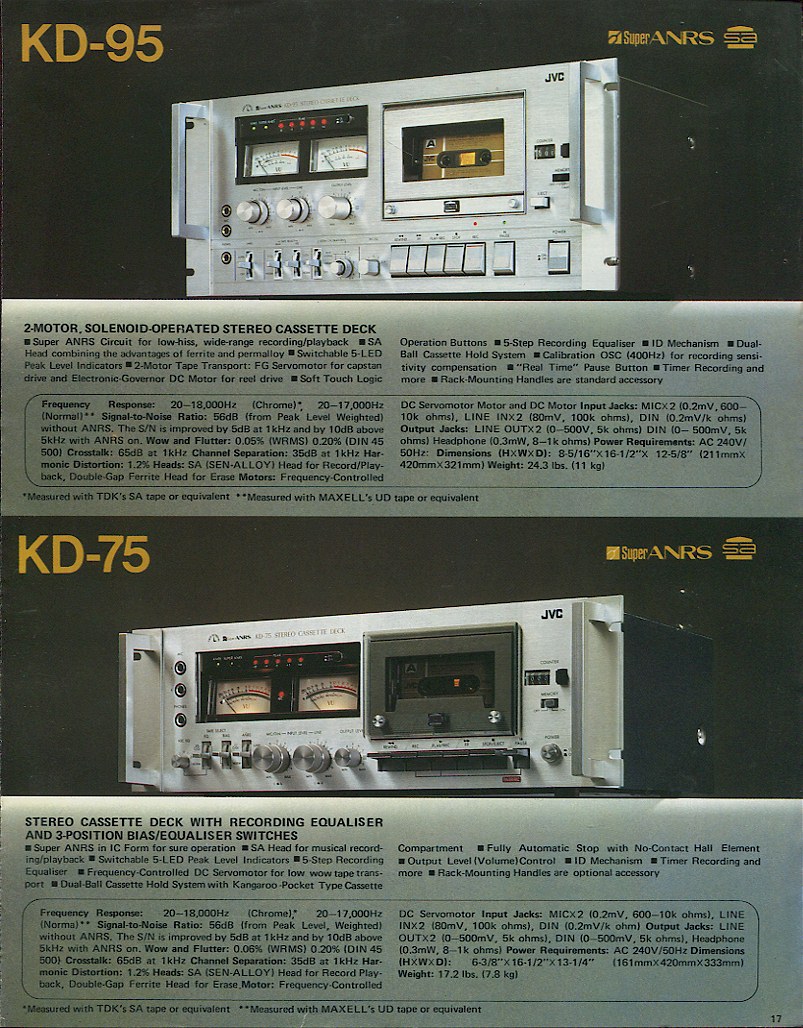
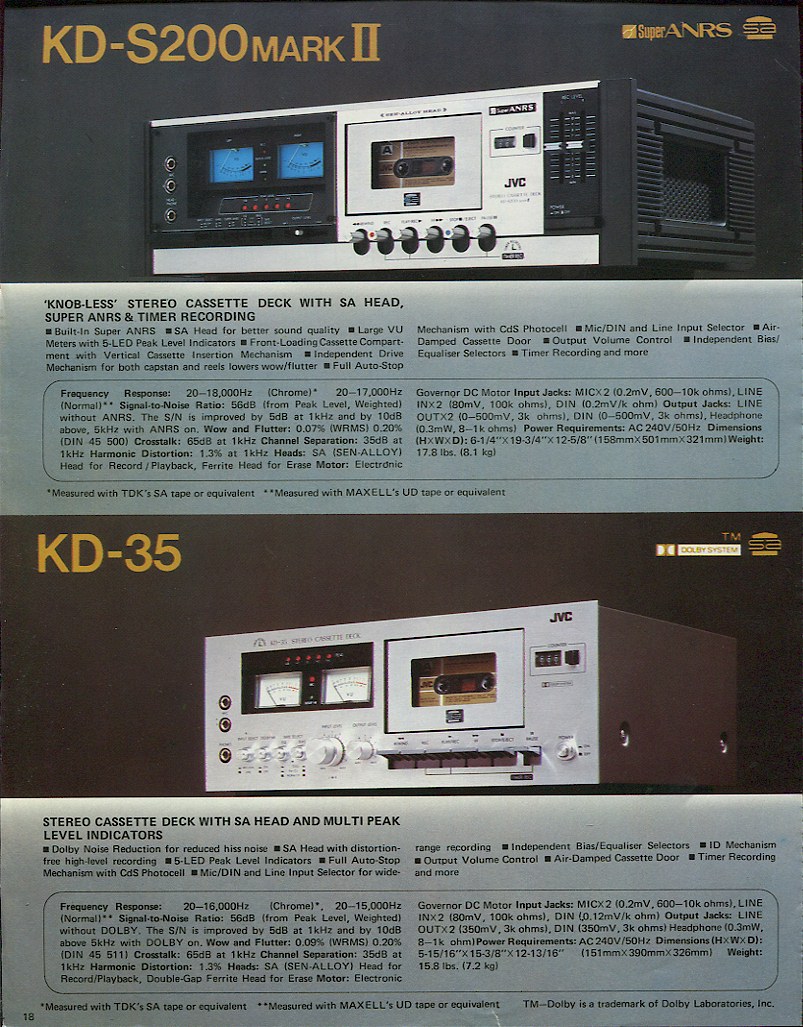
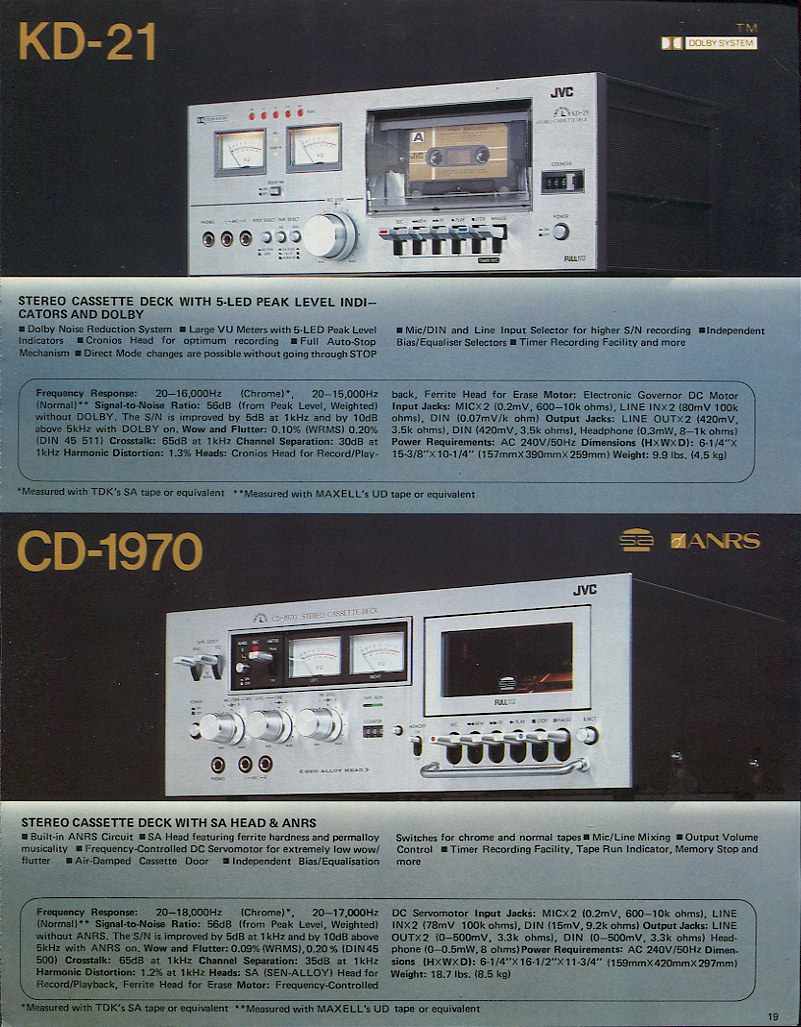
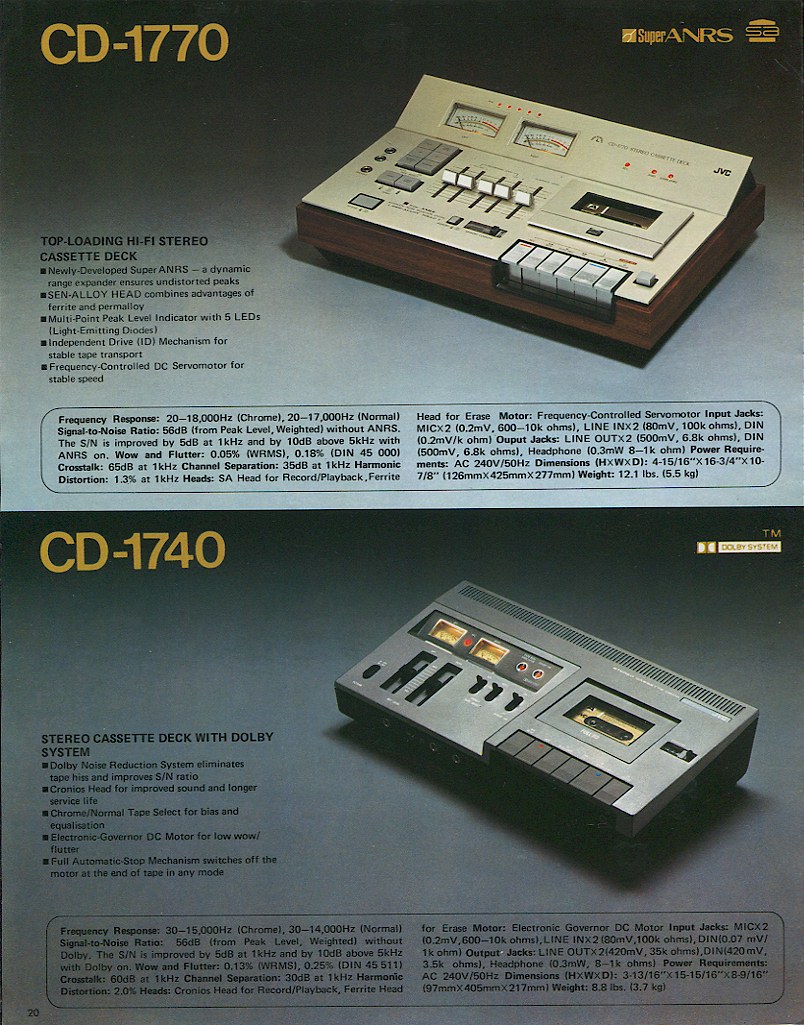
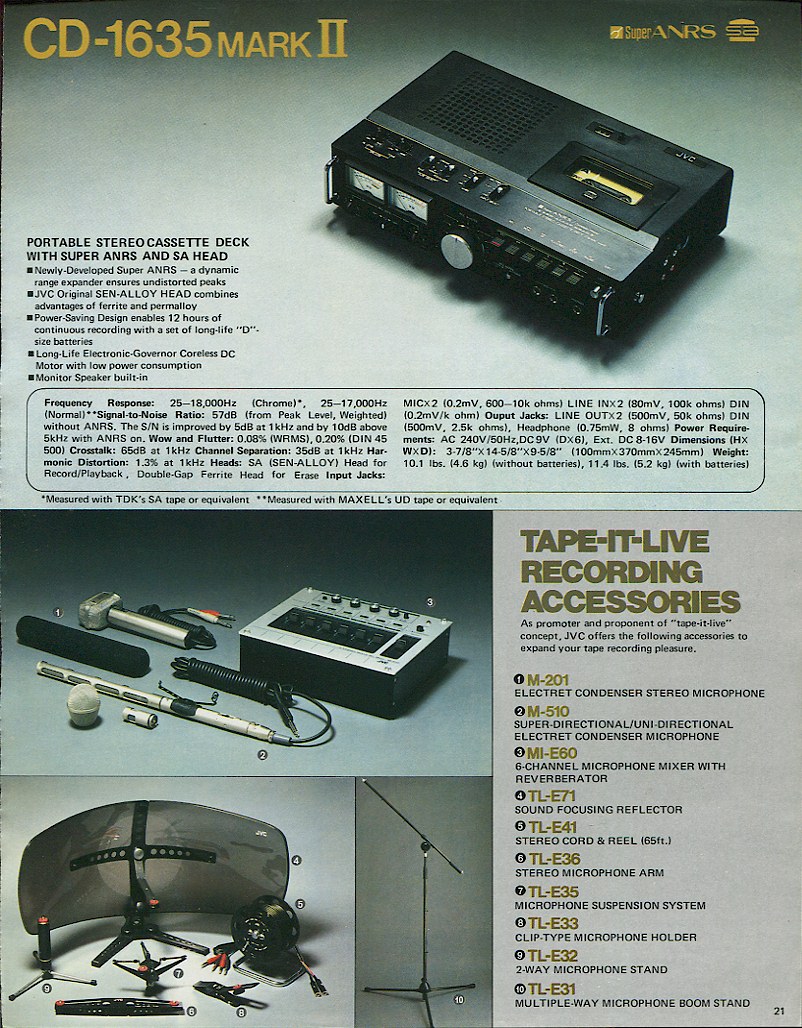
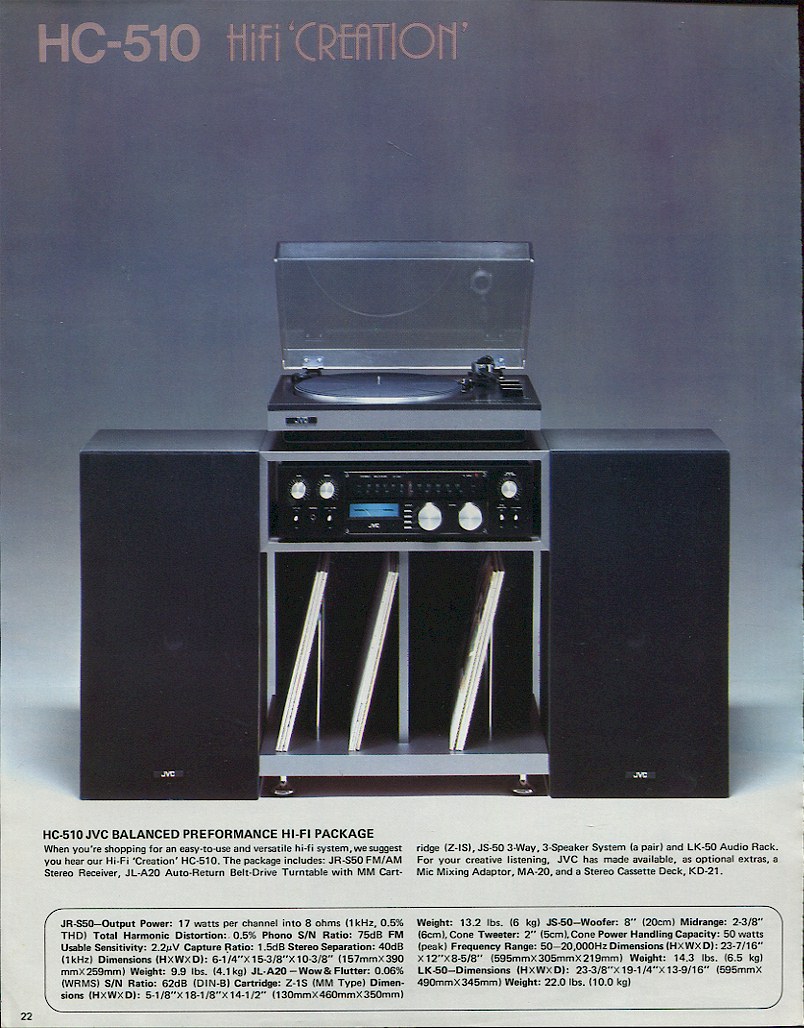
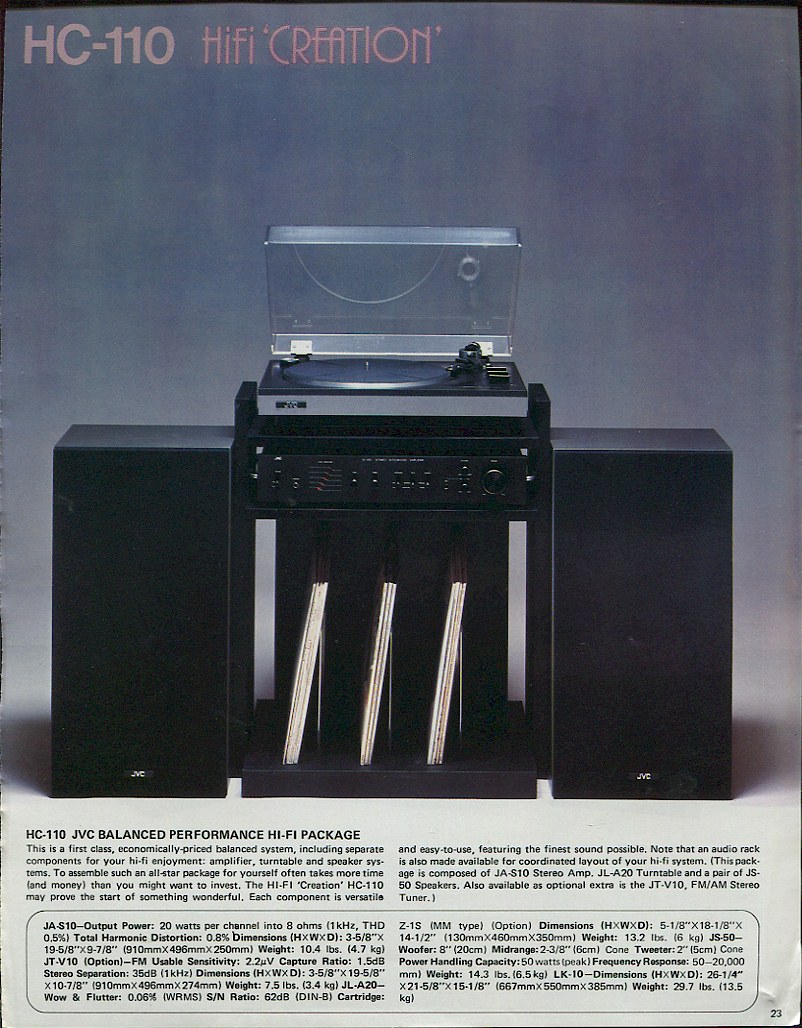
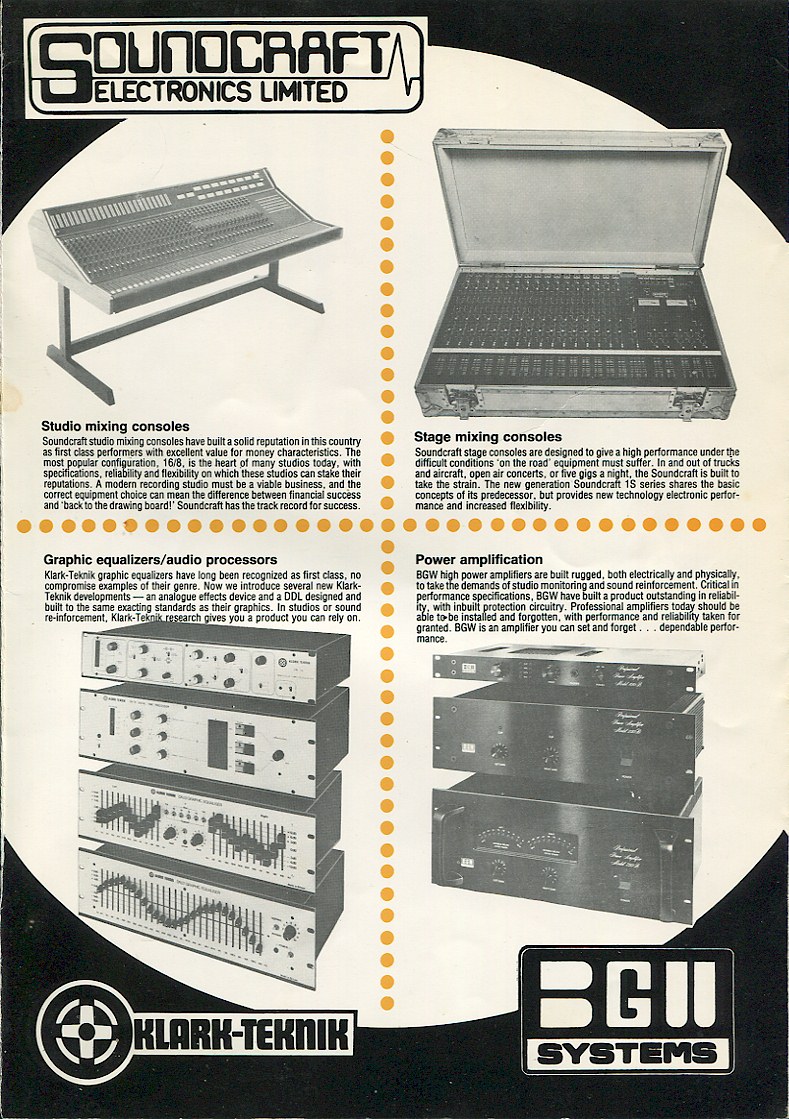
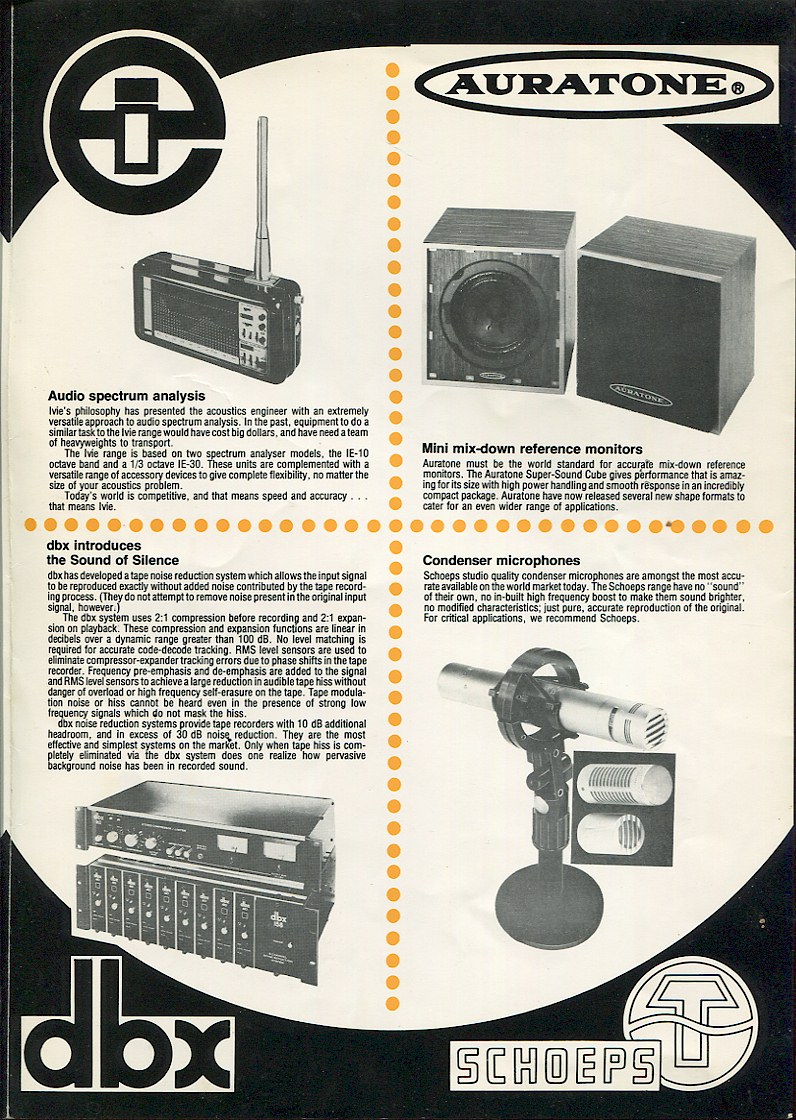
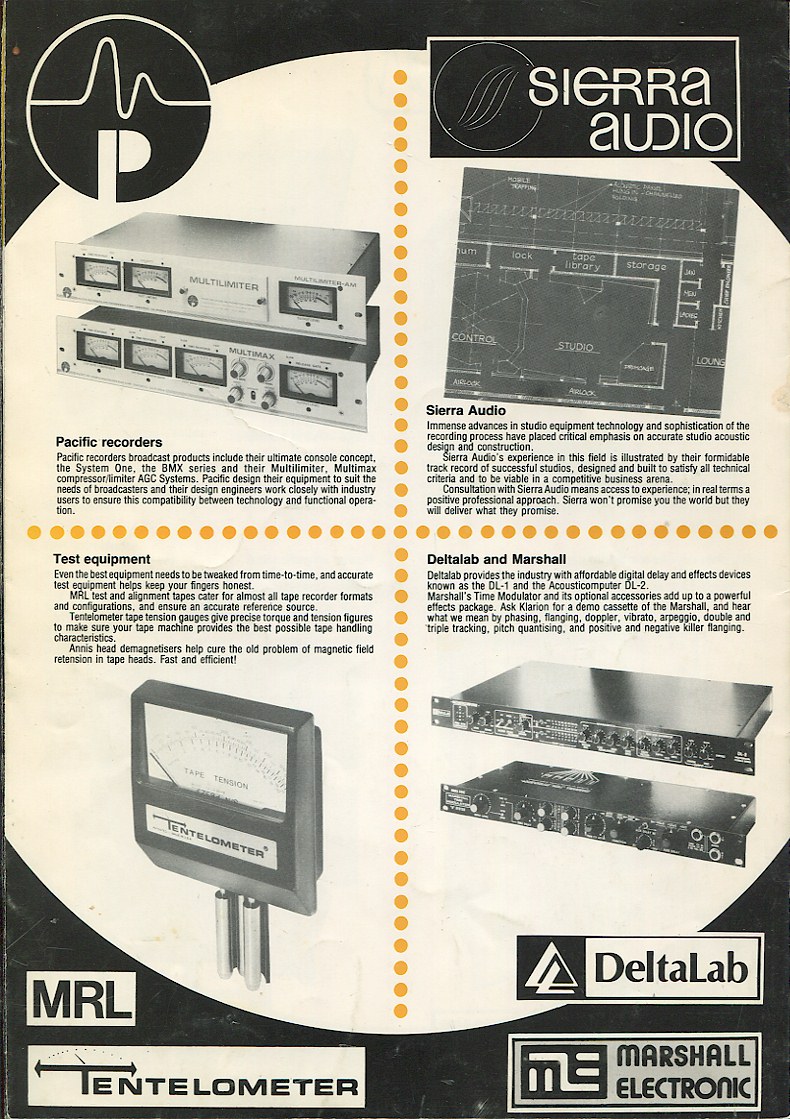
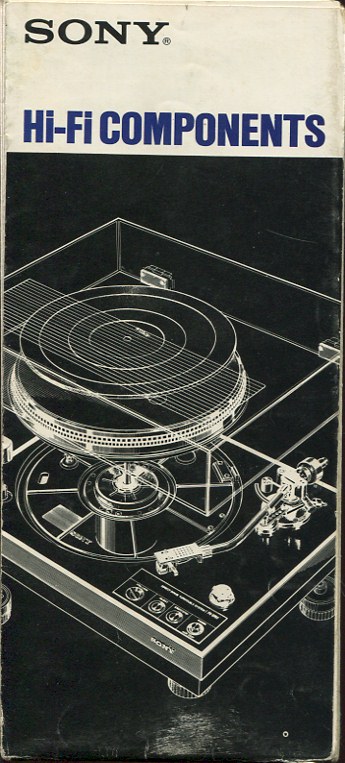
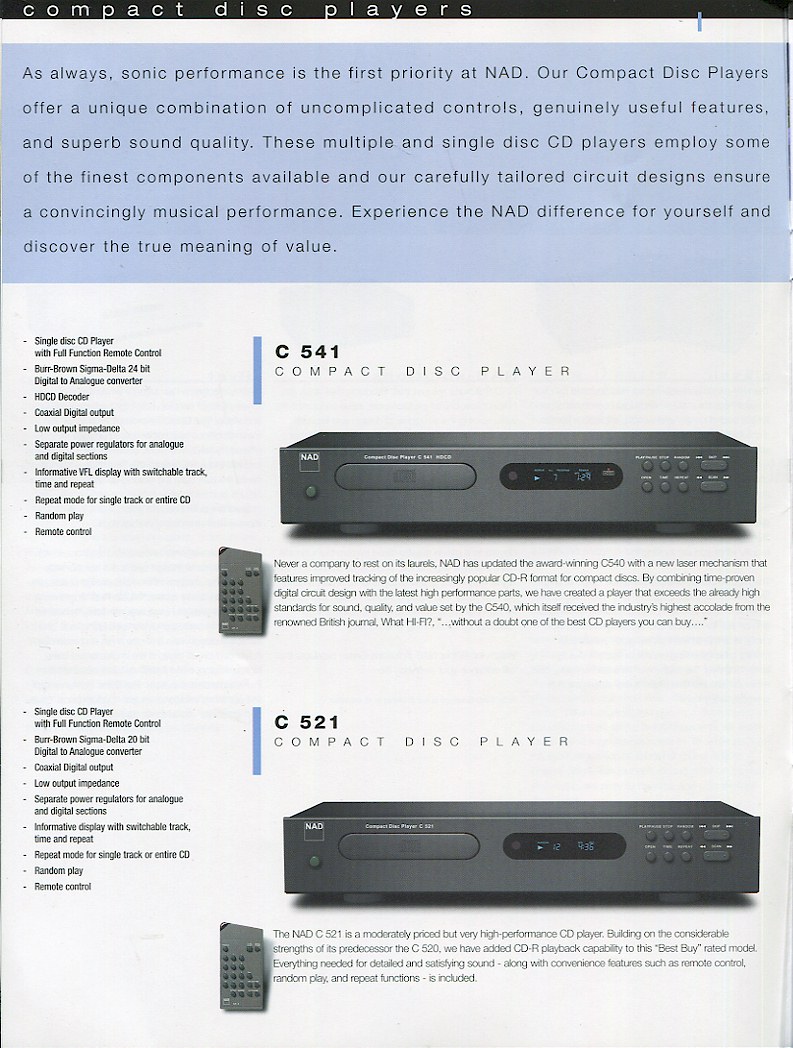
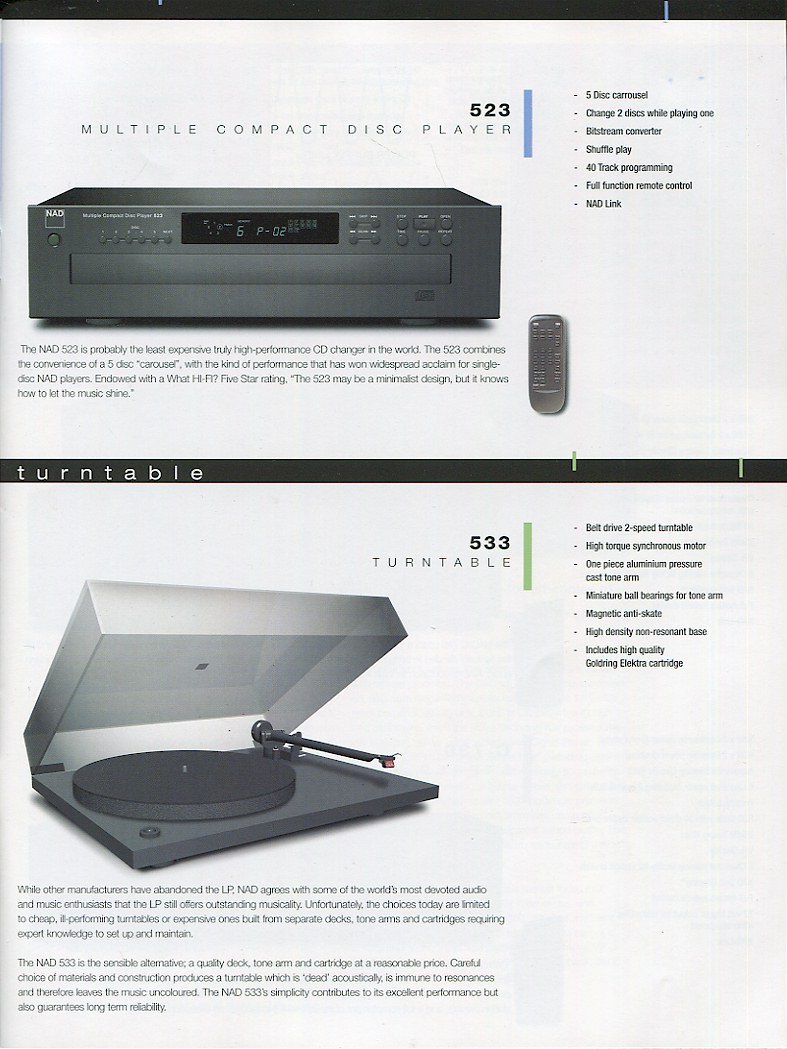
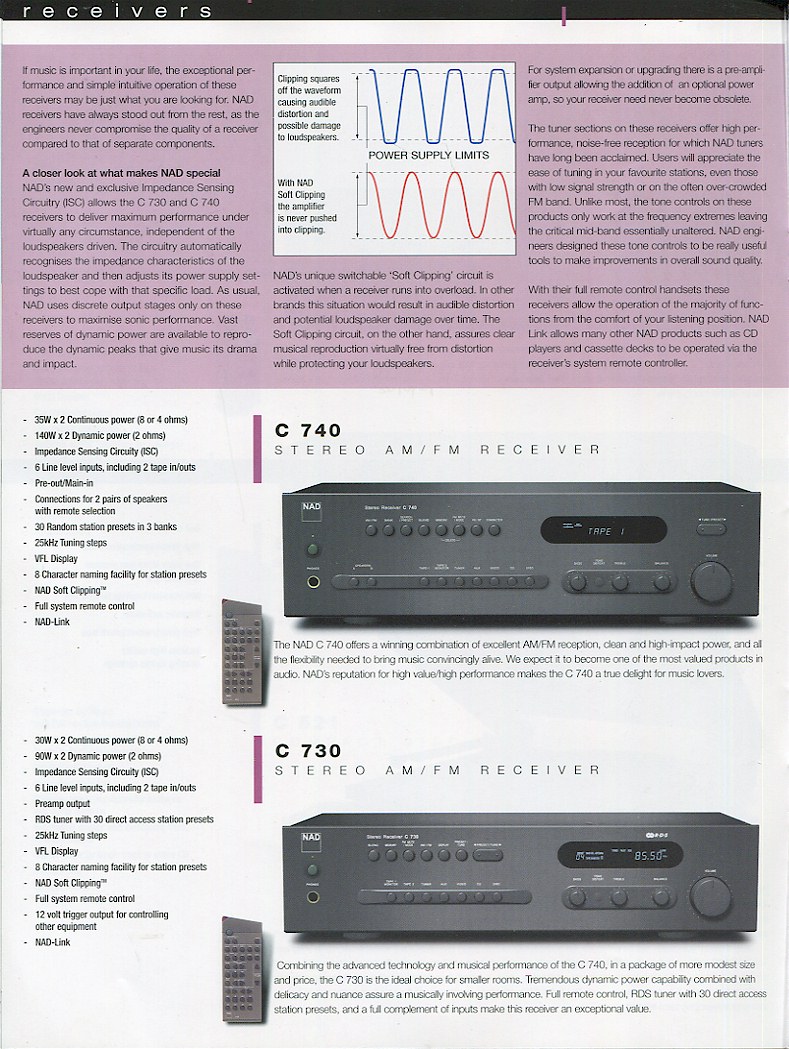
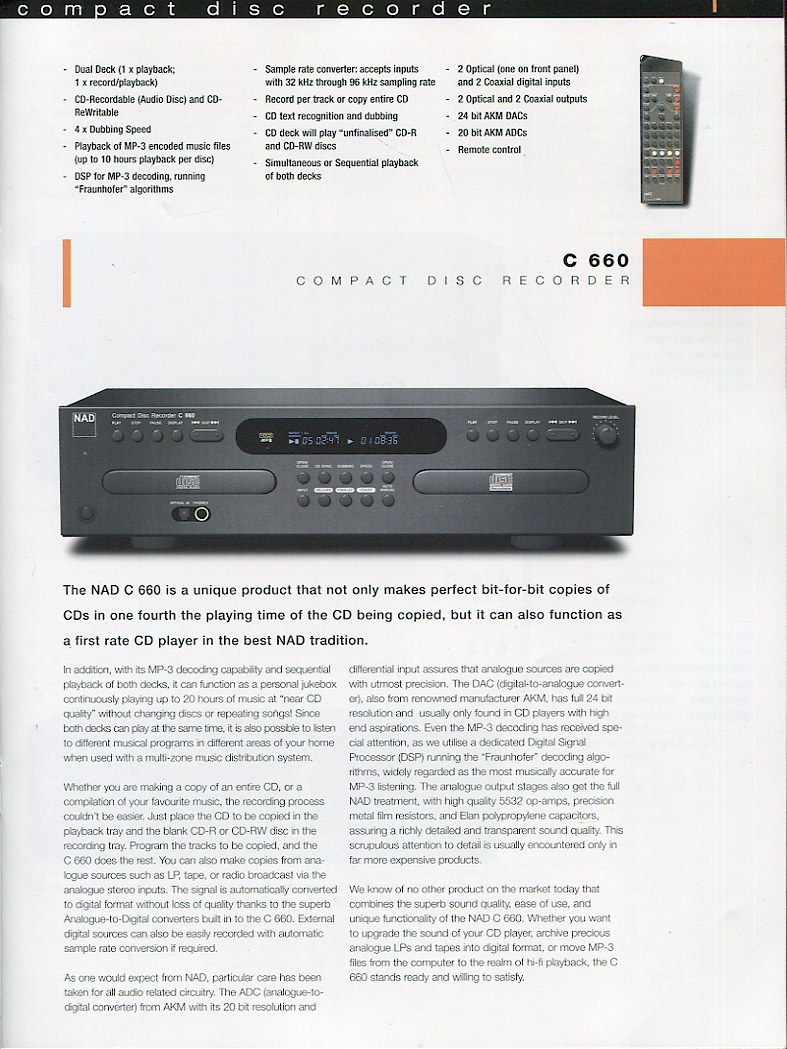
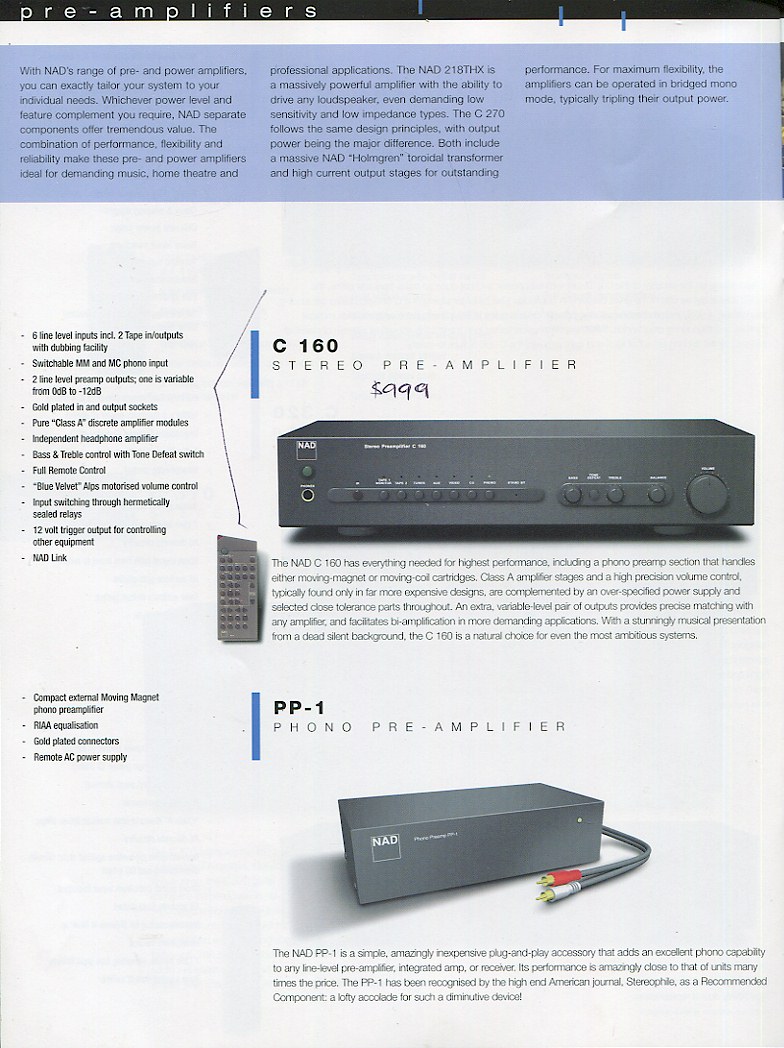
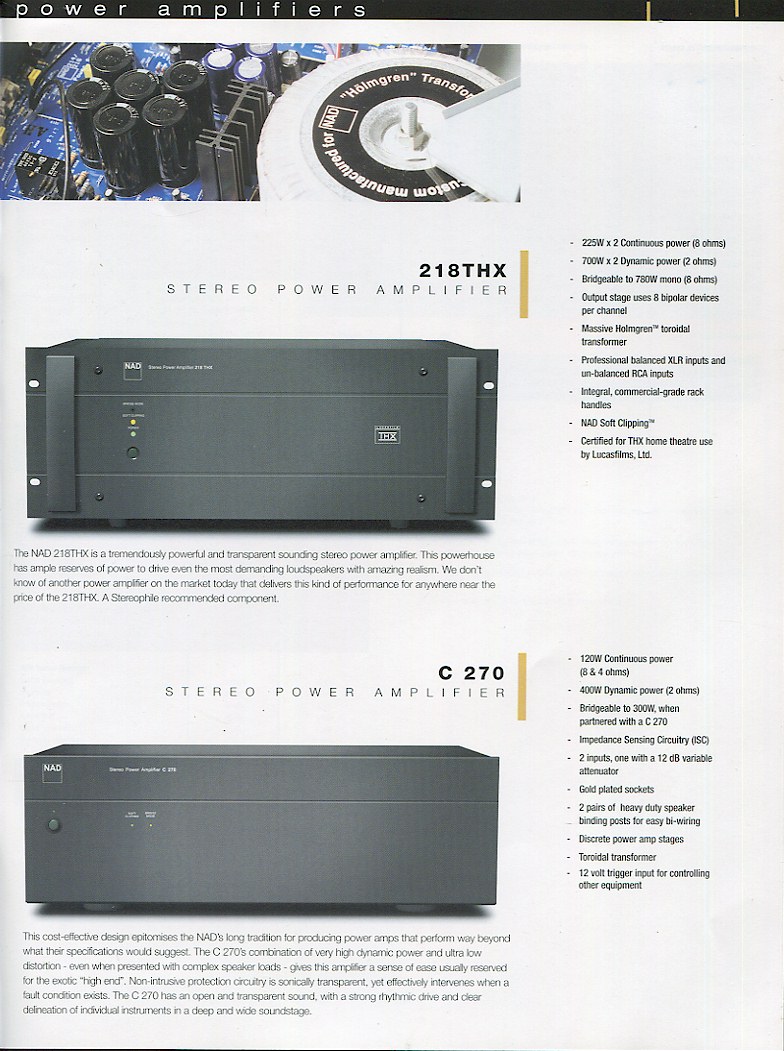
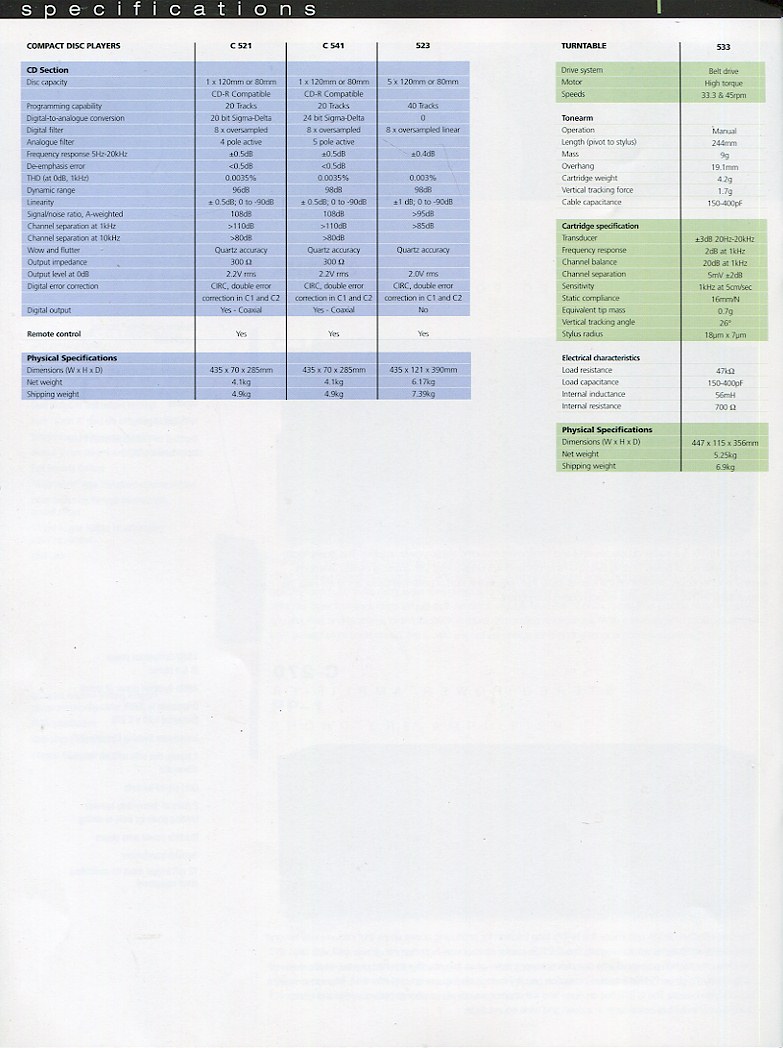
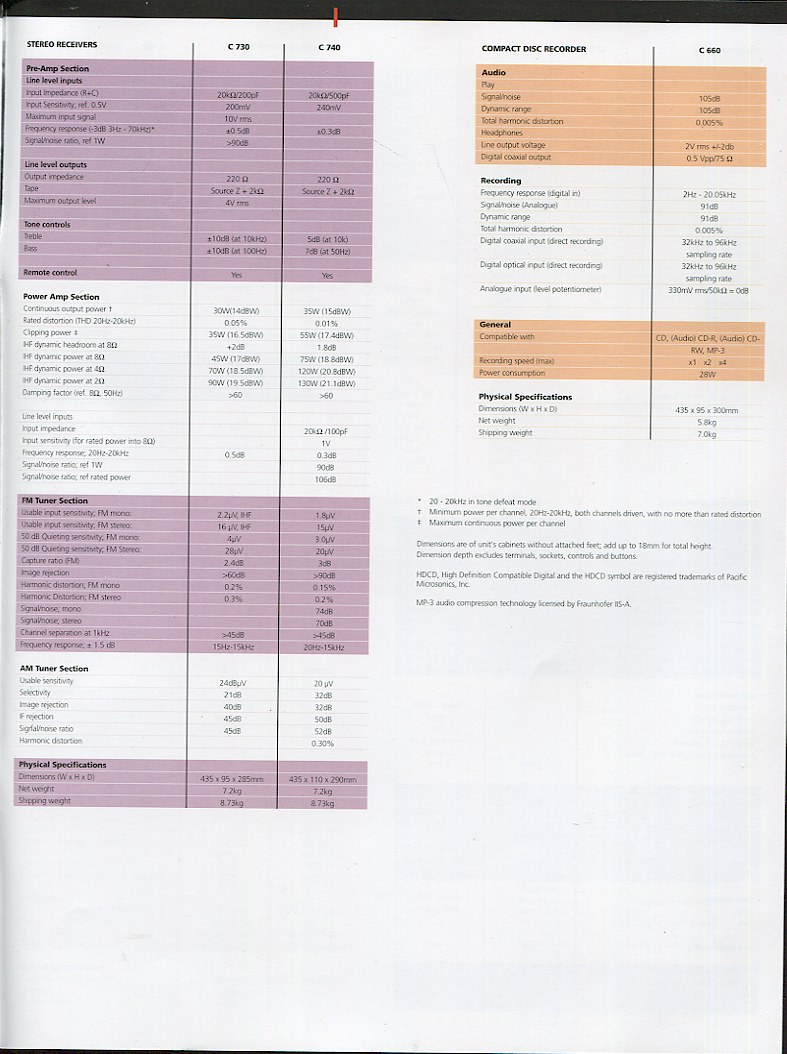
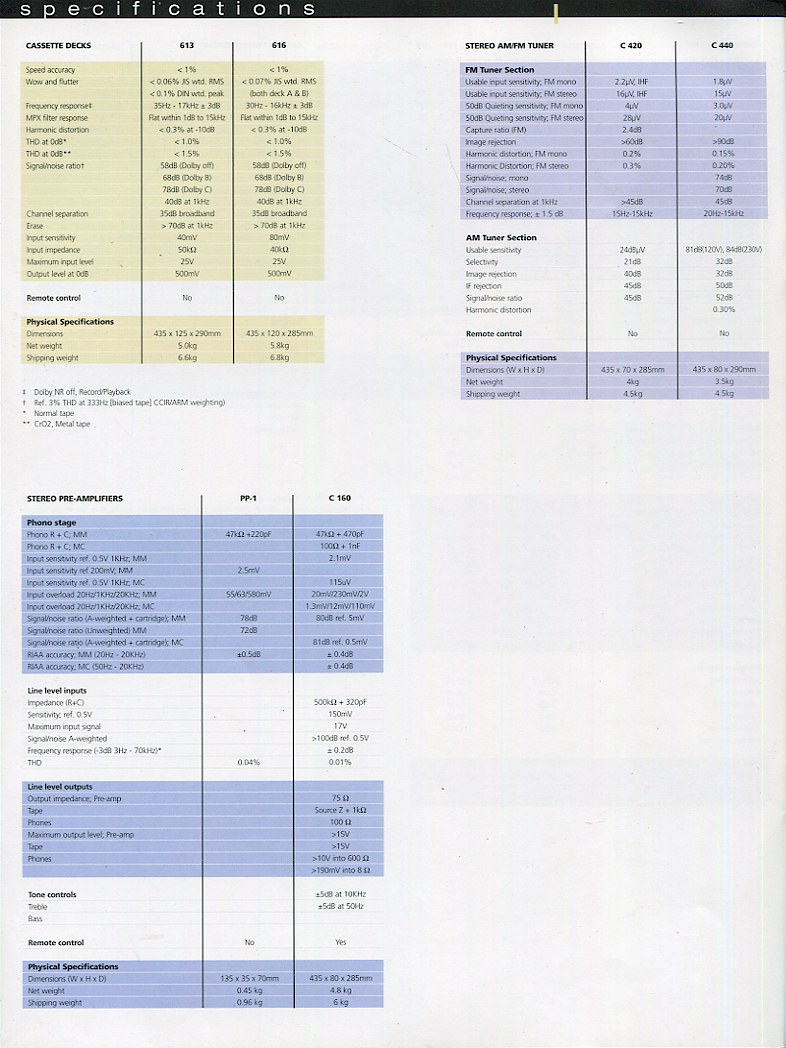
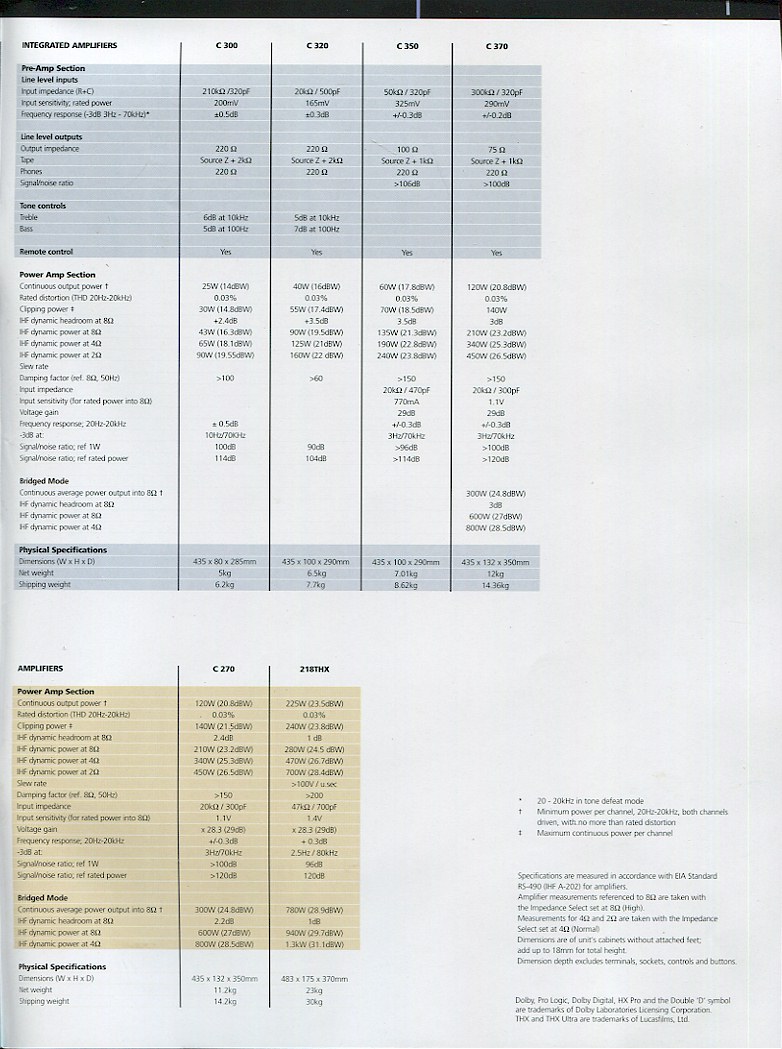
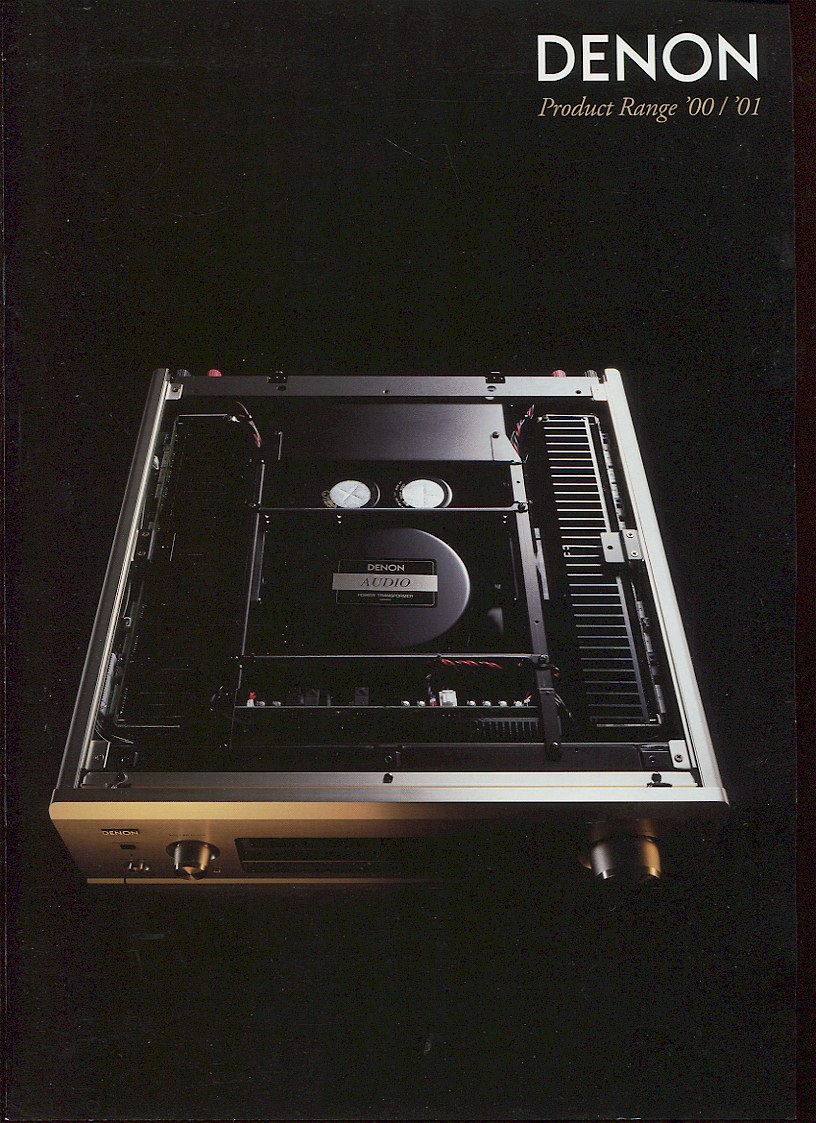
Gallery - Late 1970s Hi-Fi Sales Brochures


Marantz

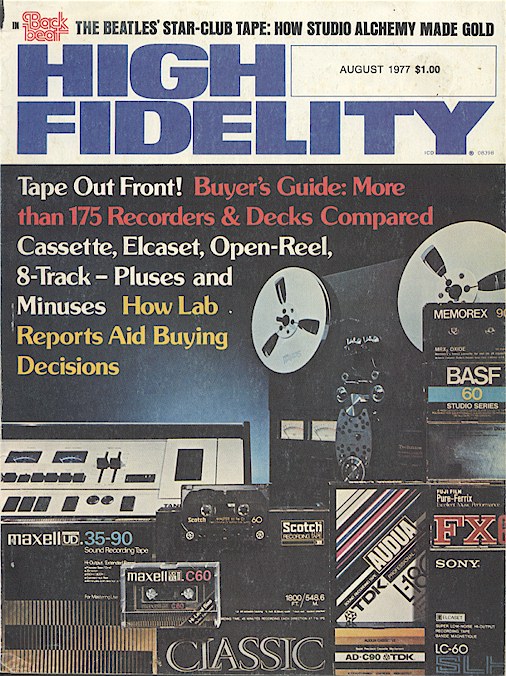
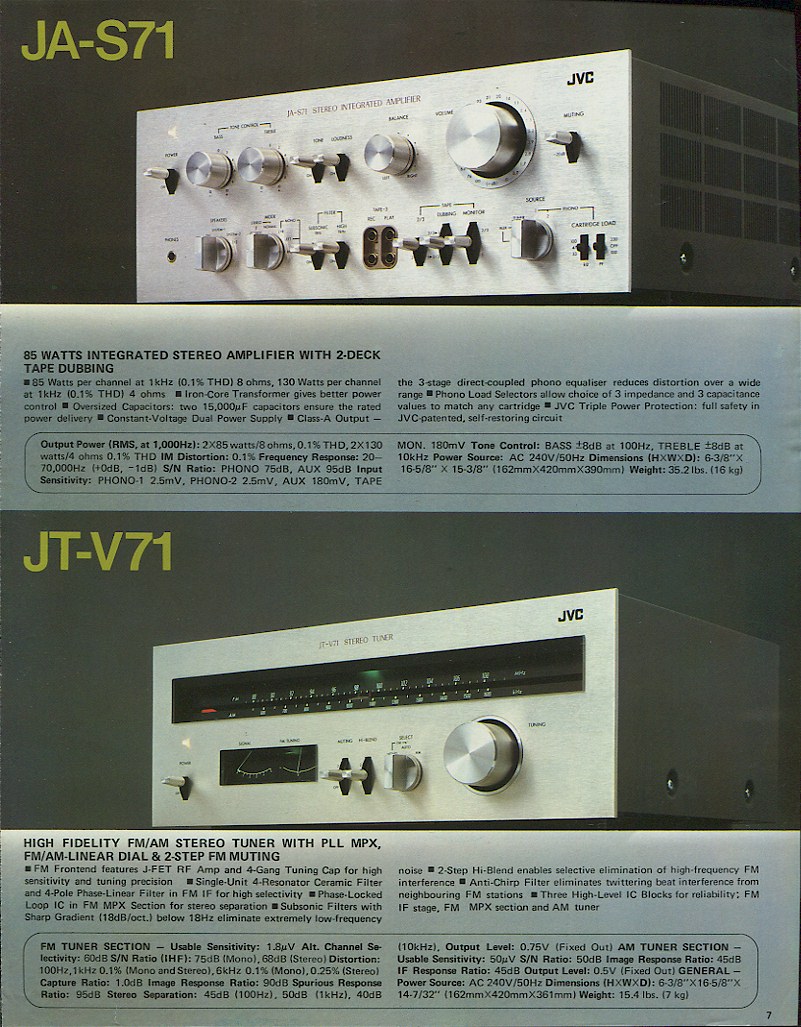
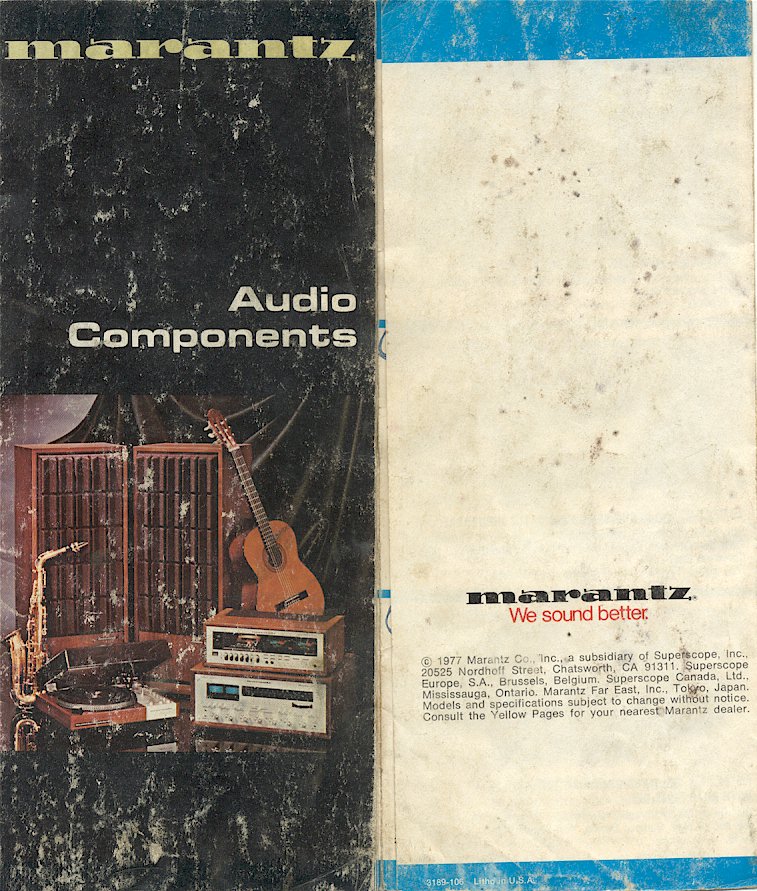
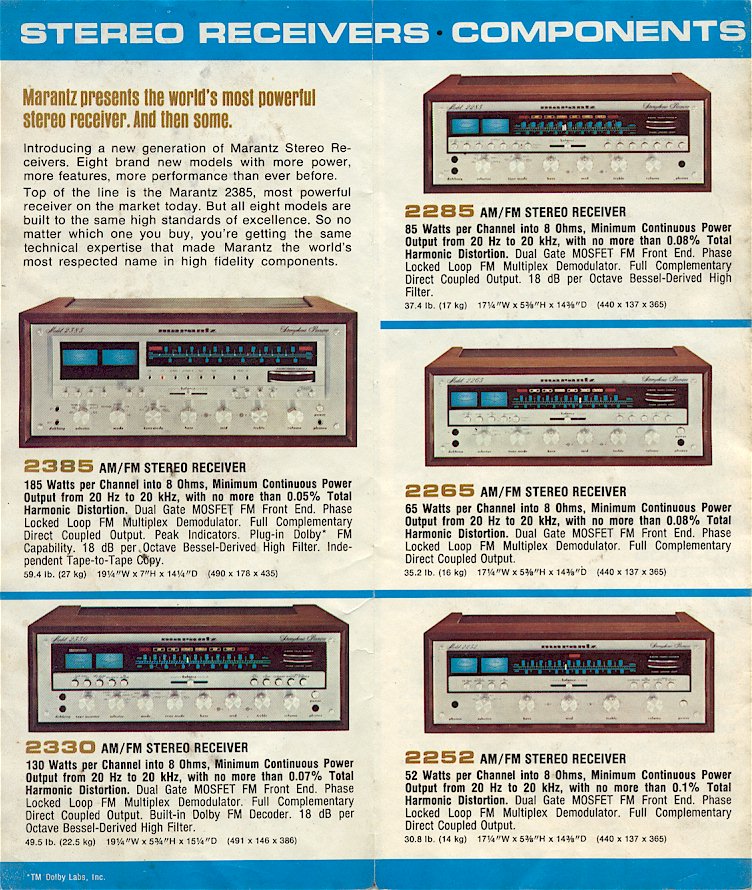
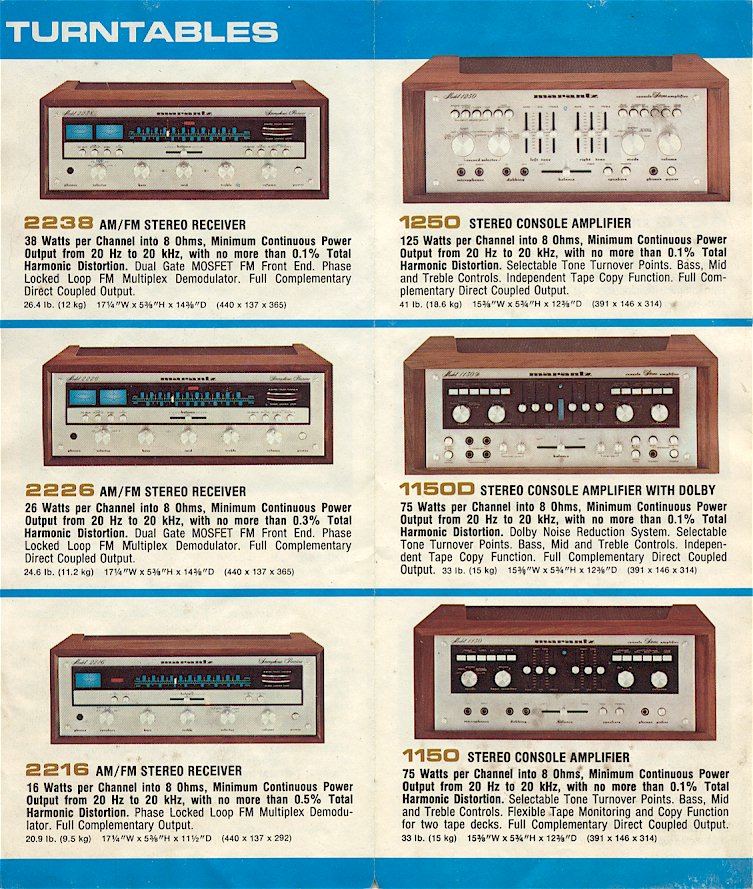
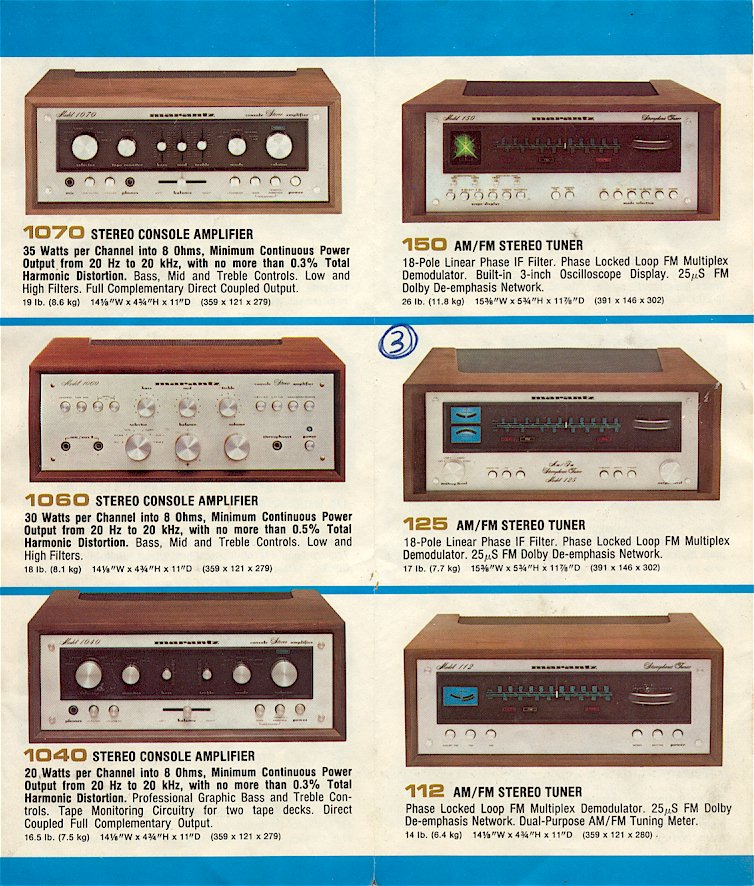
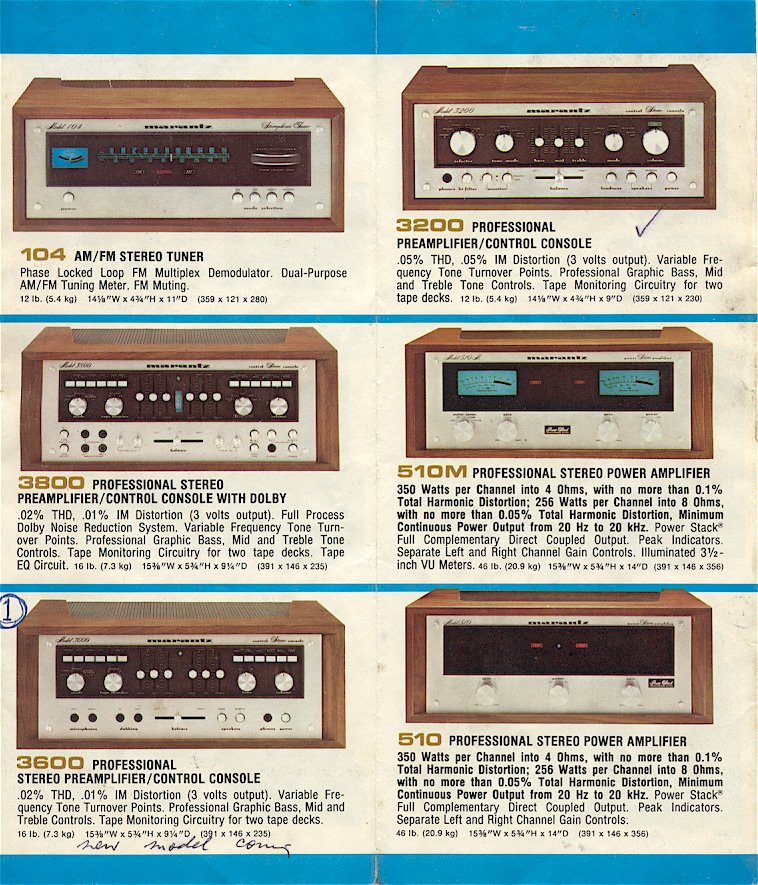
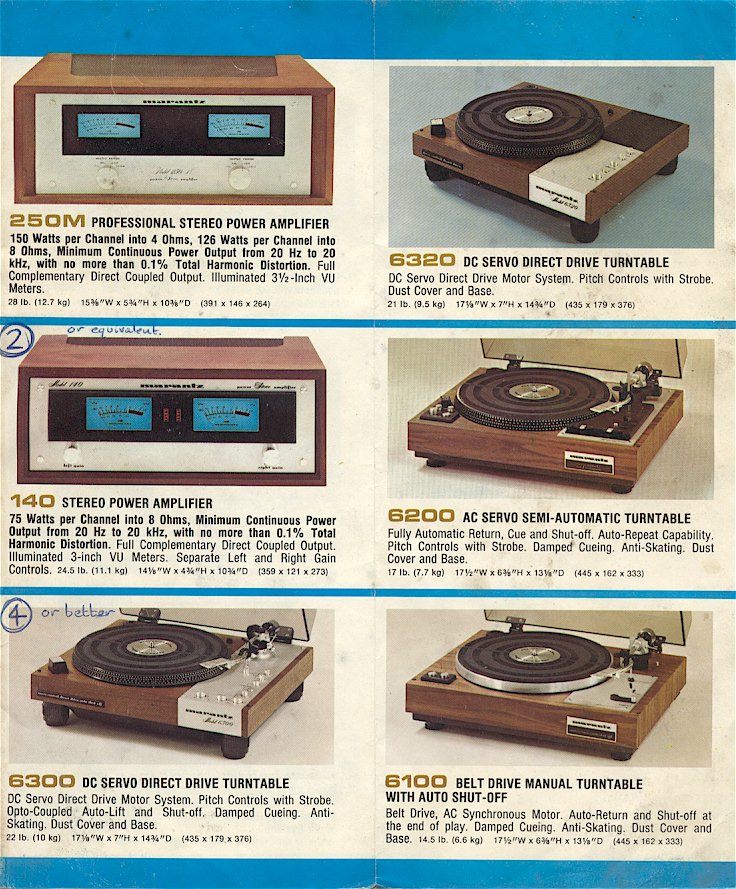
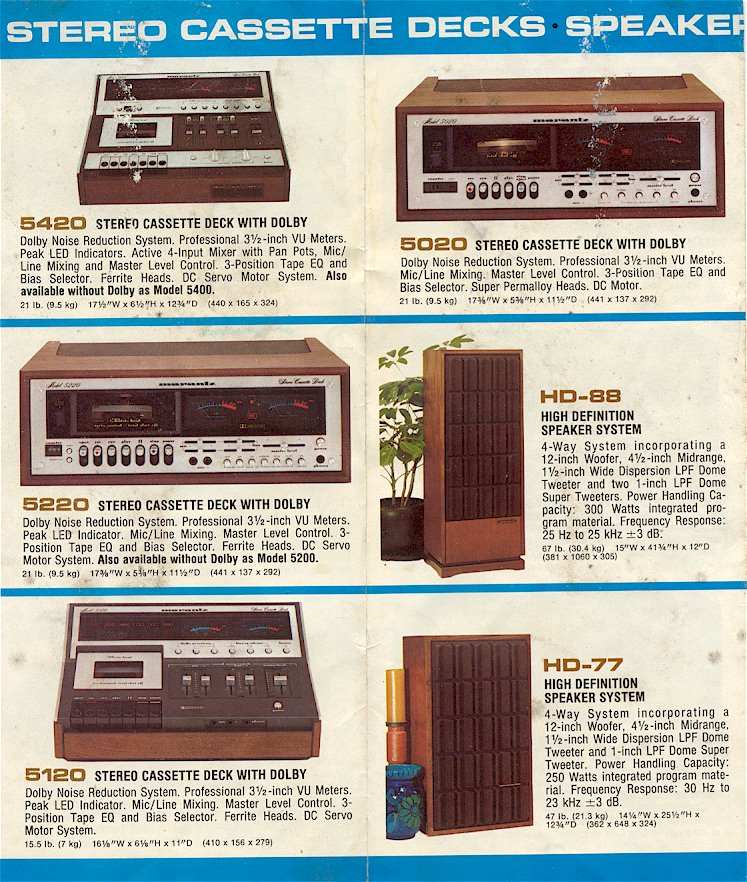
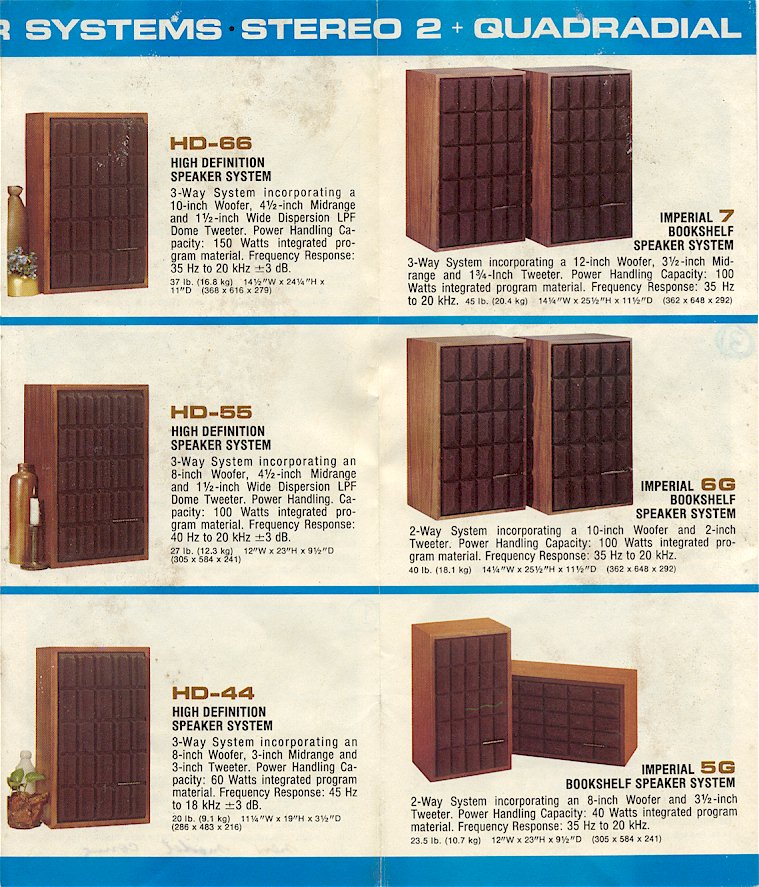
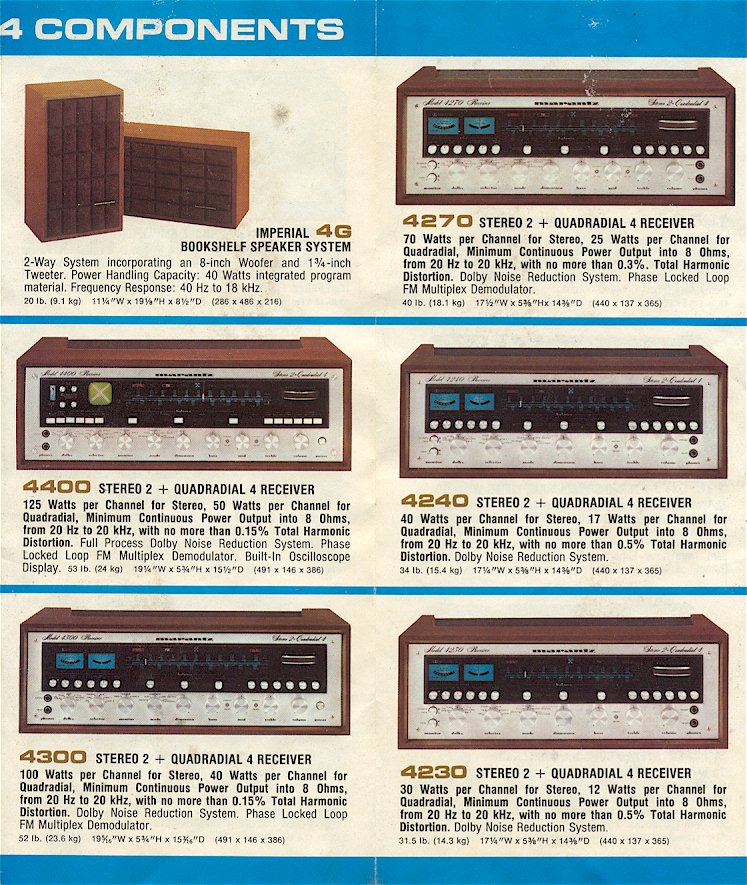
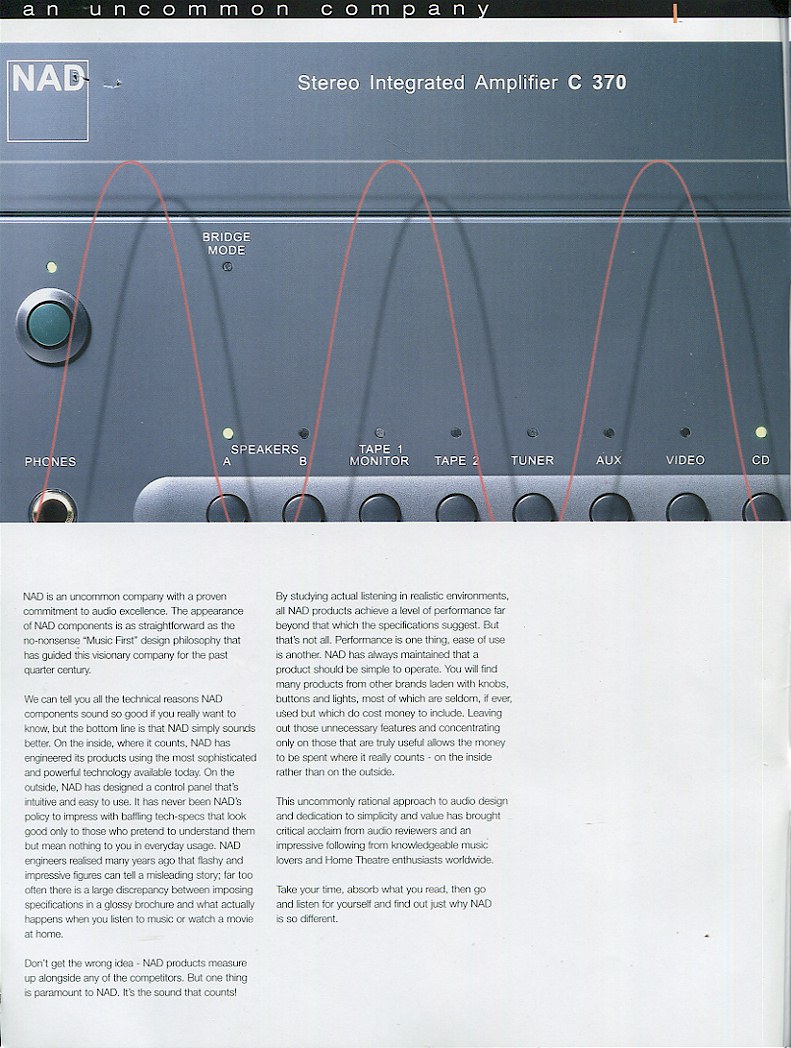
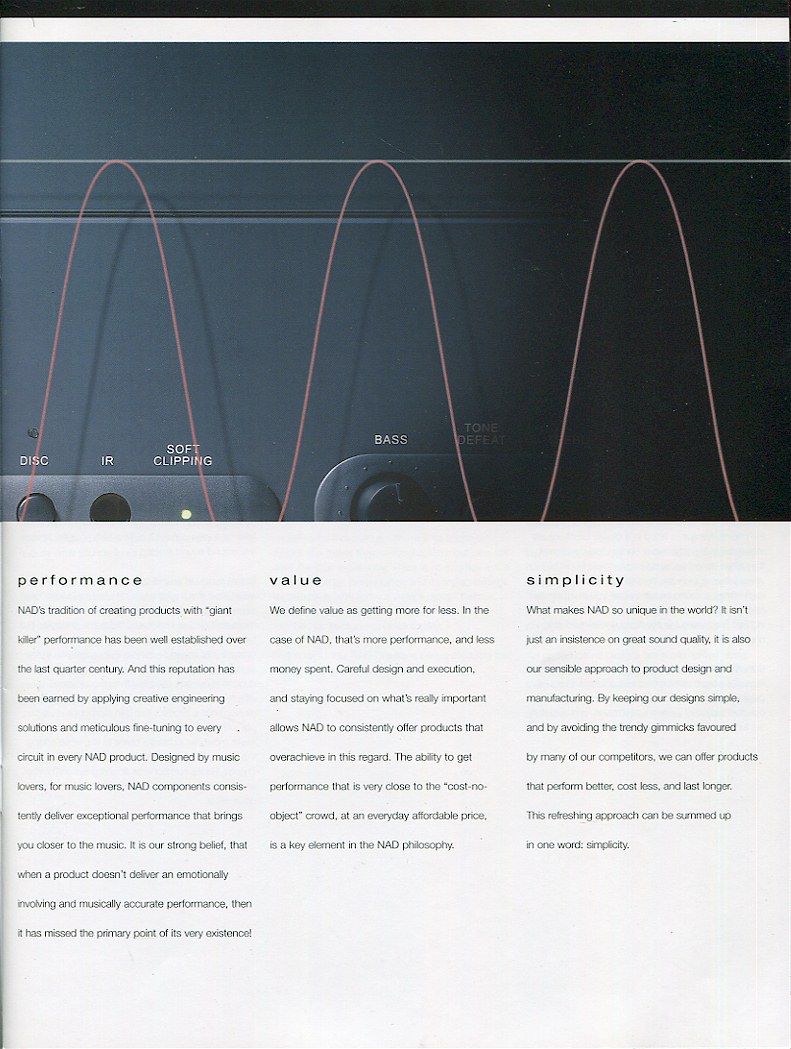
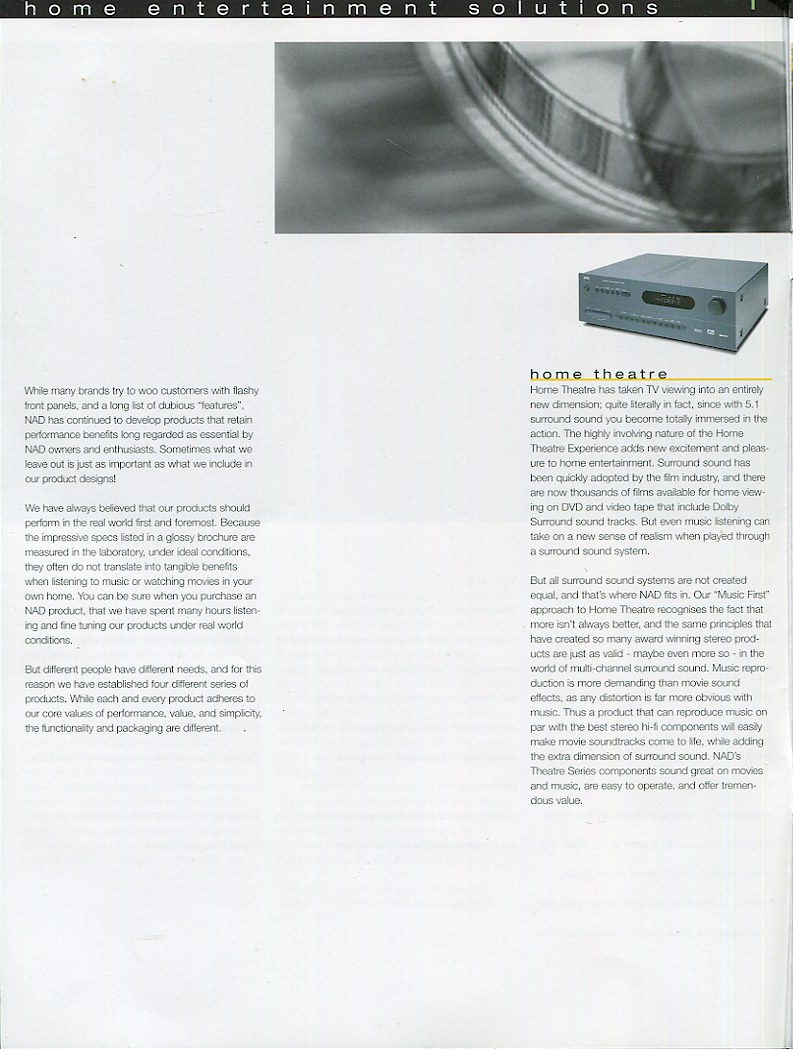
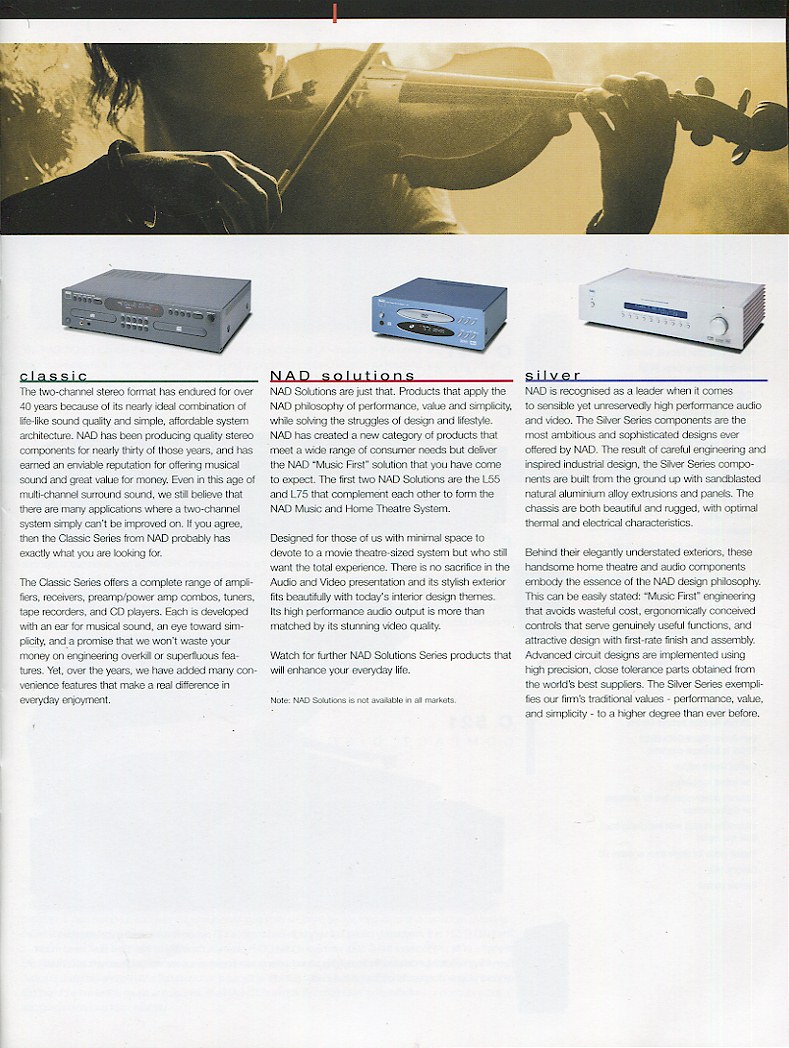
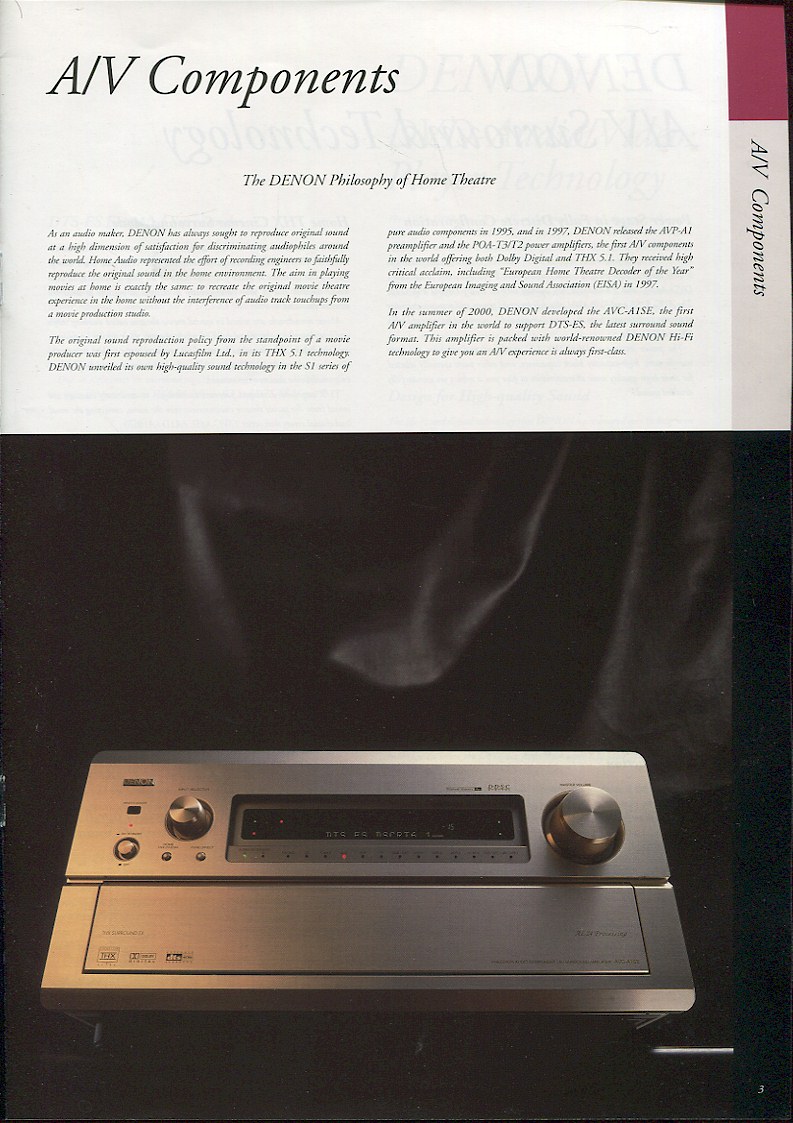
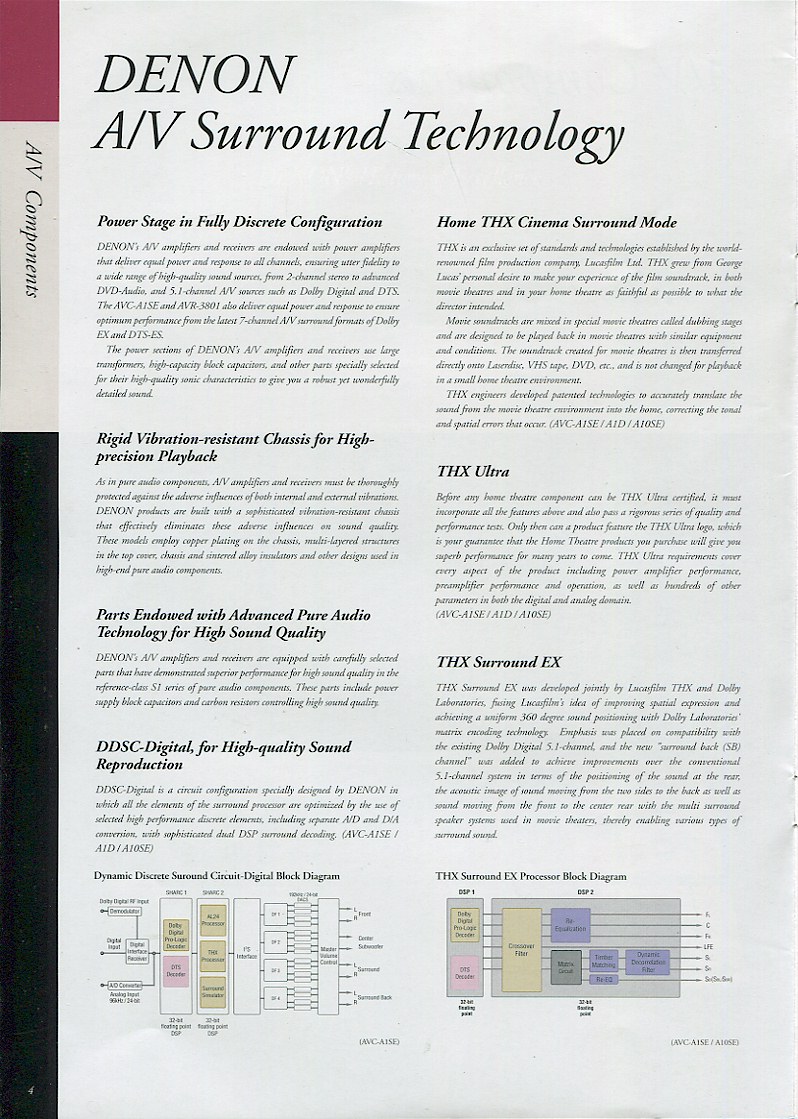
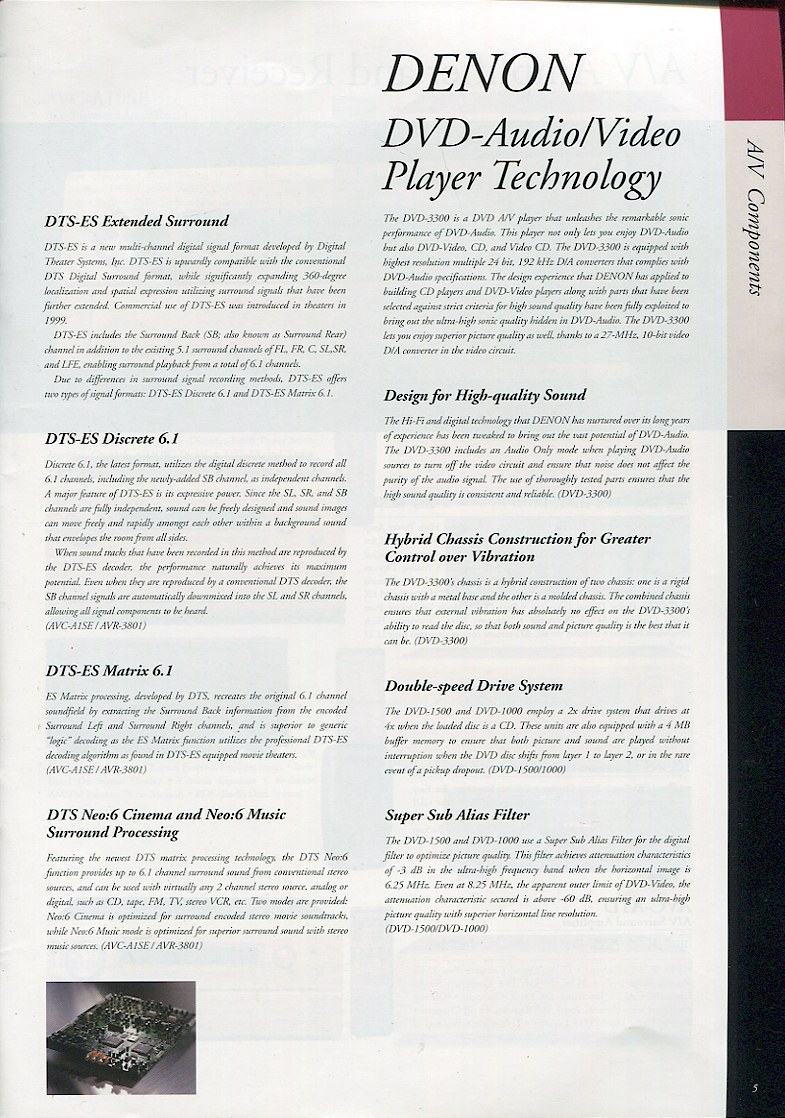
Scanned in November 2004, a 1977 folding advertising brochure of Marantz Hi-Fi components that was a major influence upon my decision to purchase a Marantz system between 1977-1981. Click the images to popup enlargements with an average size of about 750x880.

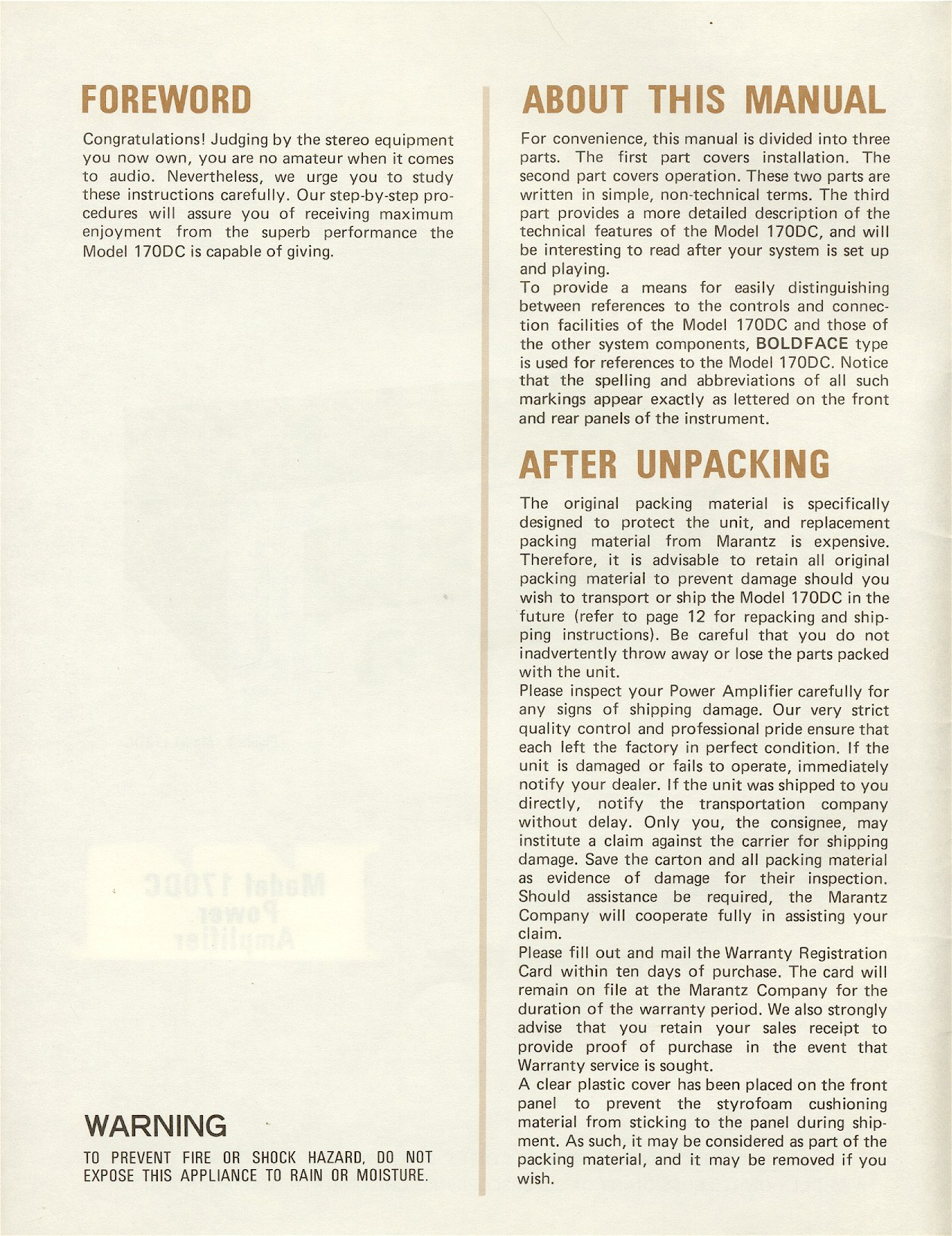
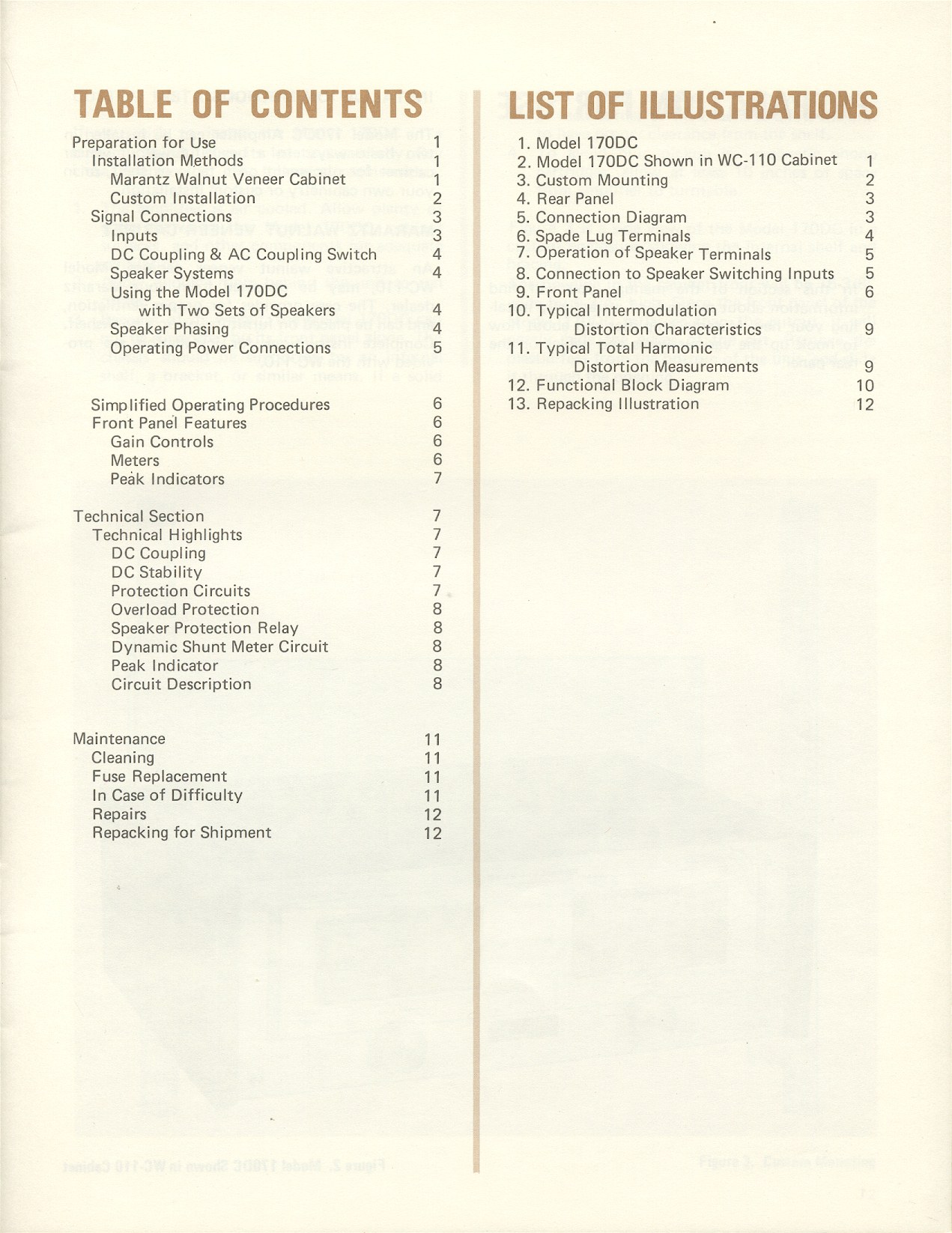
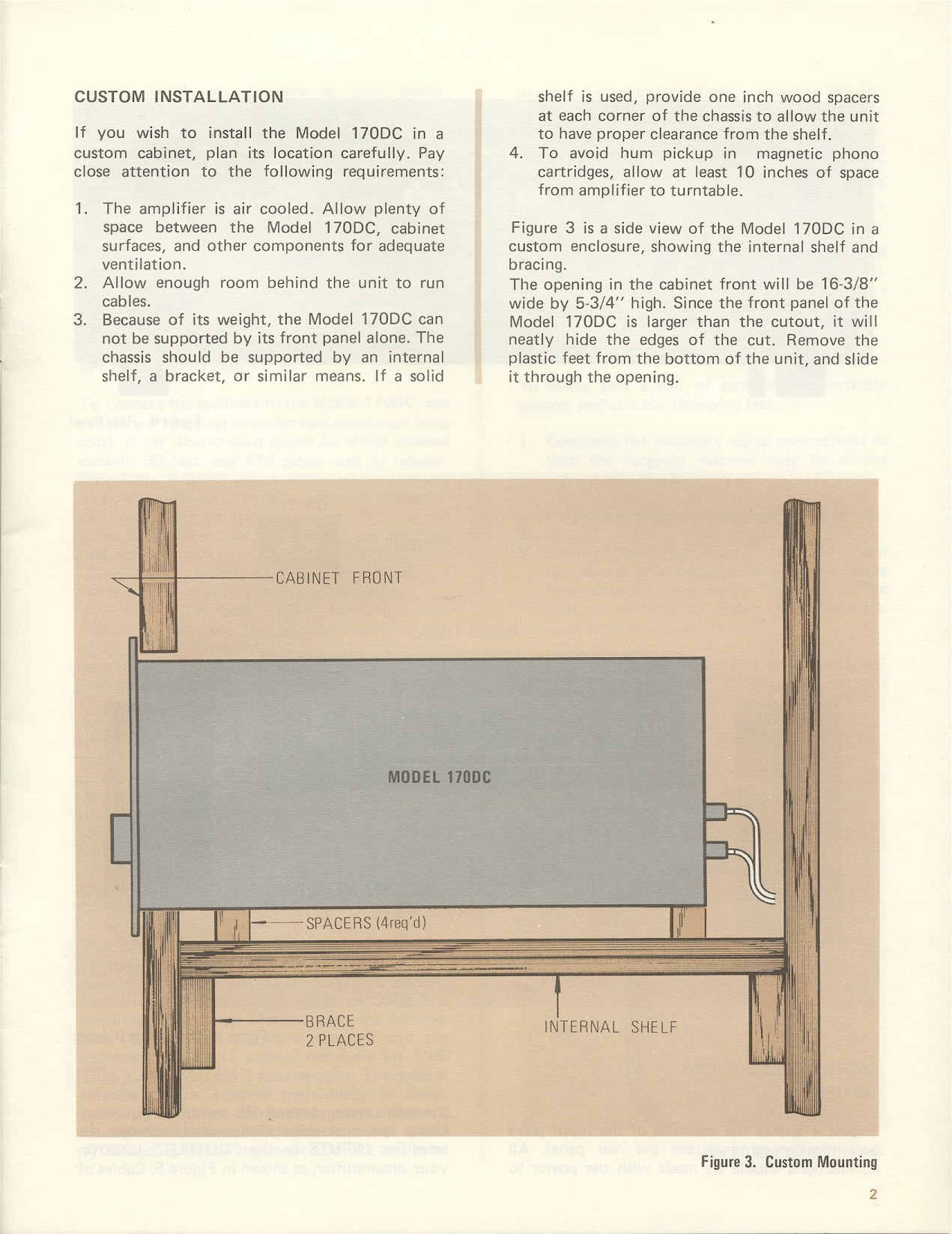
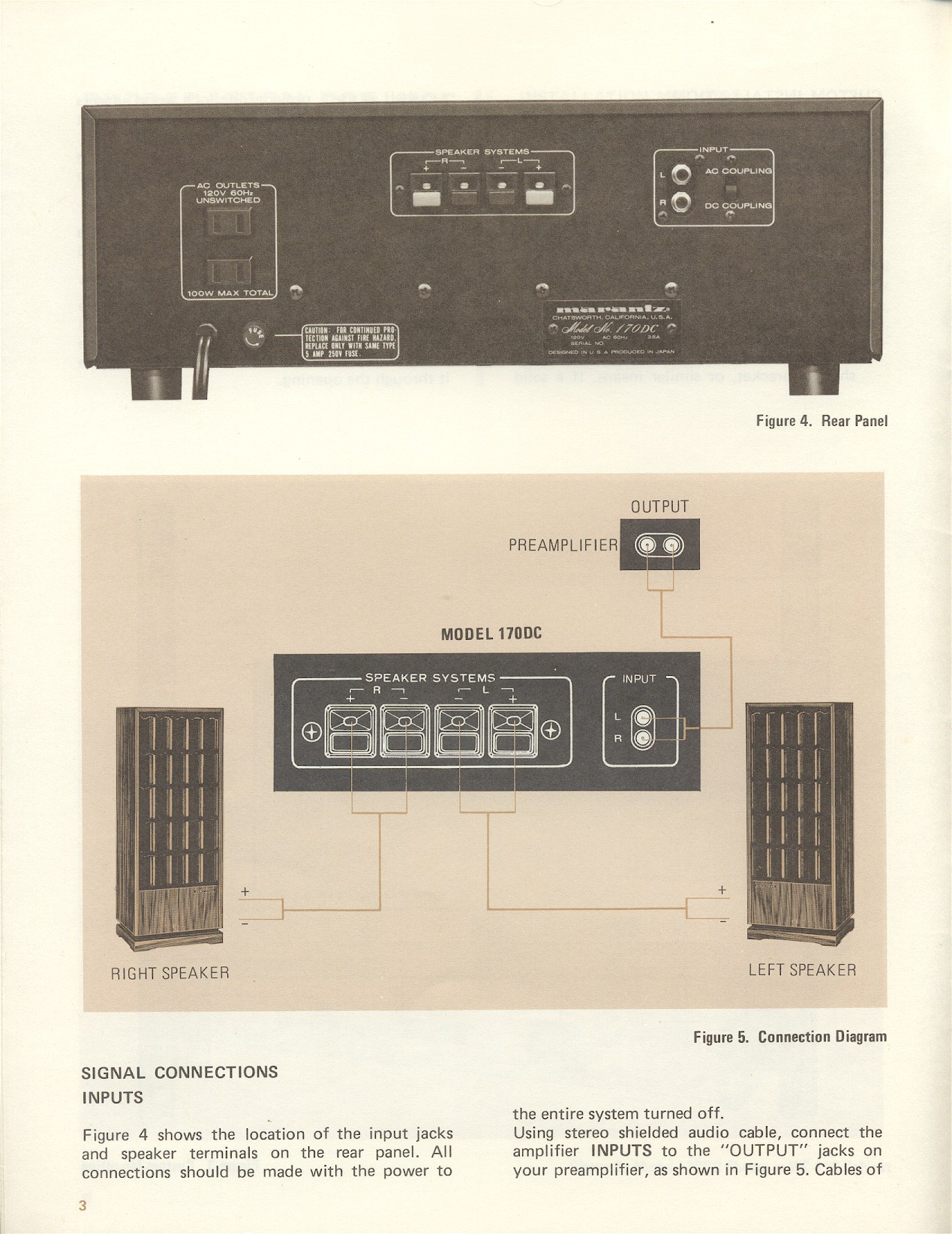
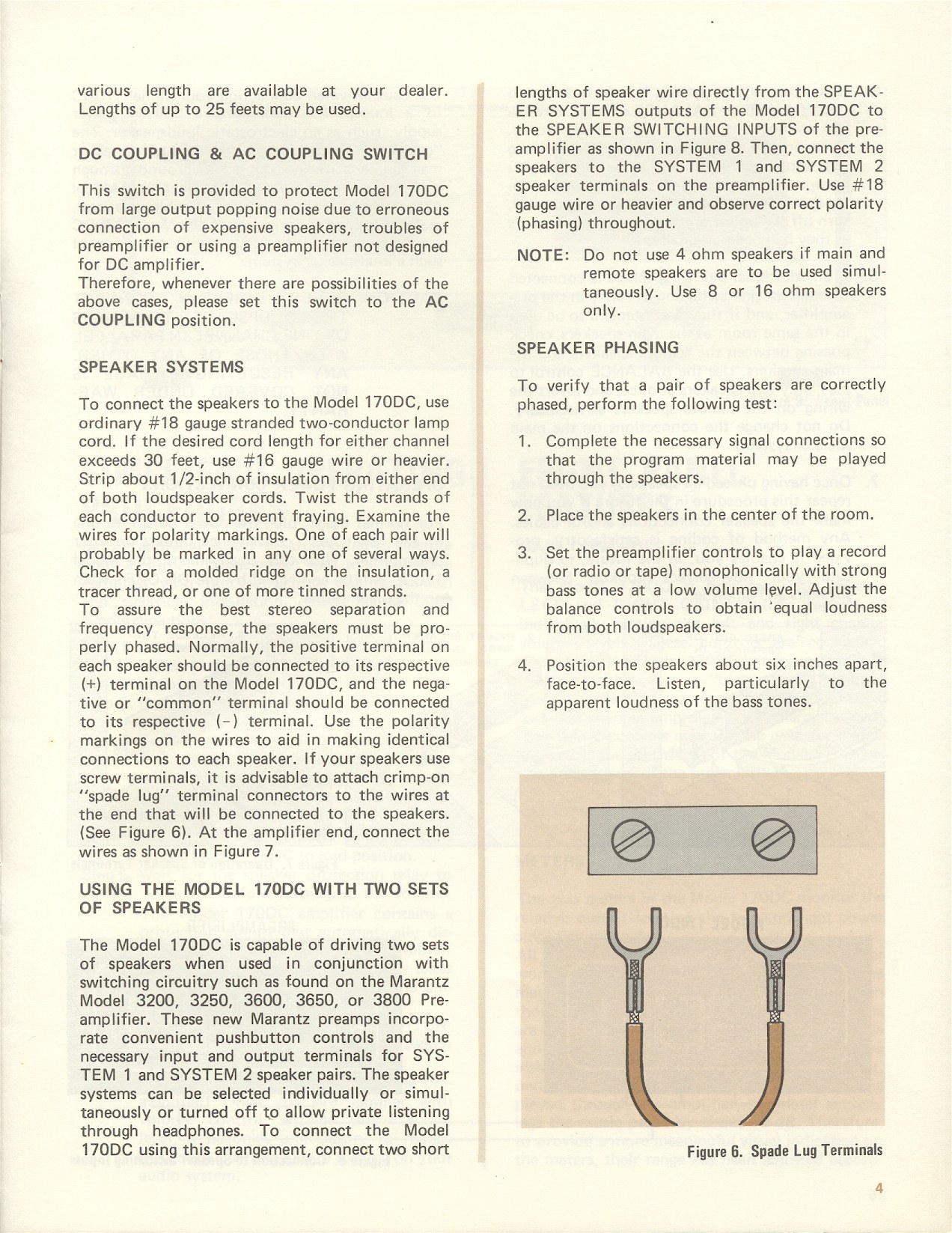
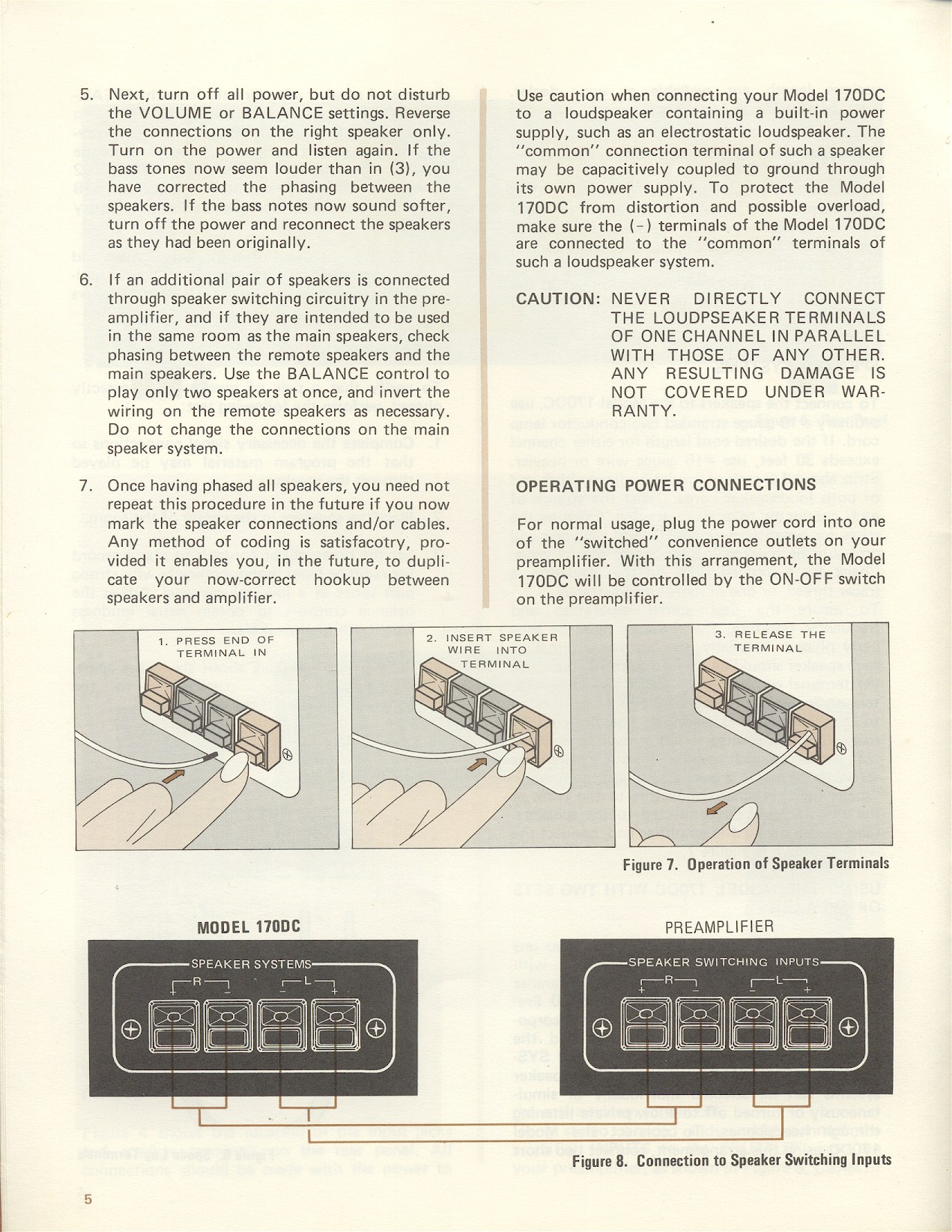
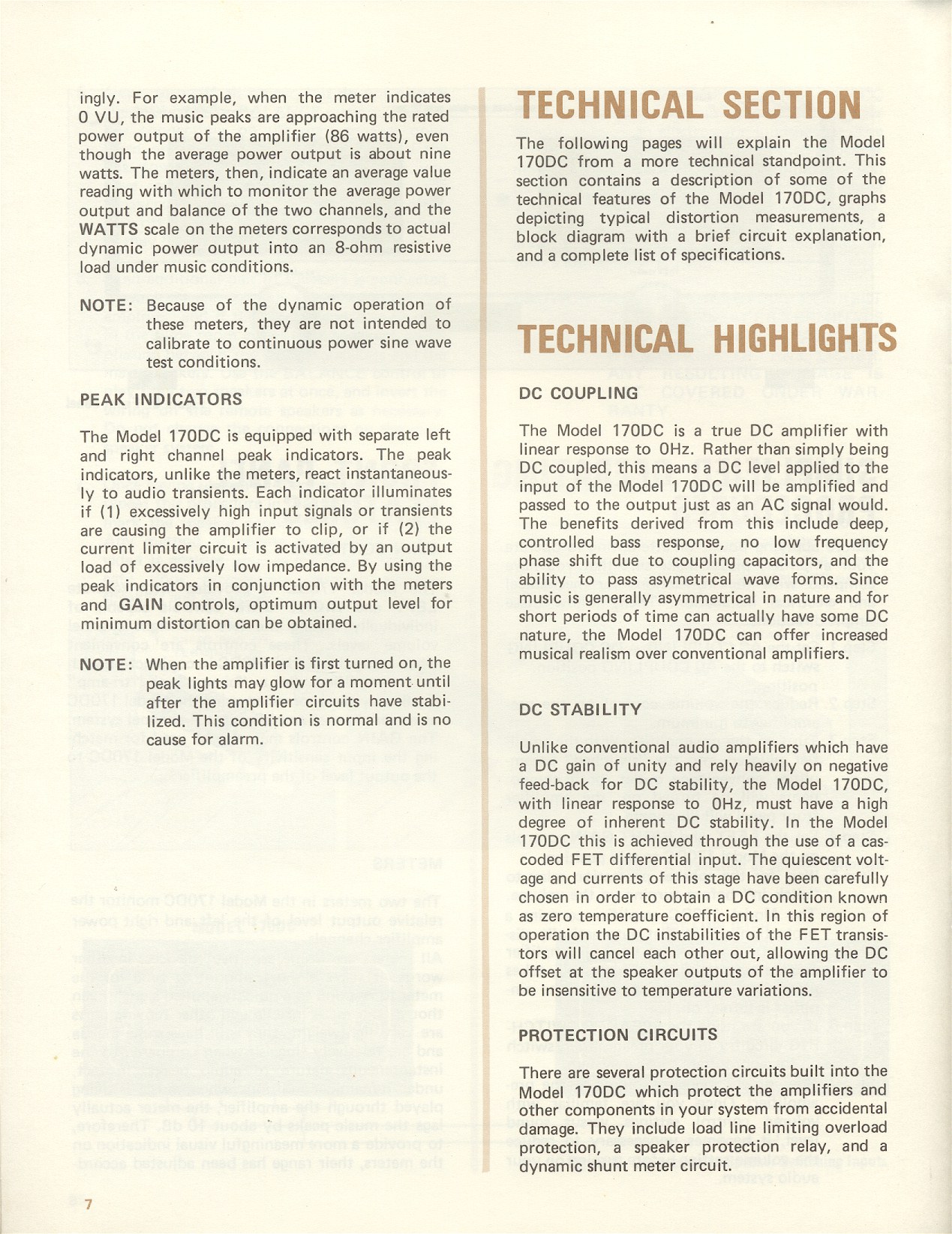
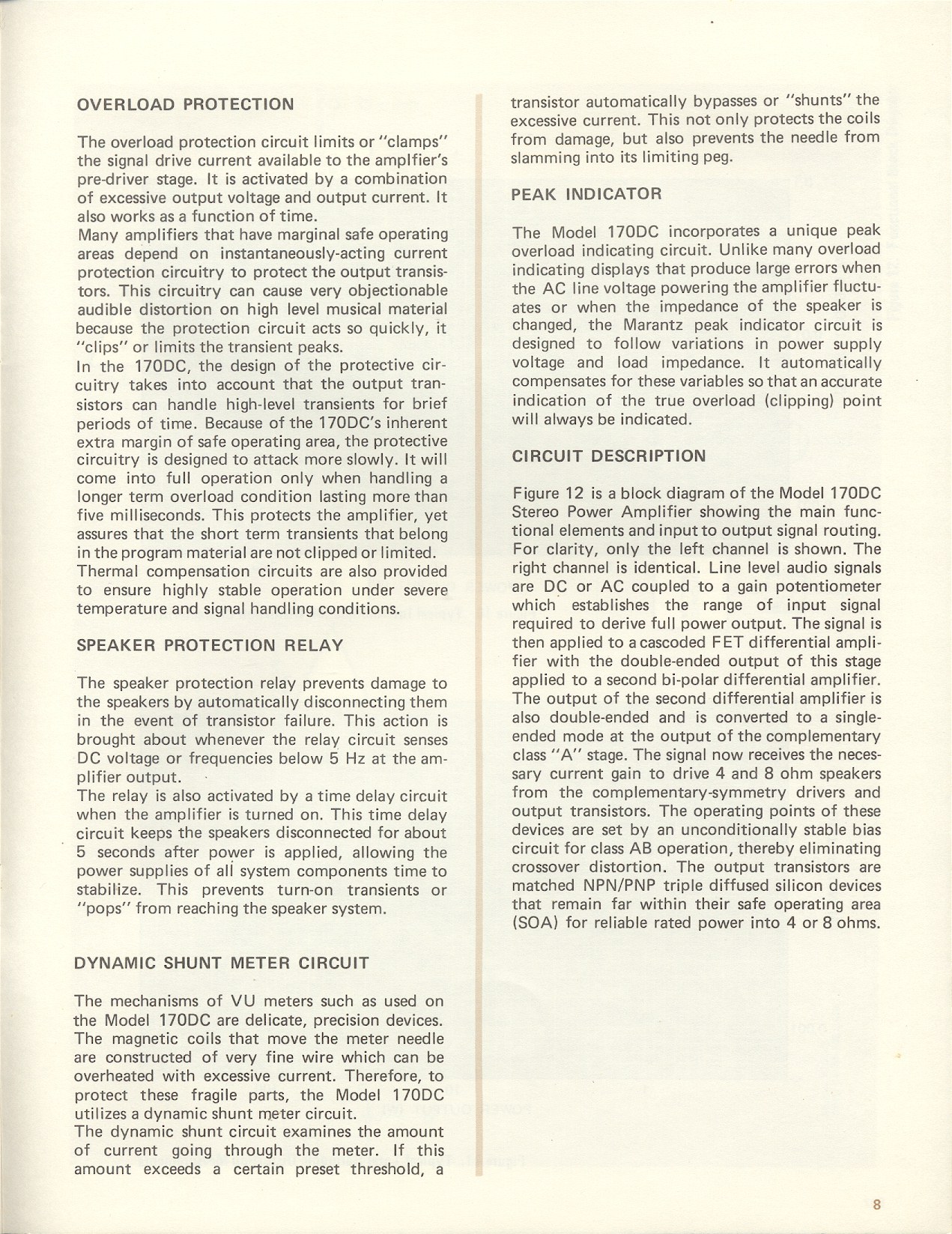
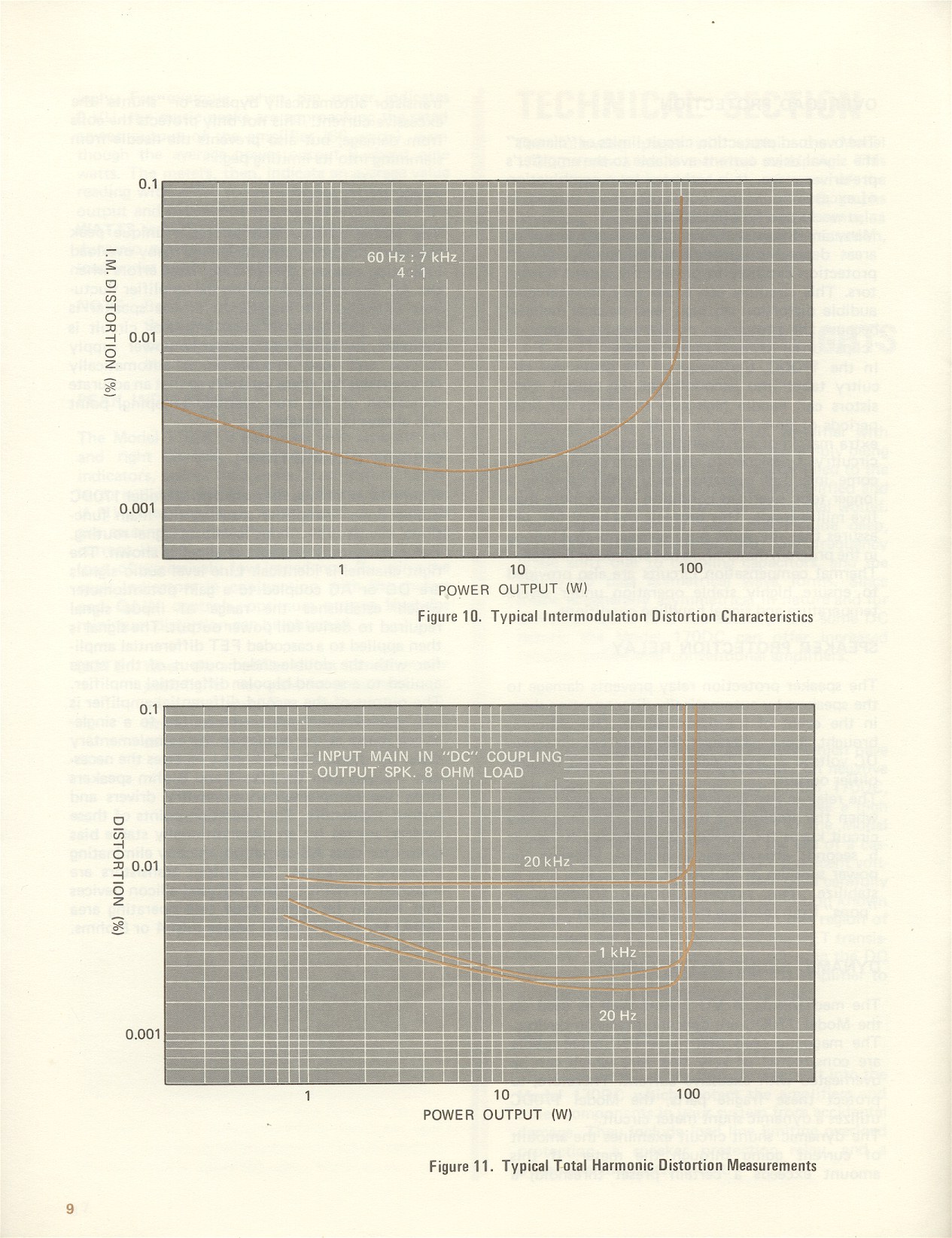
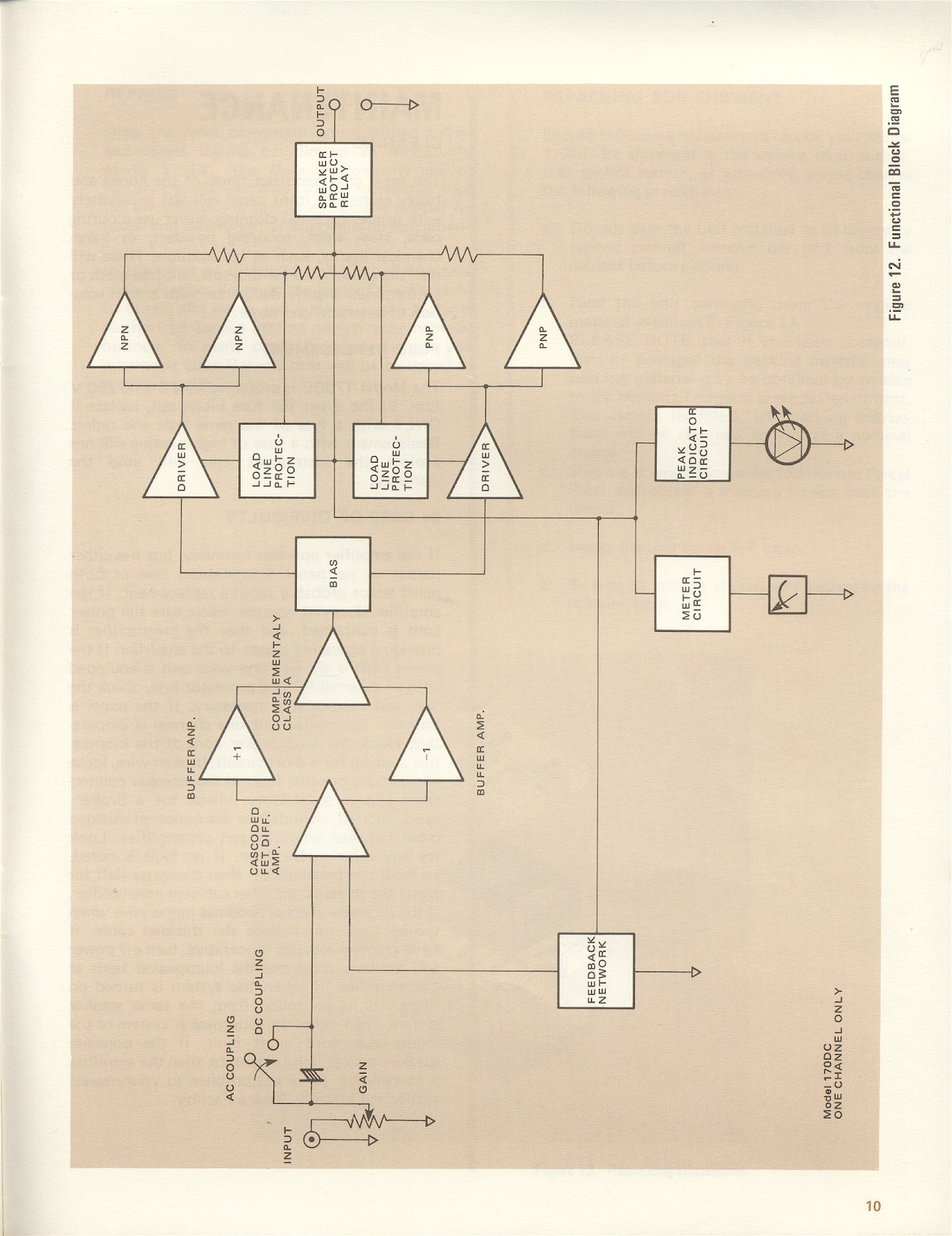
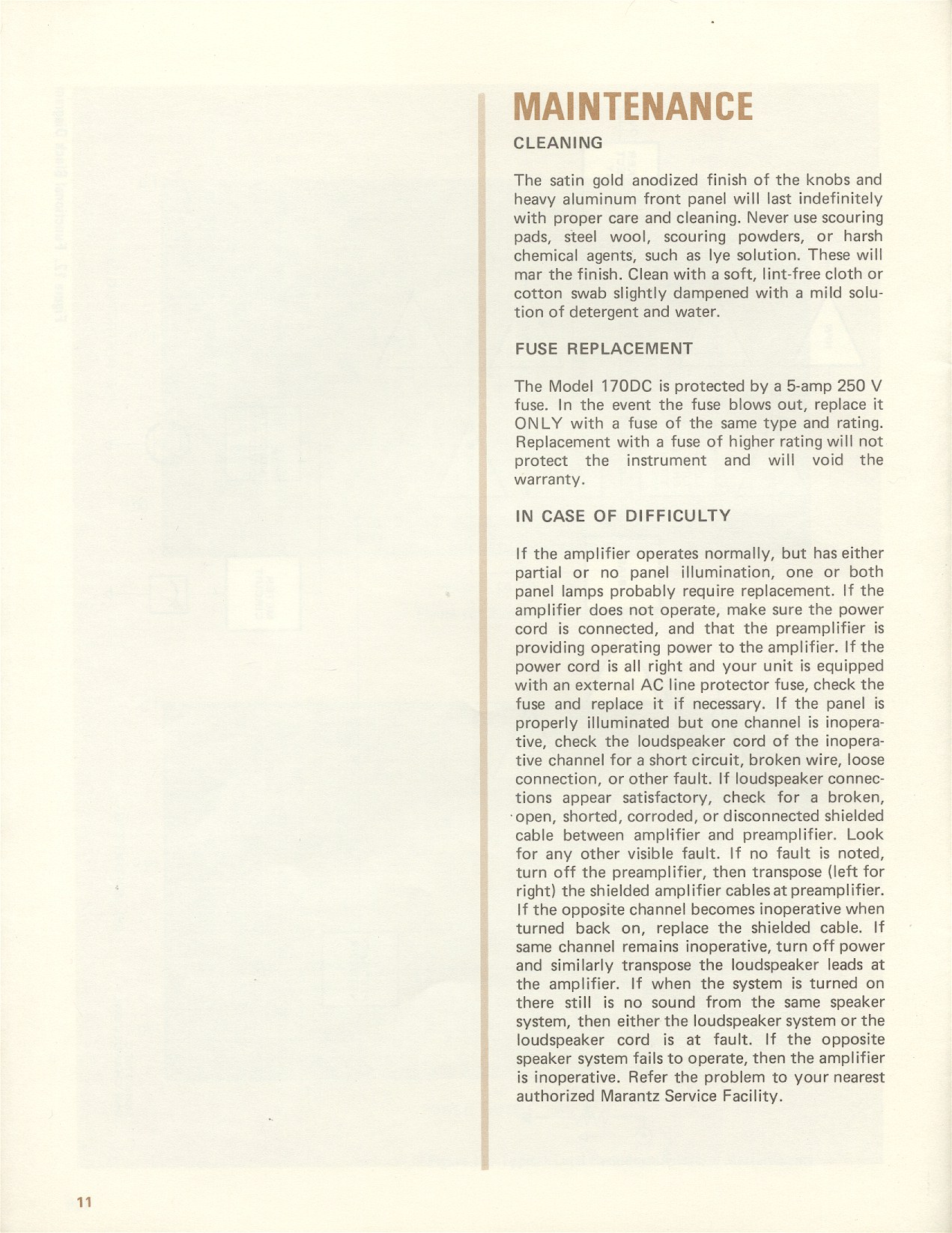
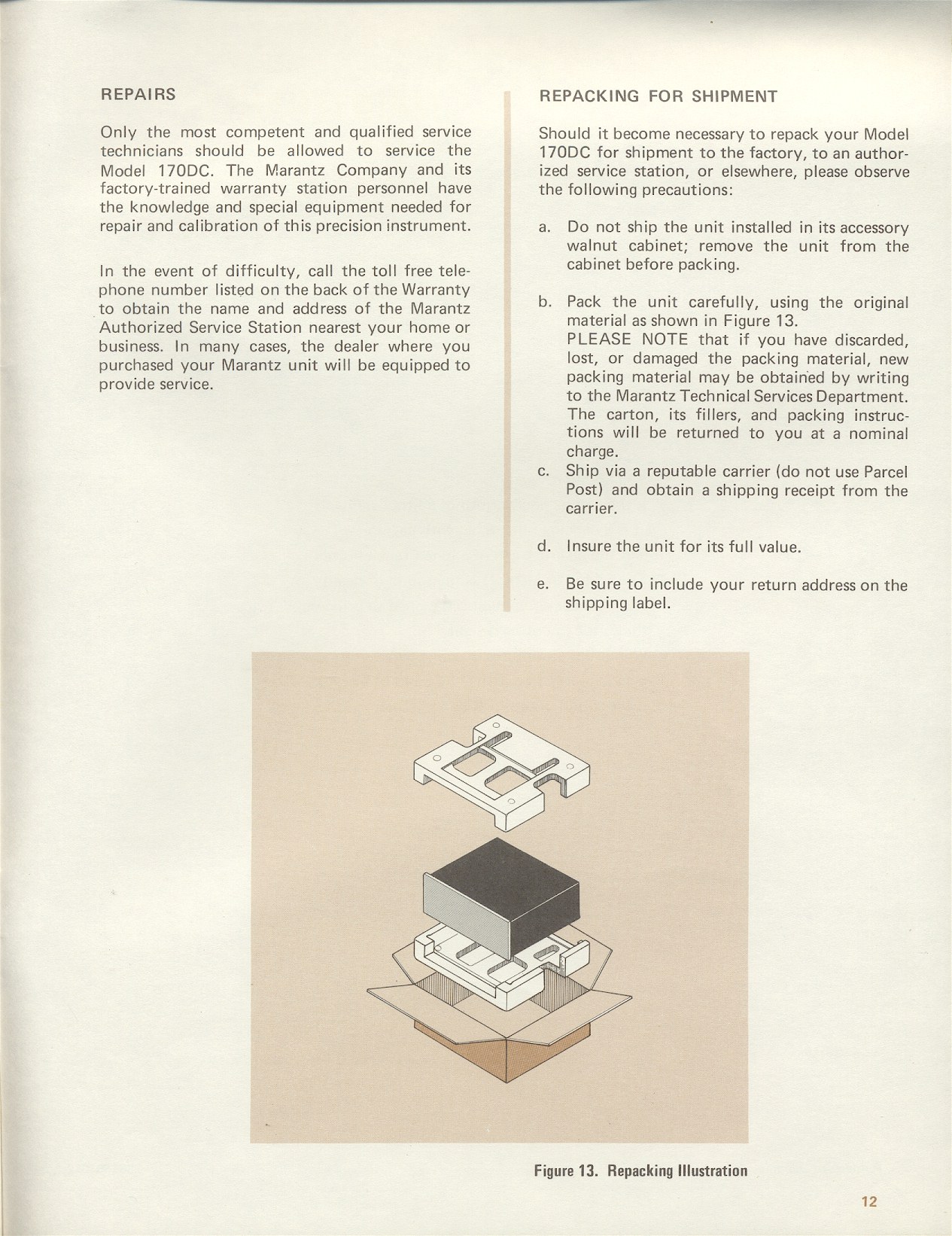
In February 2009 I scanned the 170DC Power Amplifier manual so a collector in Germany could download the following images. WARNING -- Clicking the images will popup enlargements that have an average size of about 500KB and dimensions of about 1200x1600 pixels.


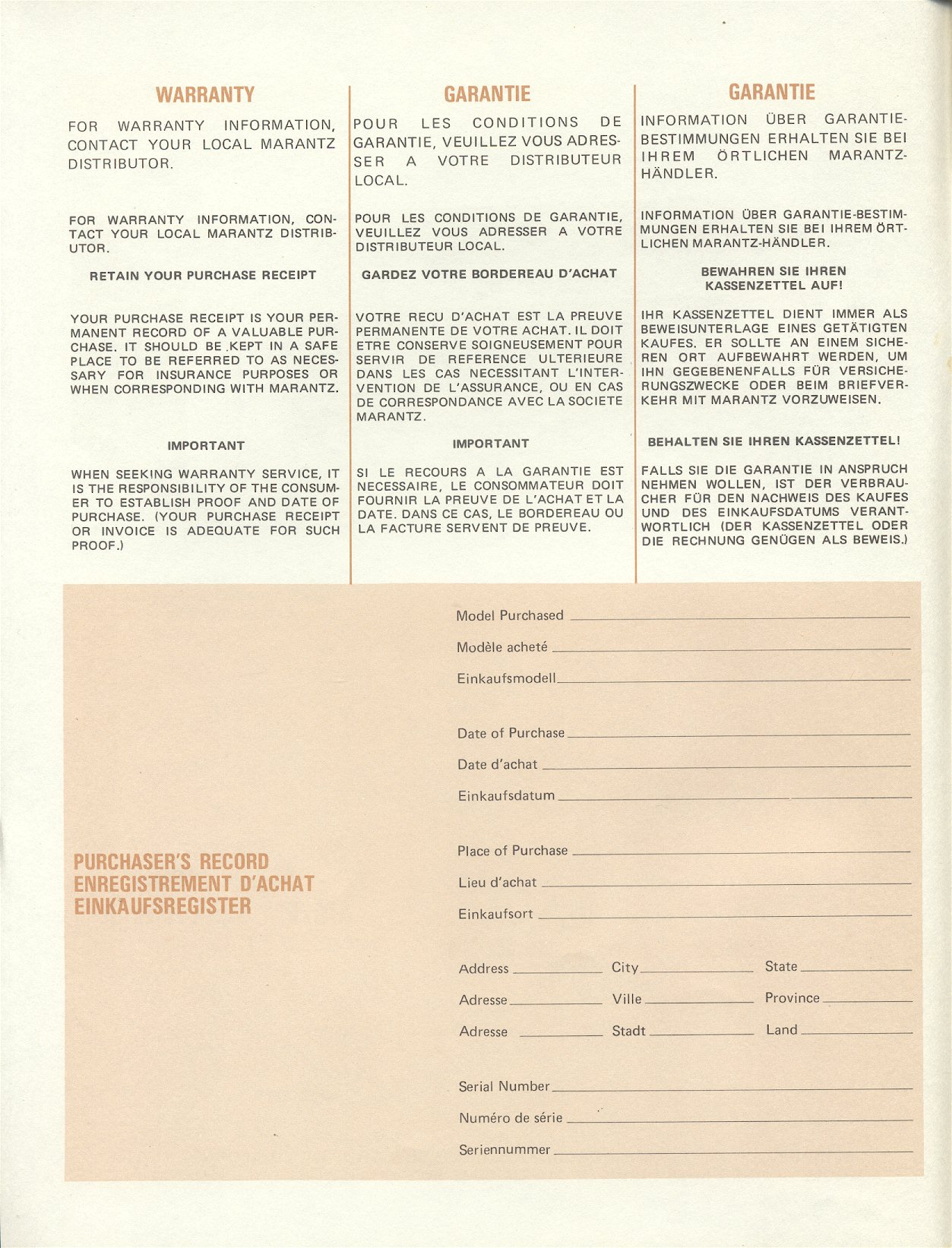
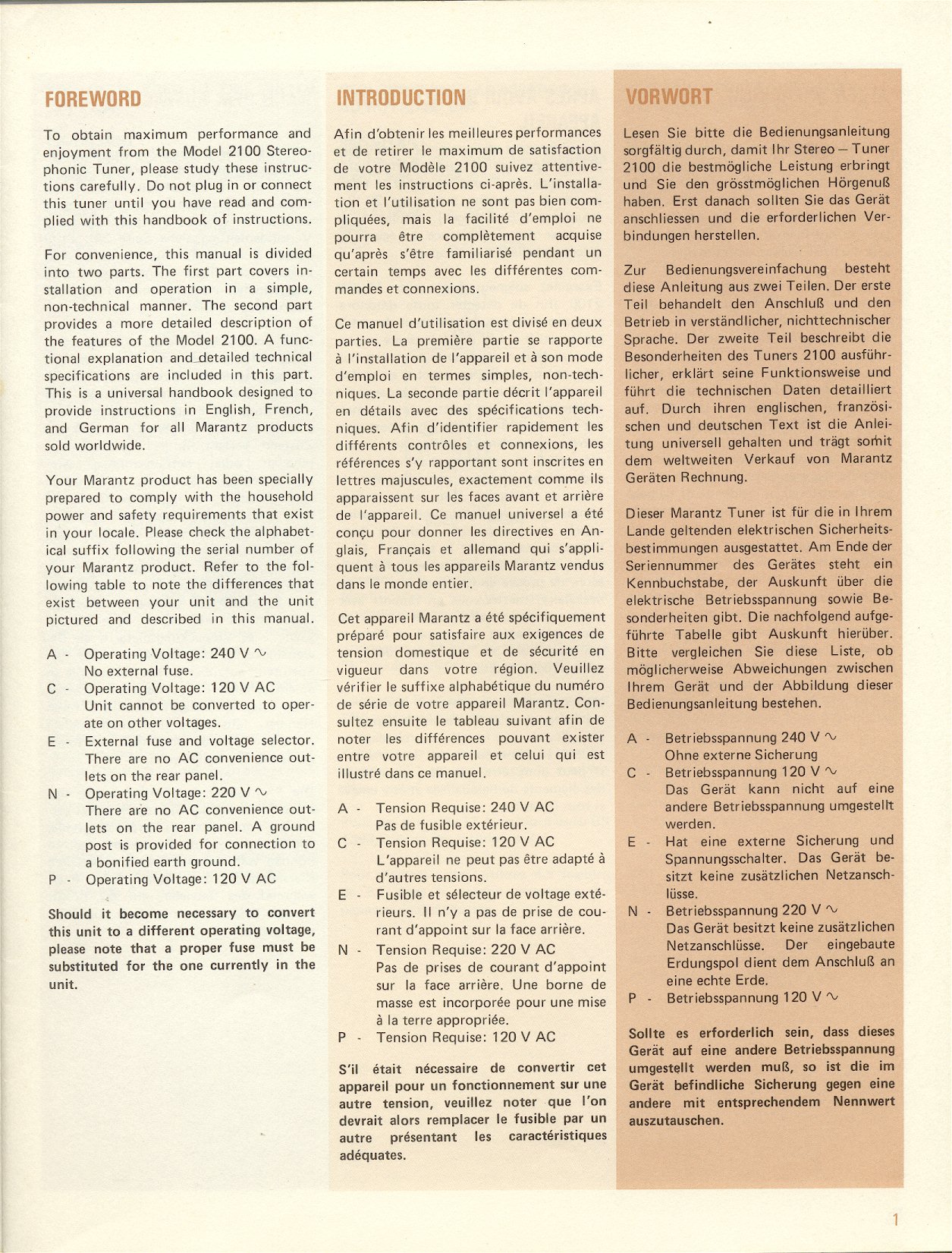
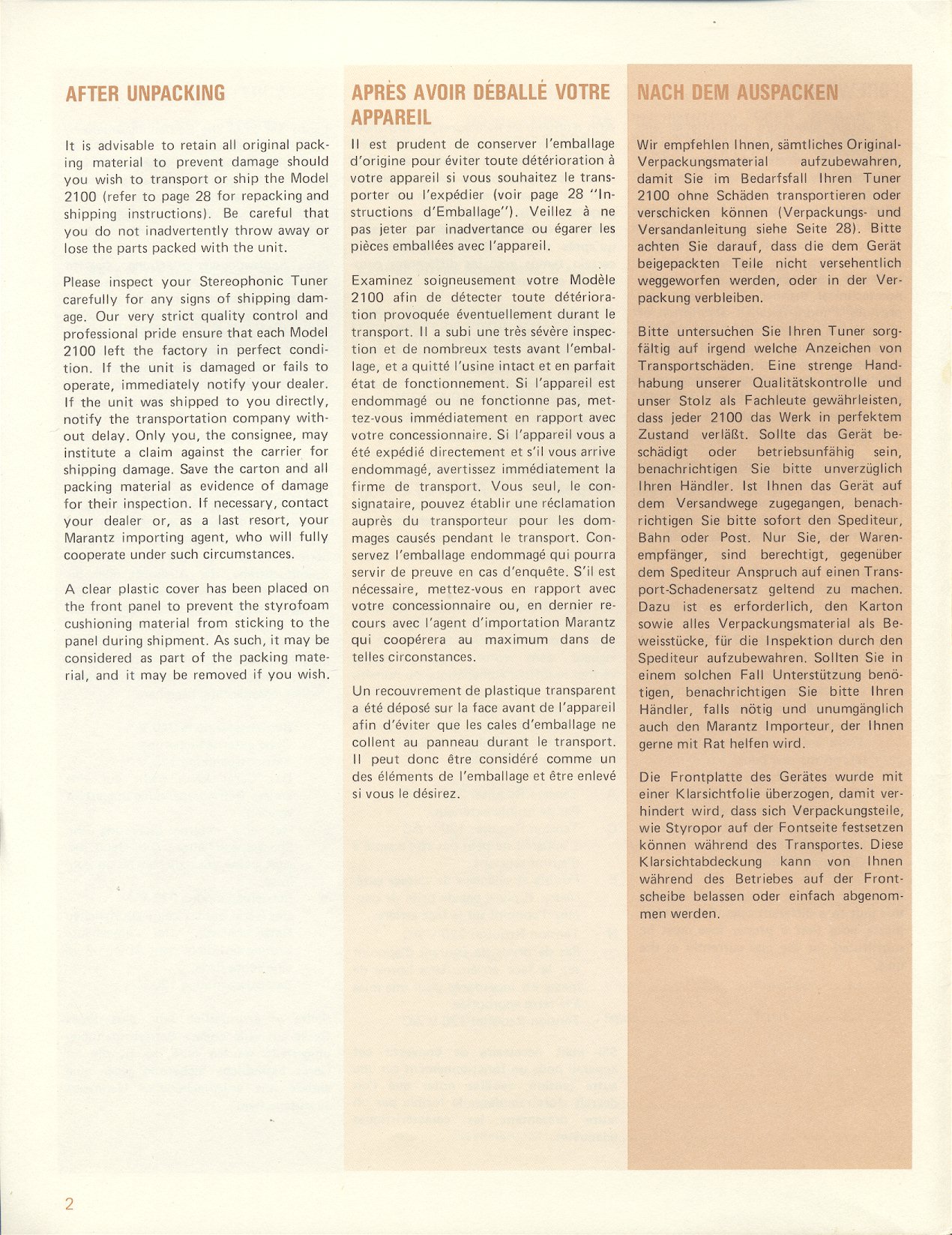
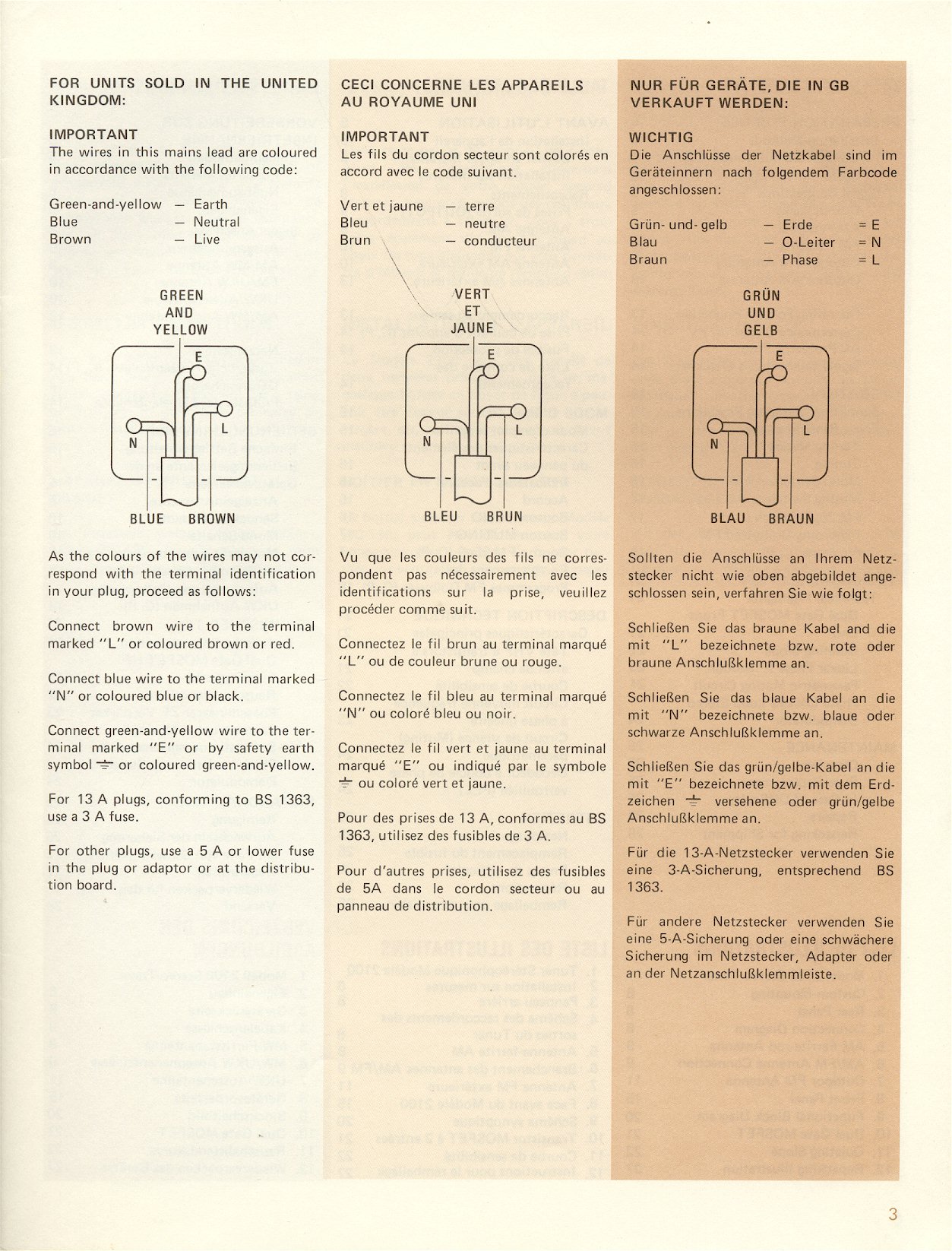
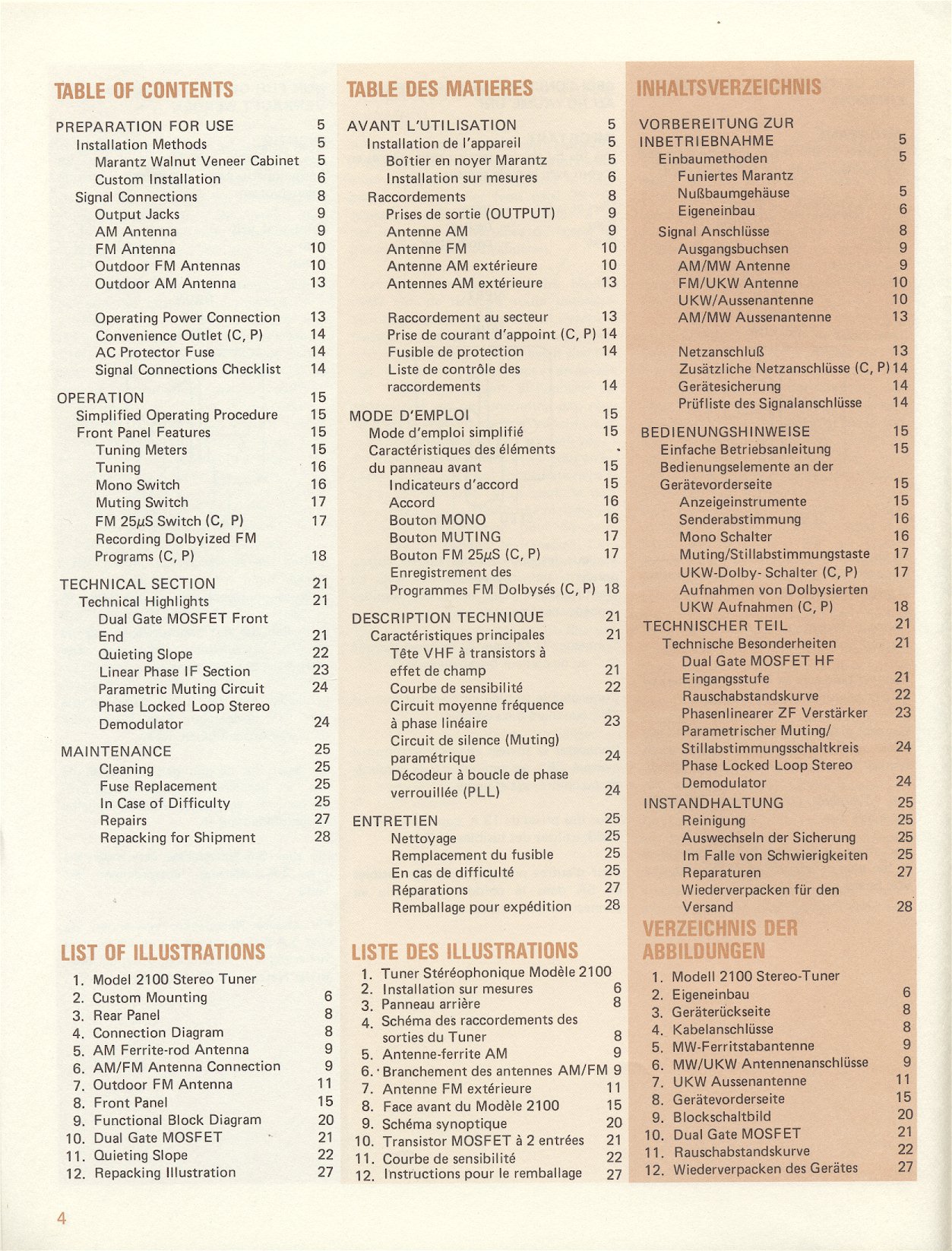
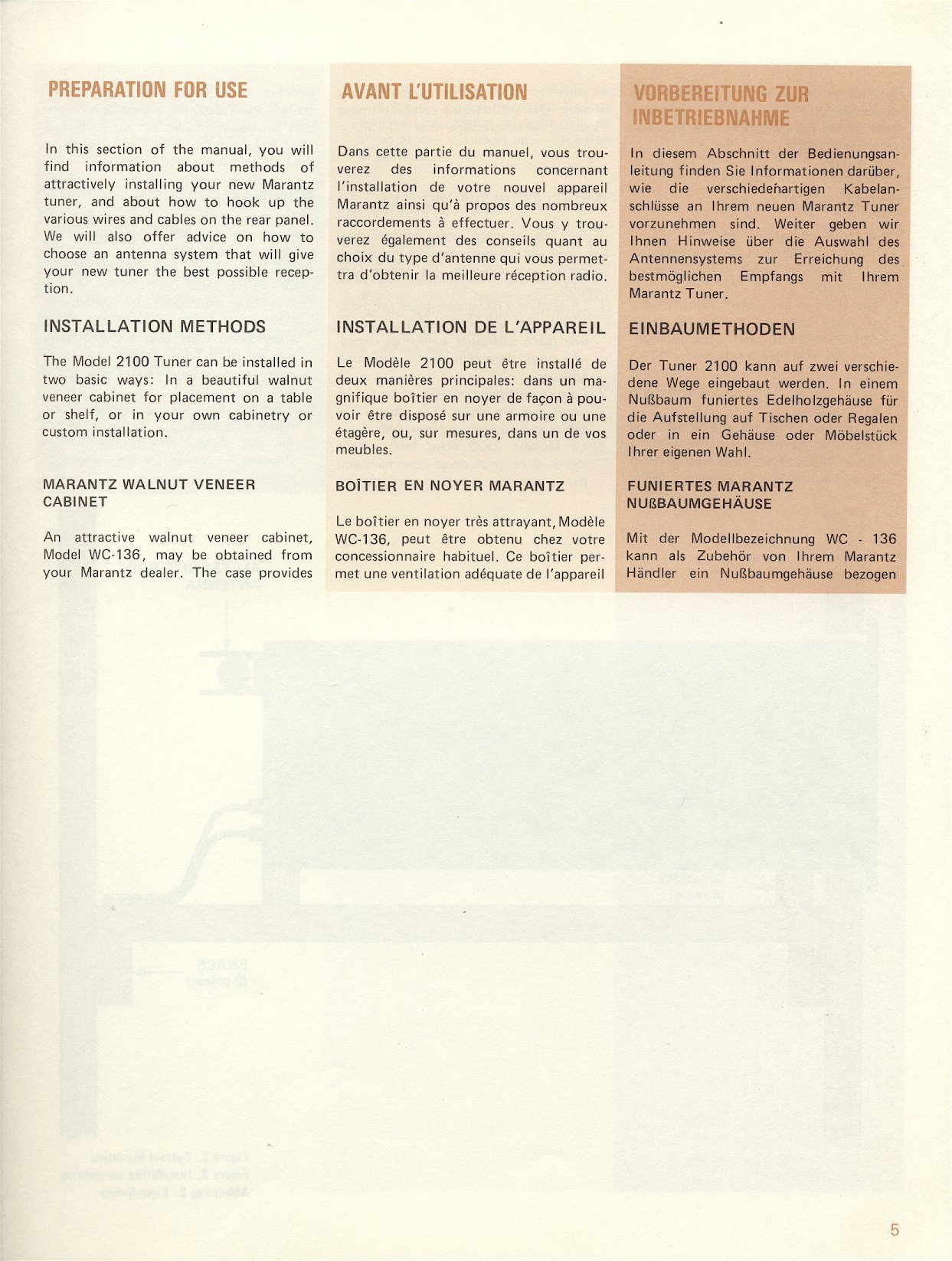
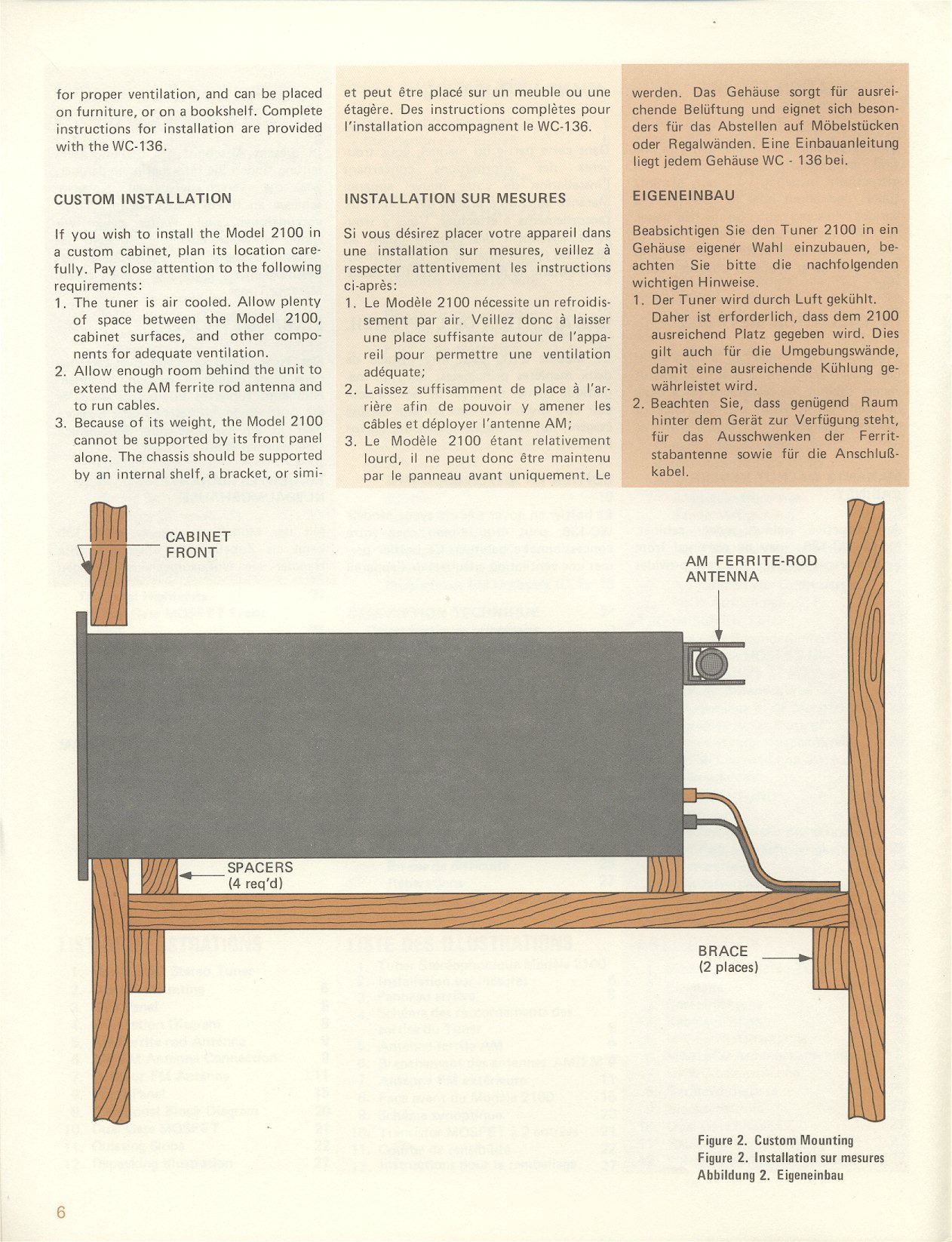
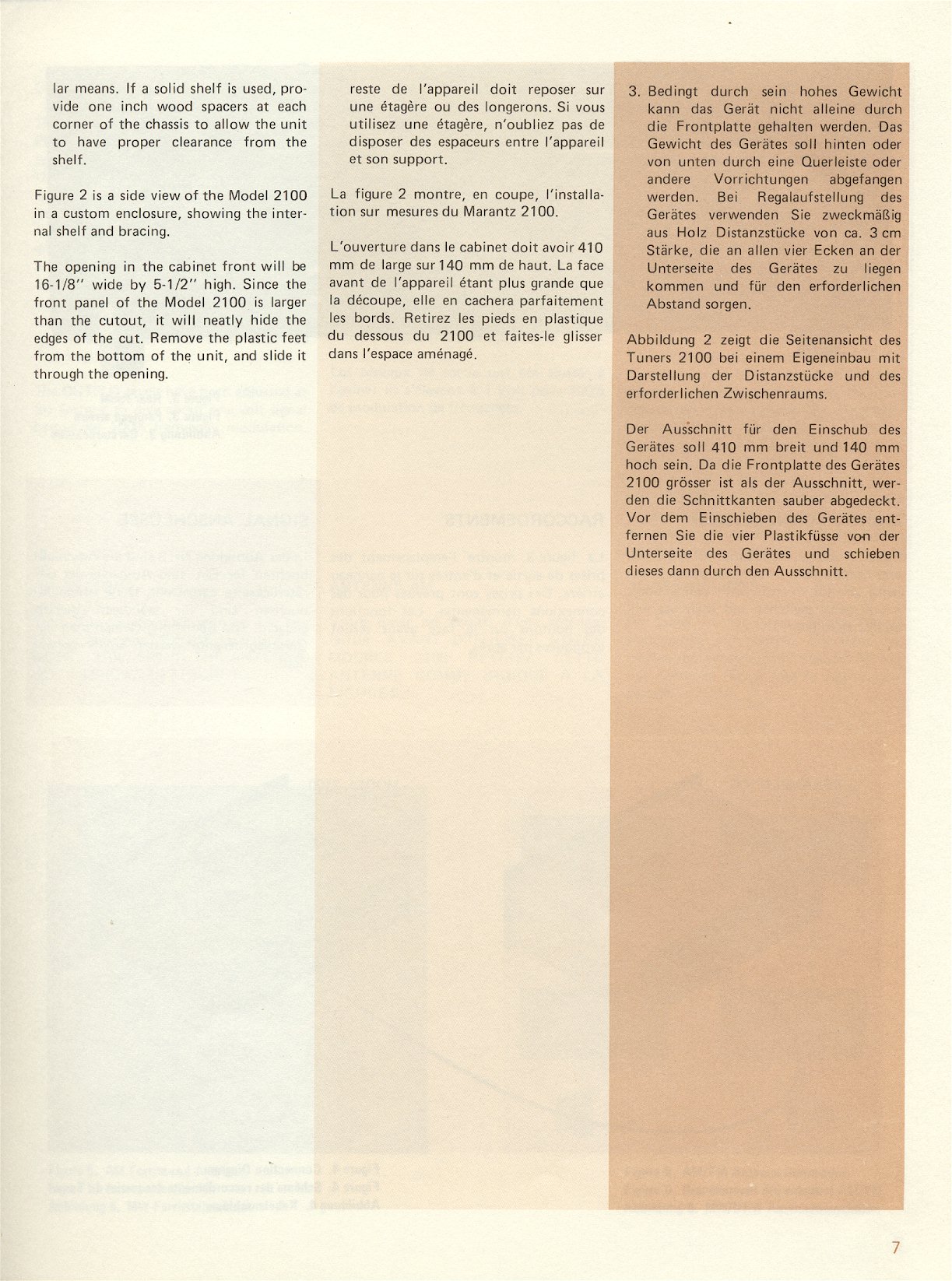
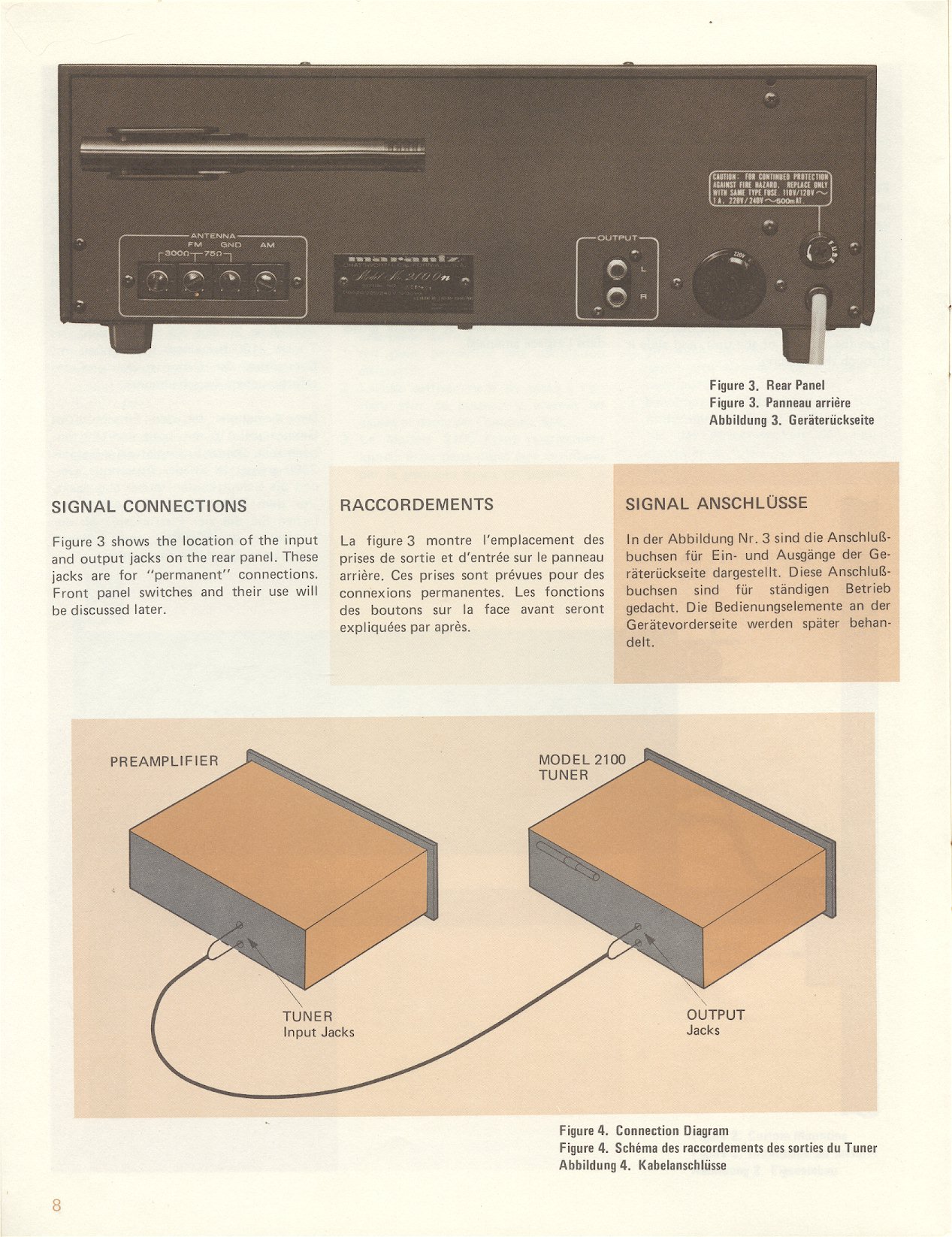
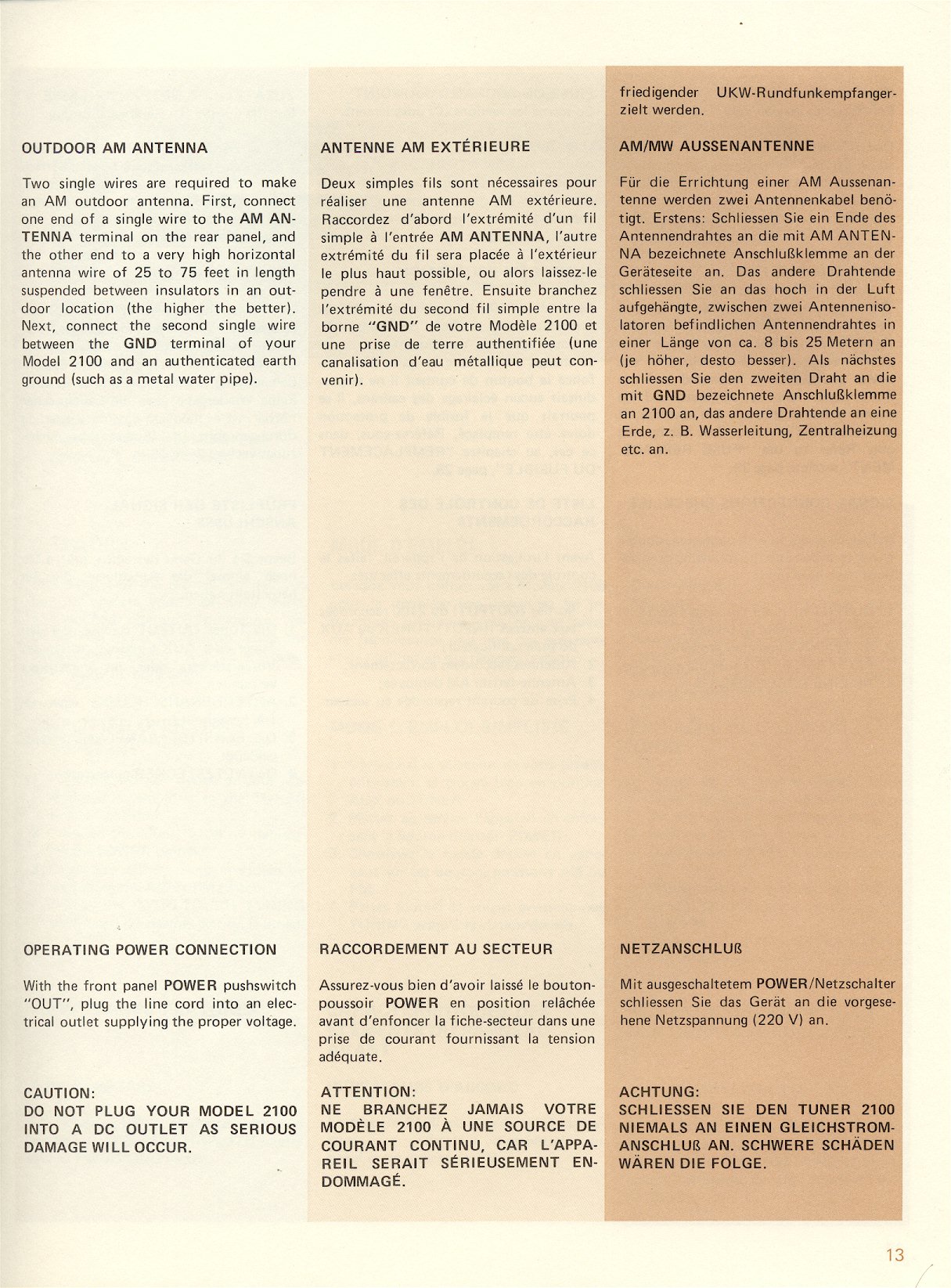
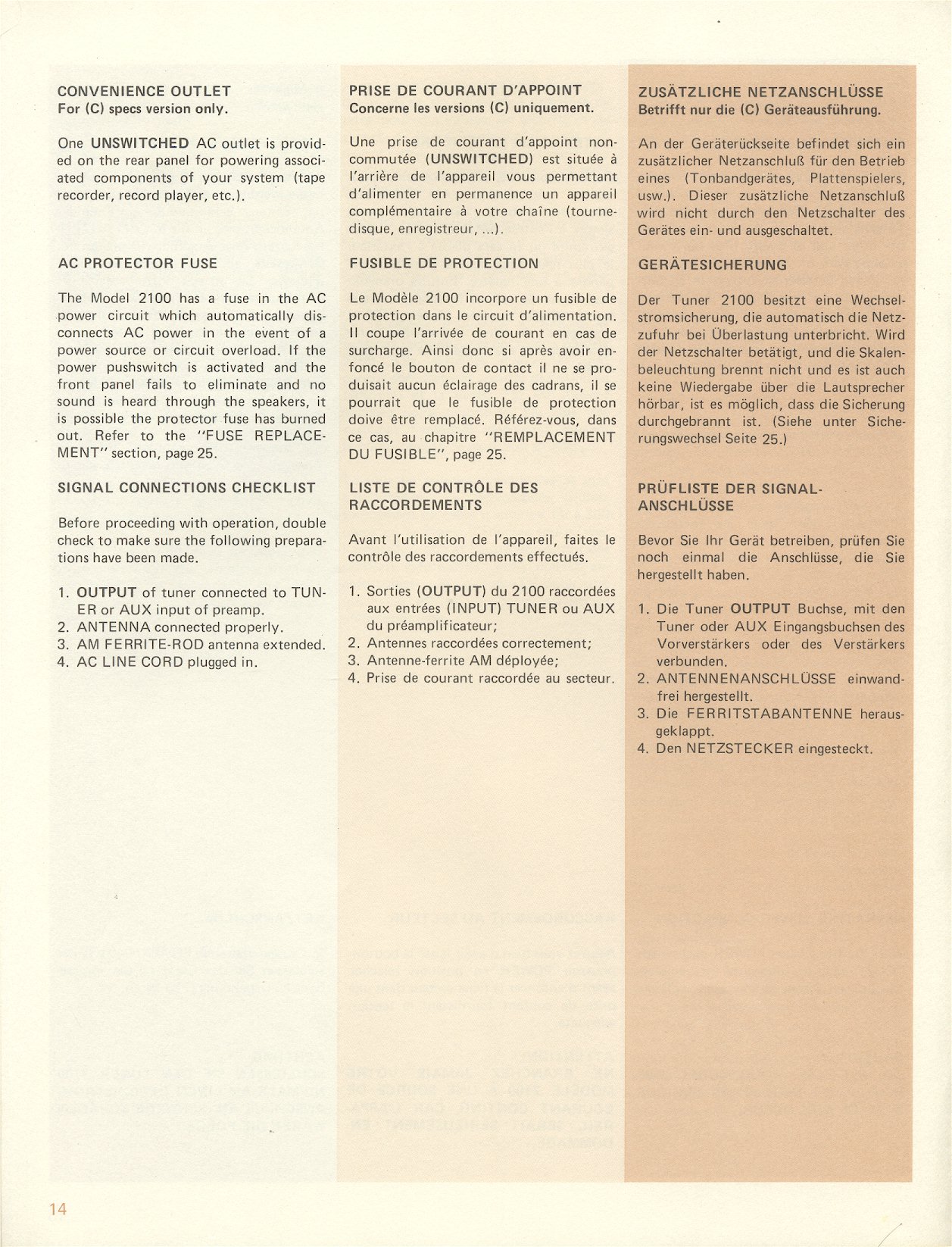
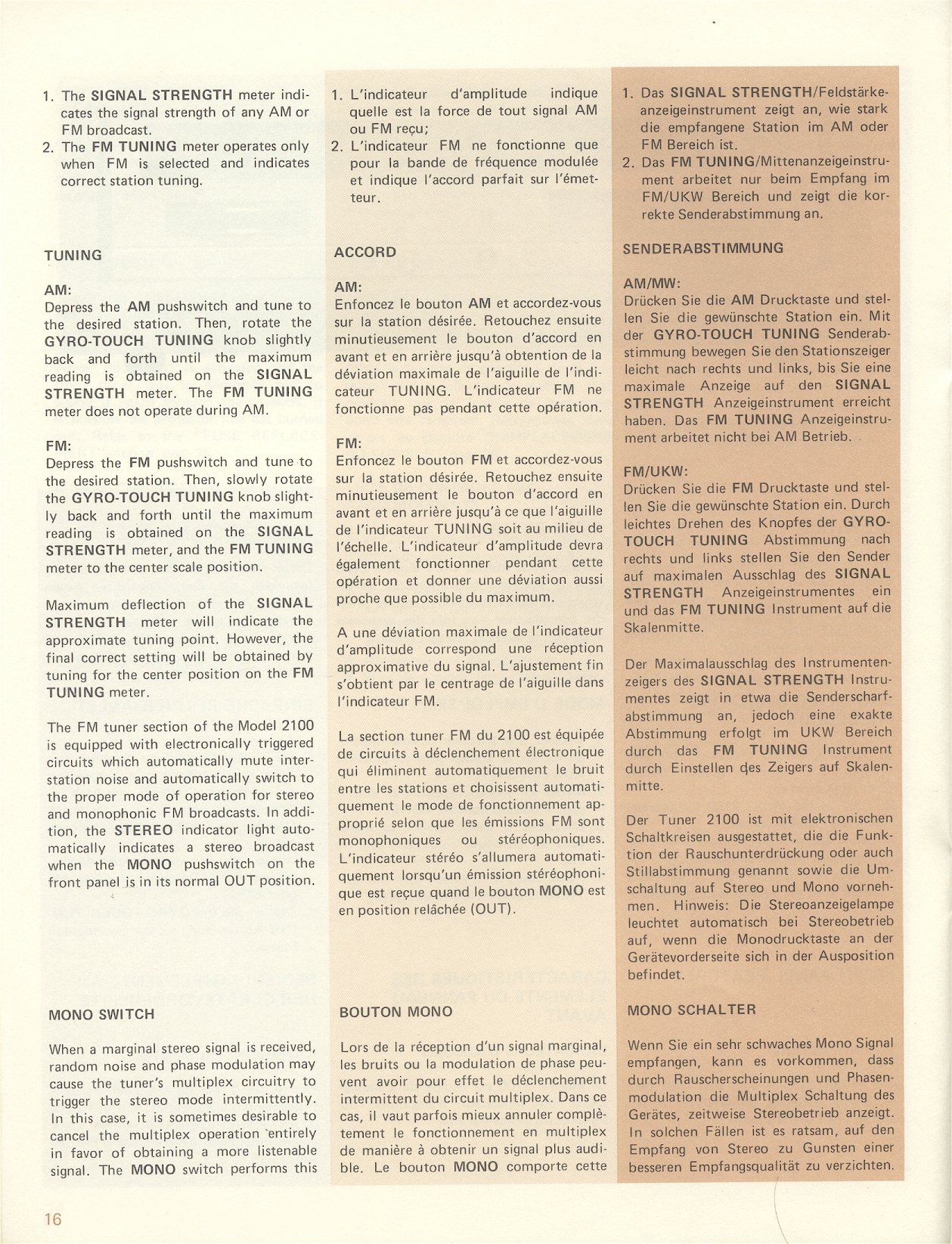
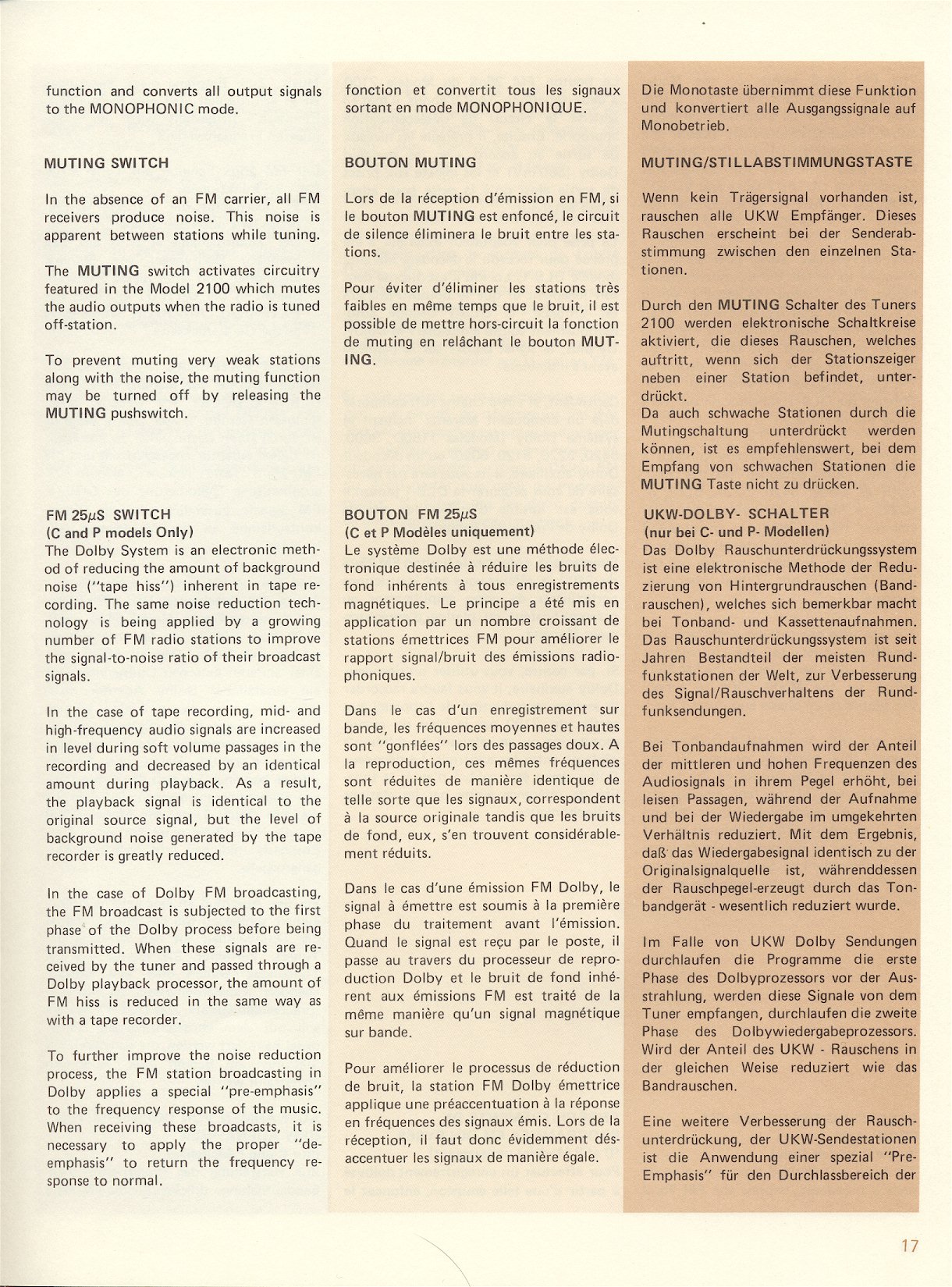
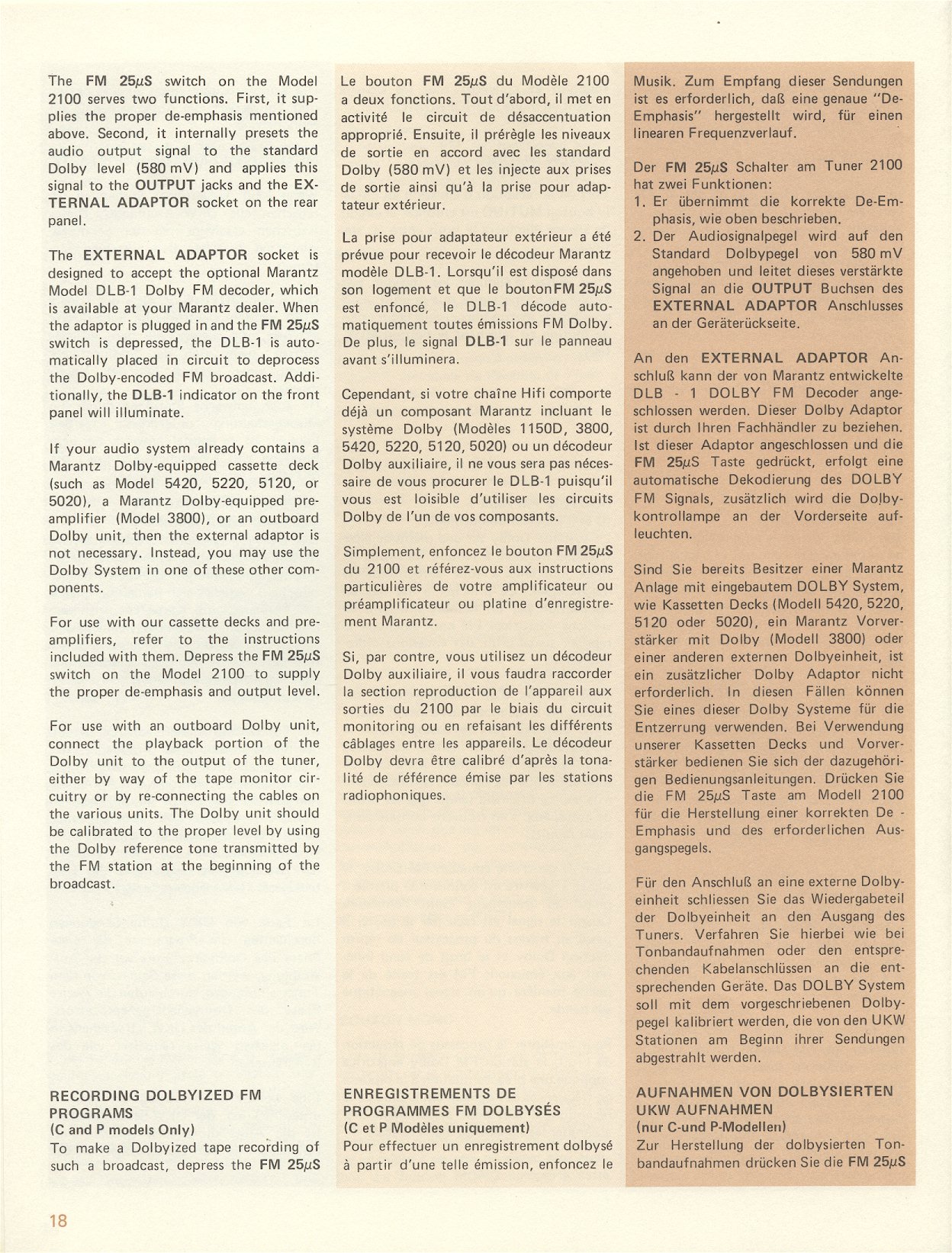
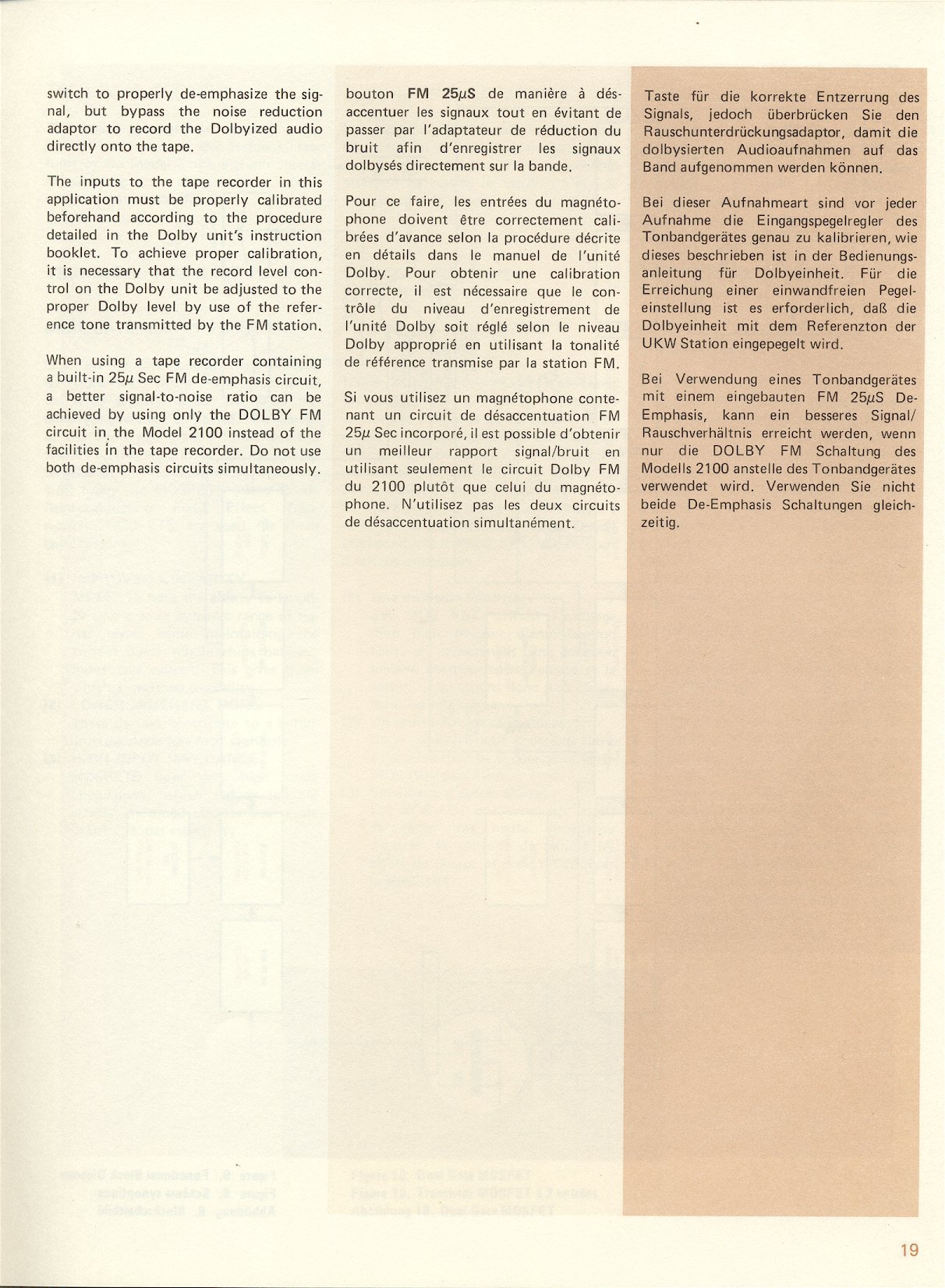
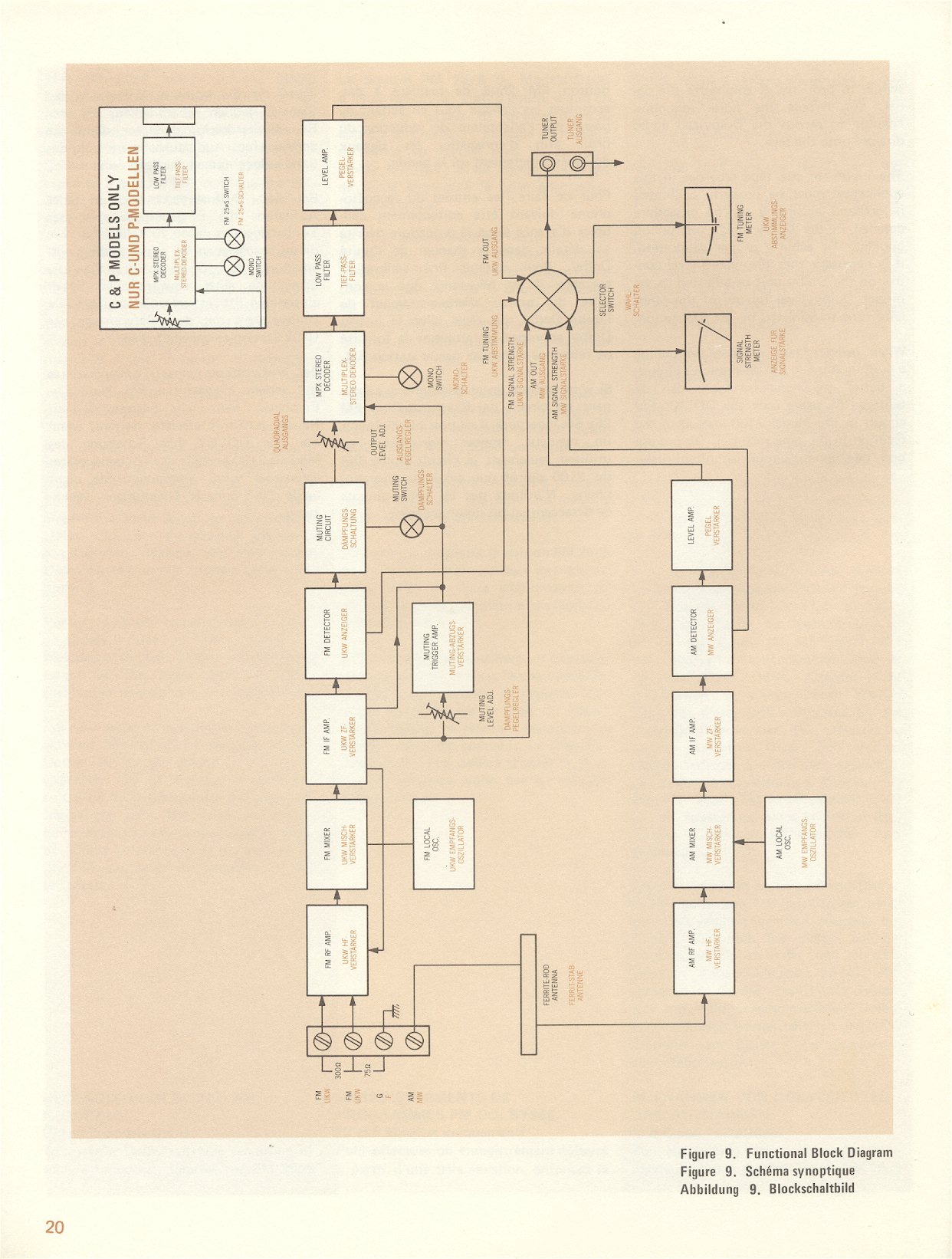
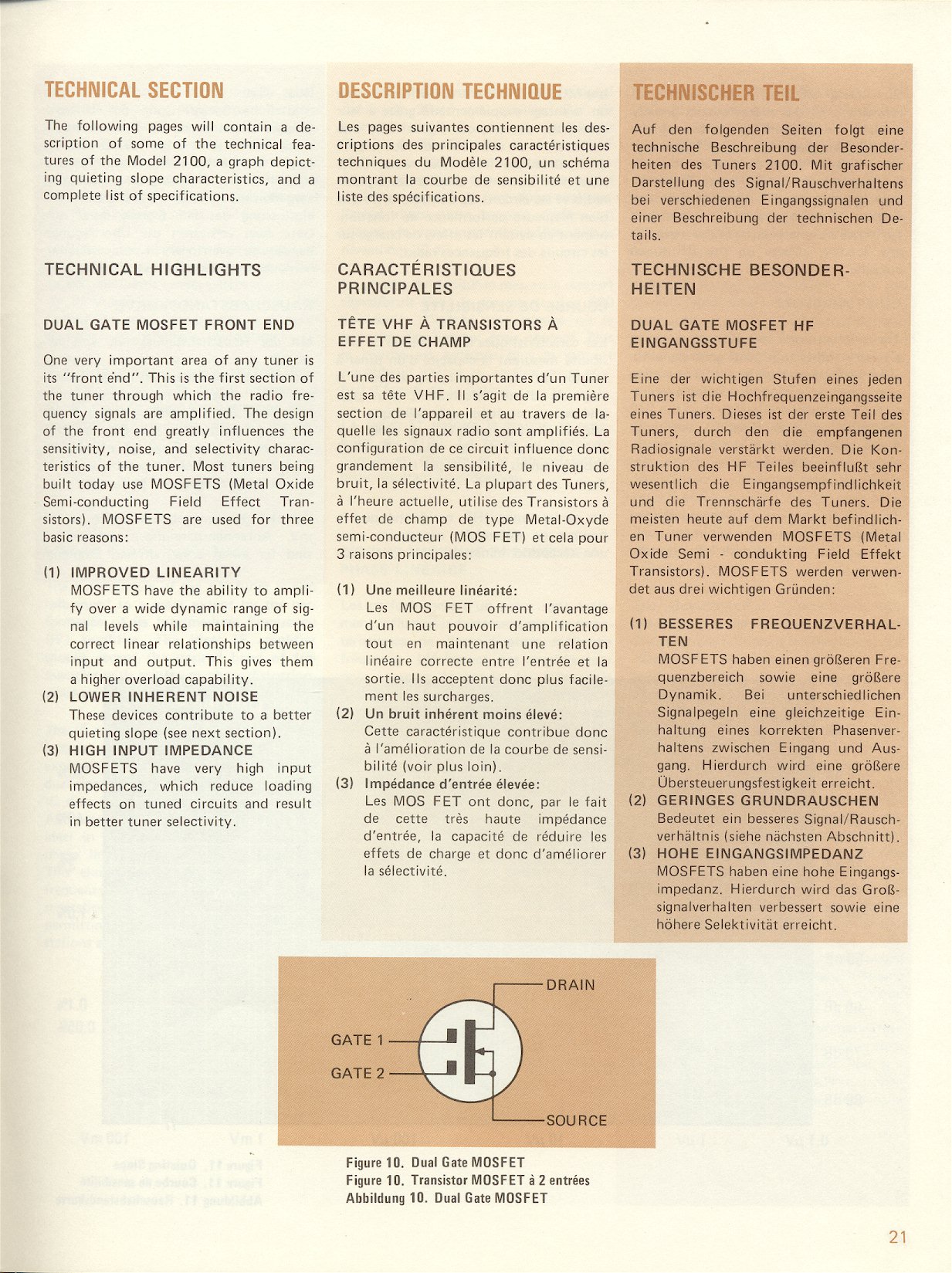
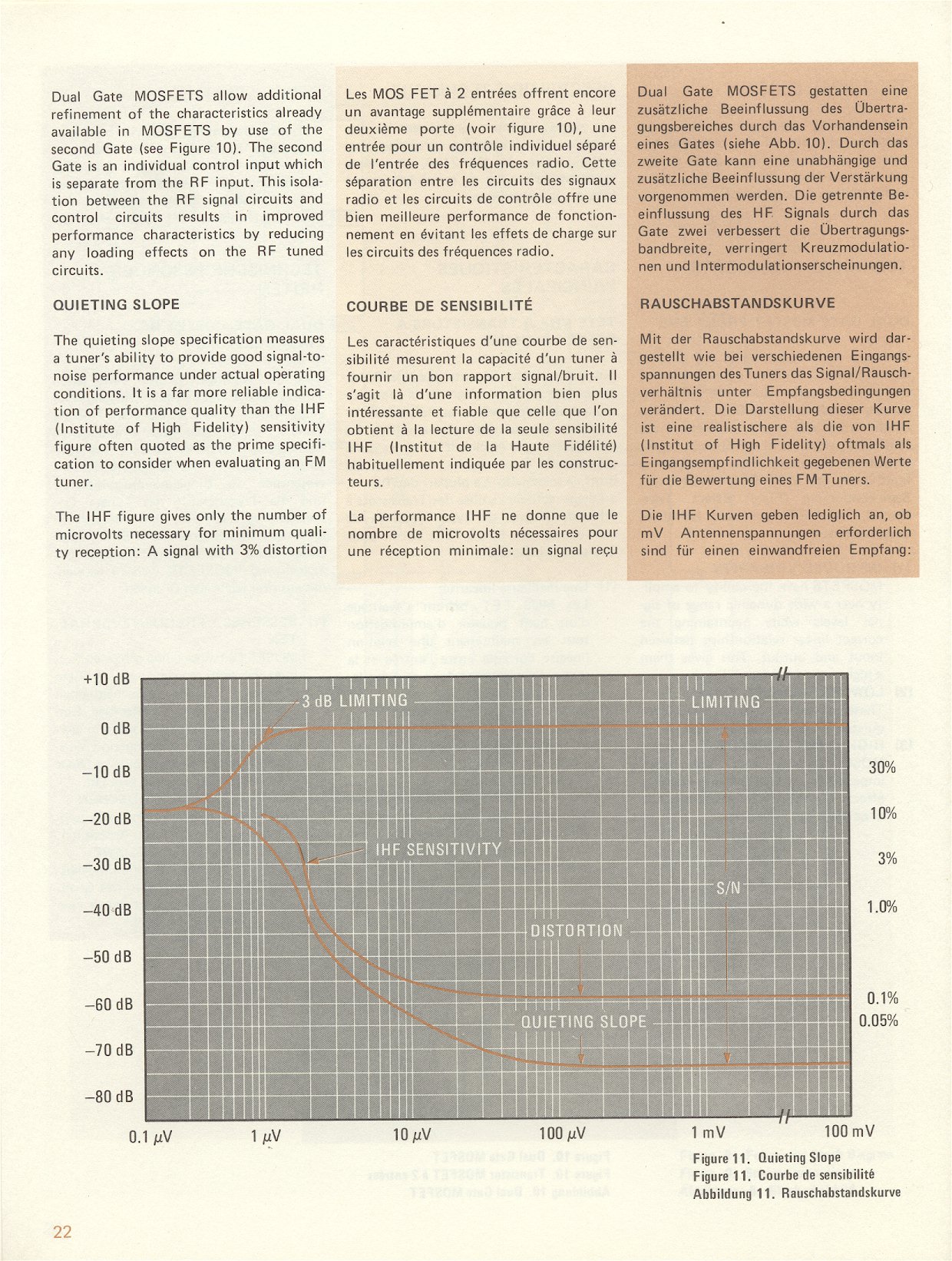
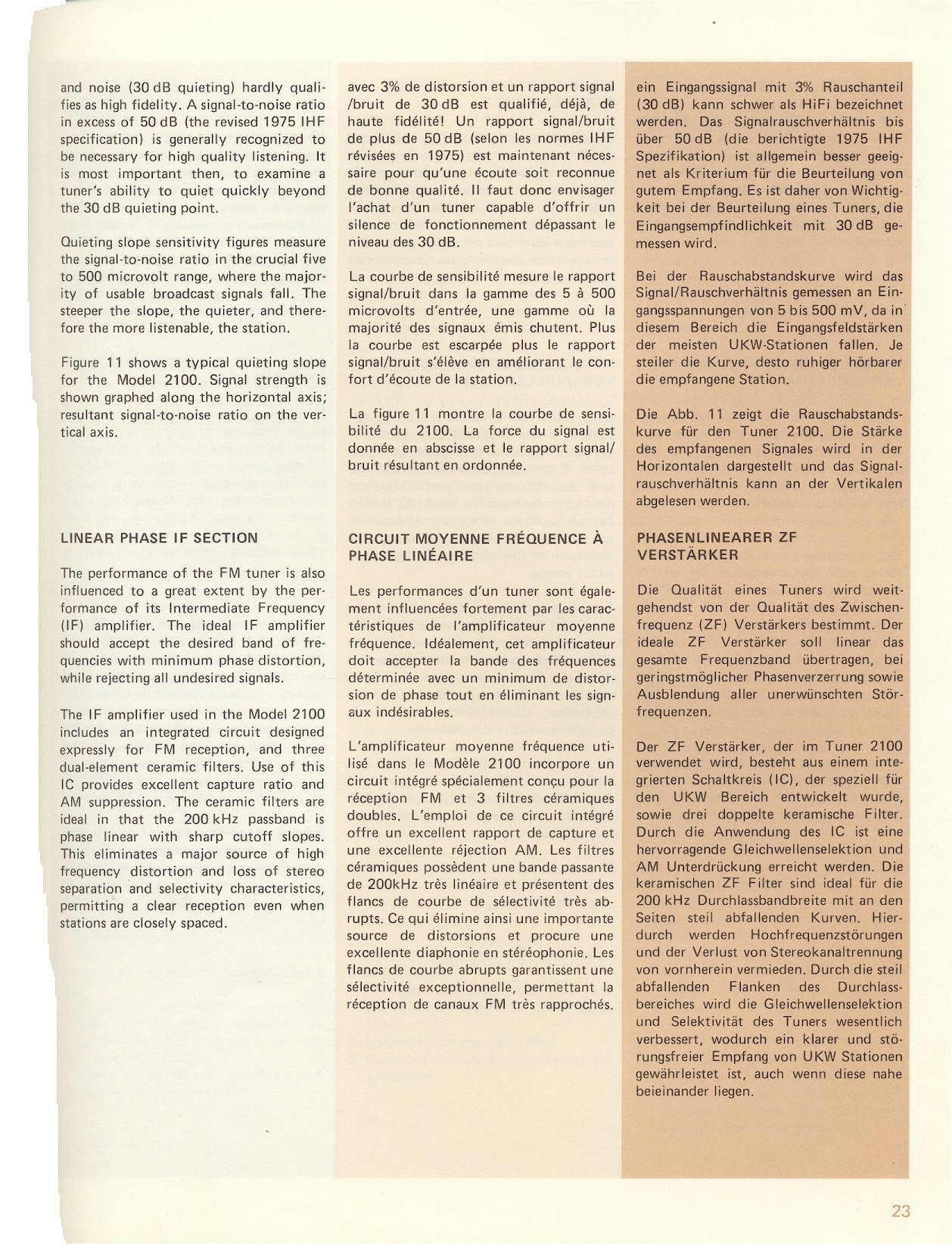
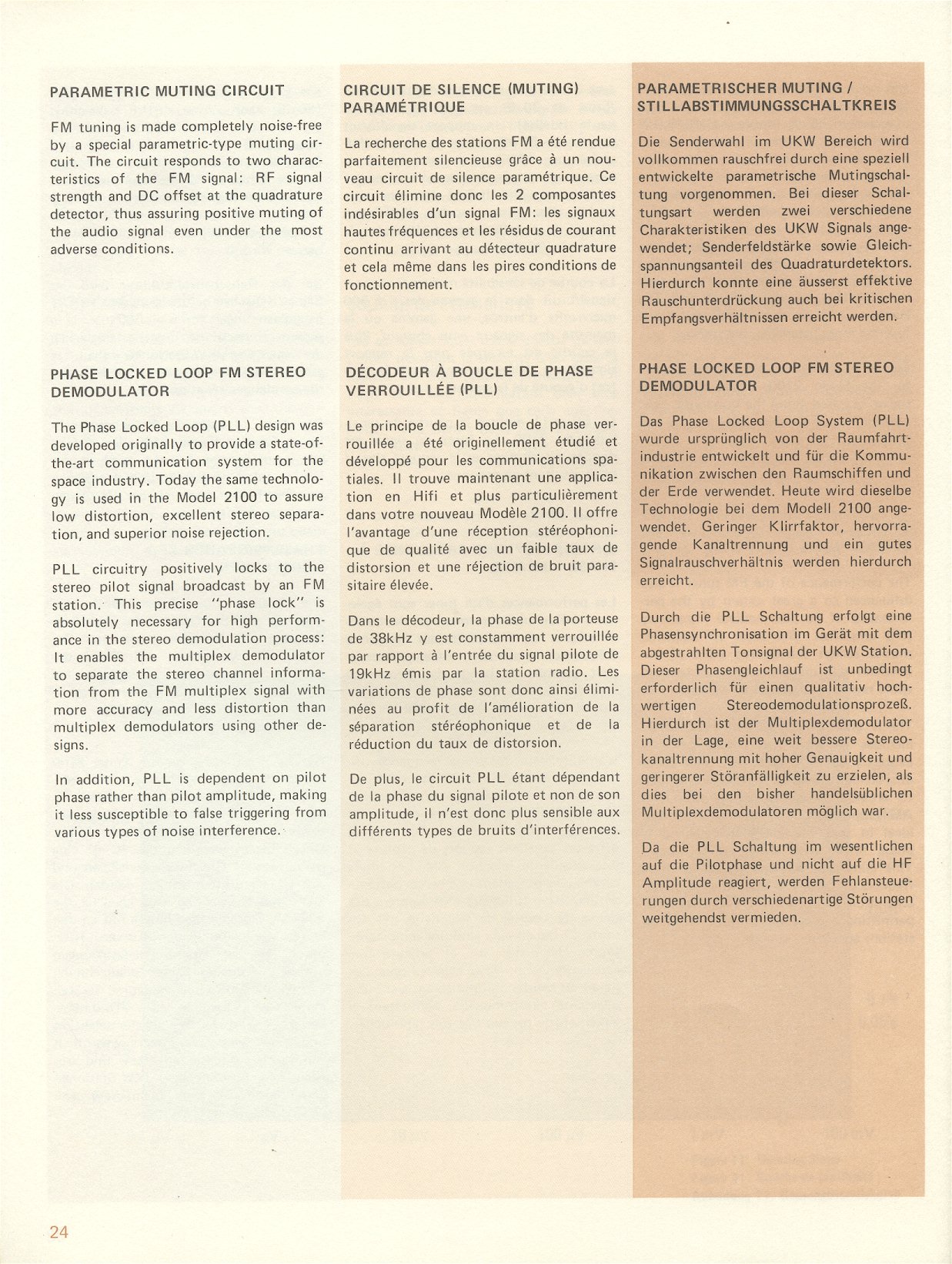
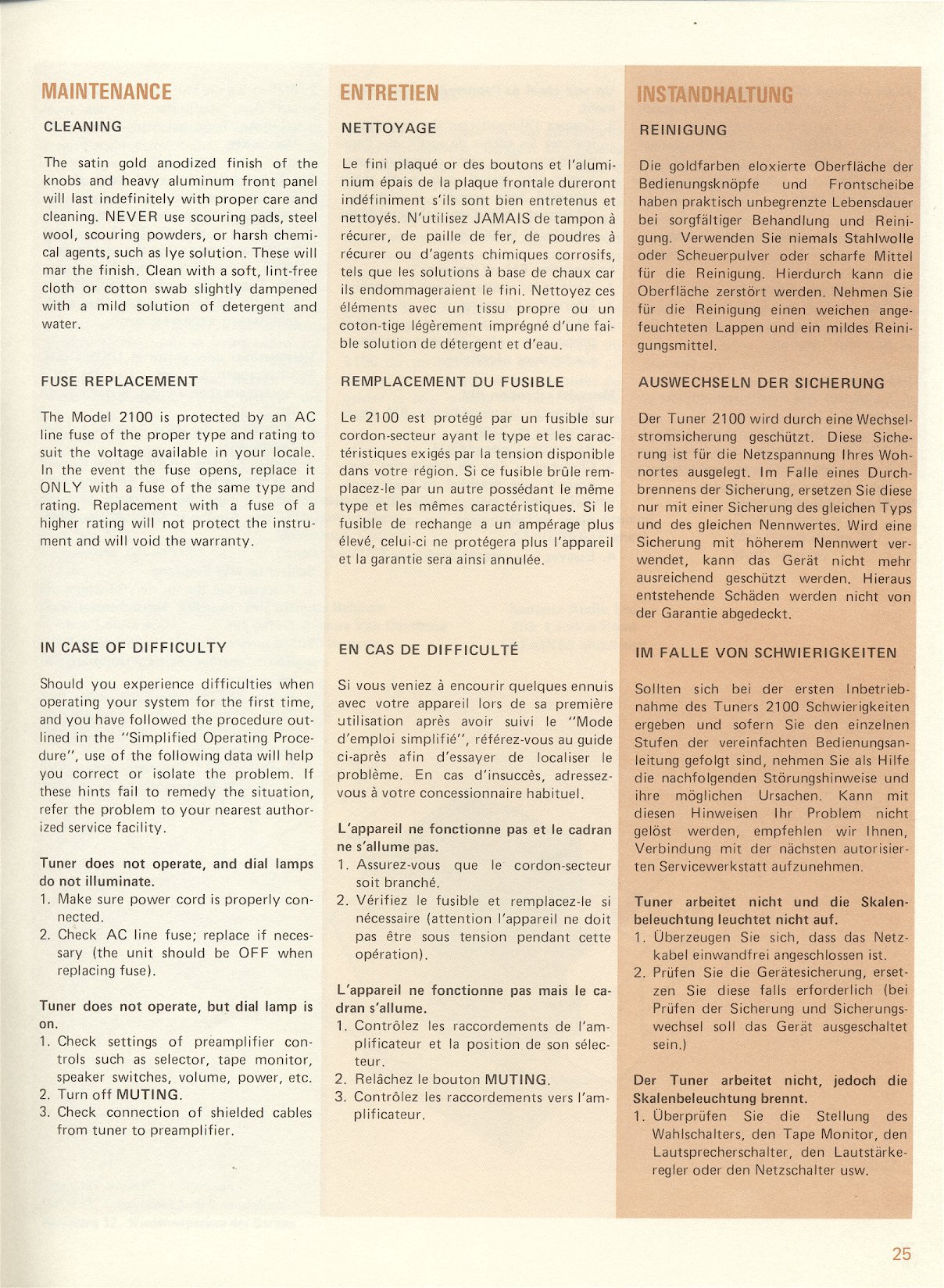
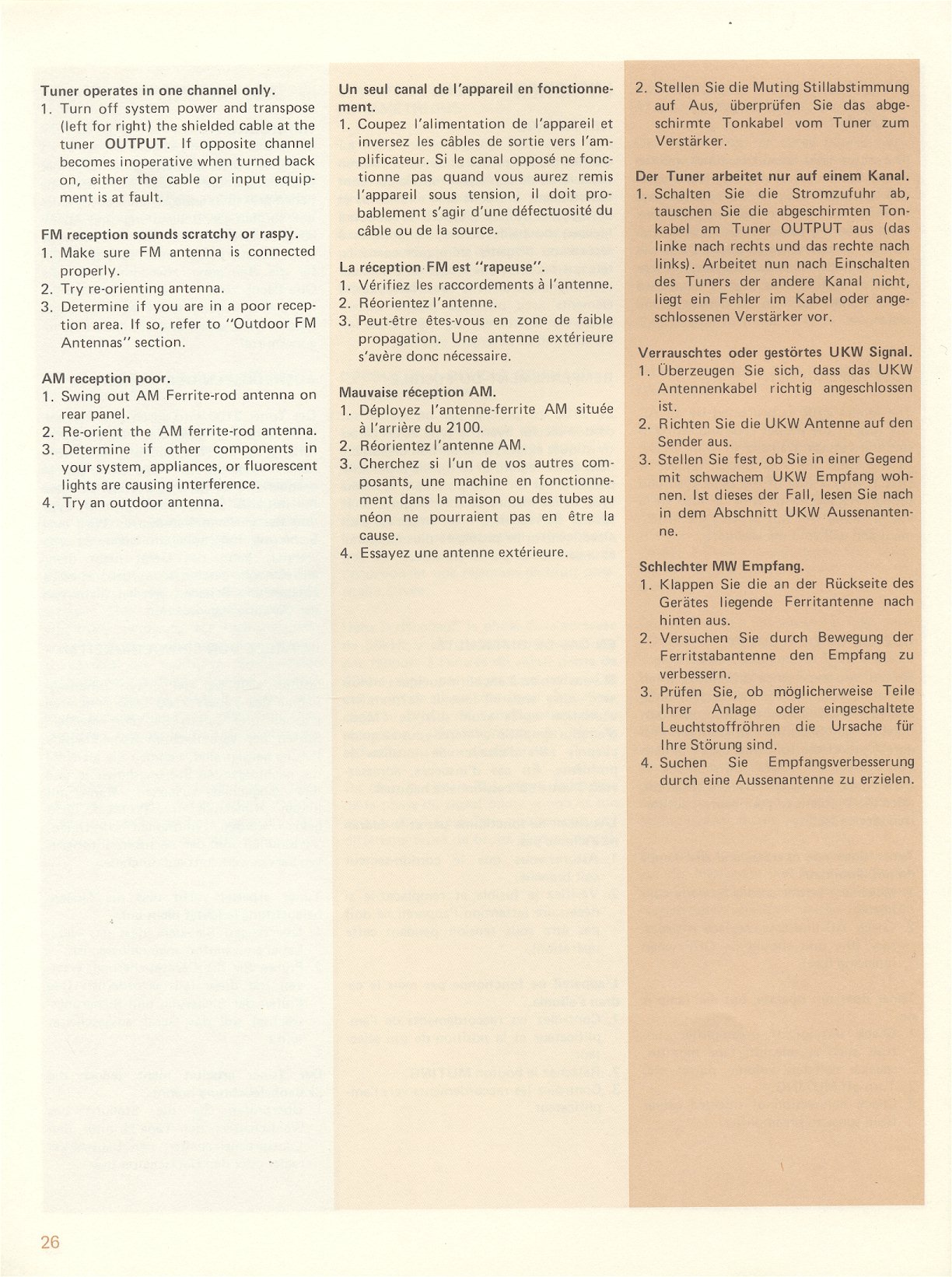
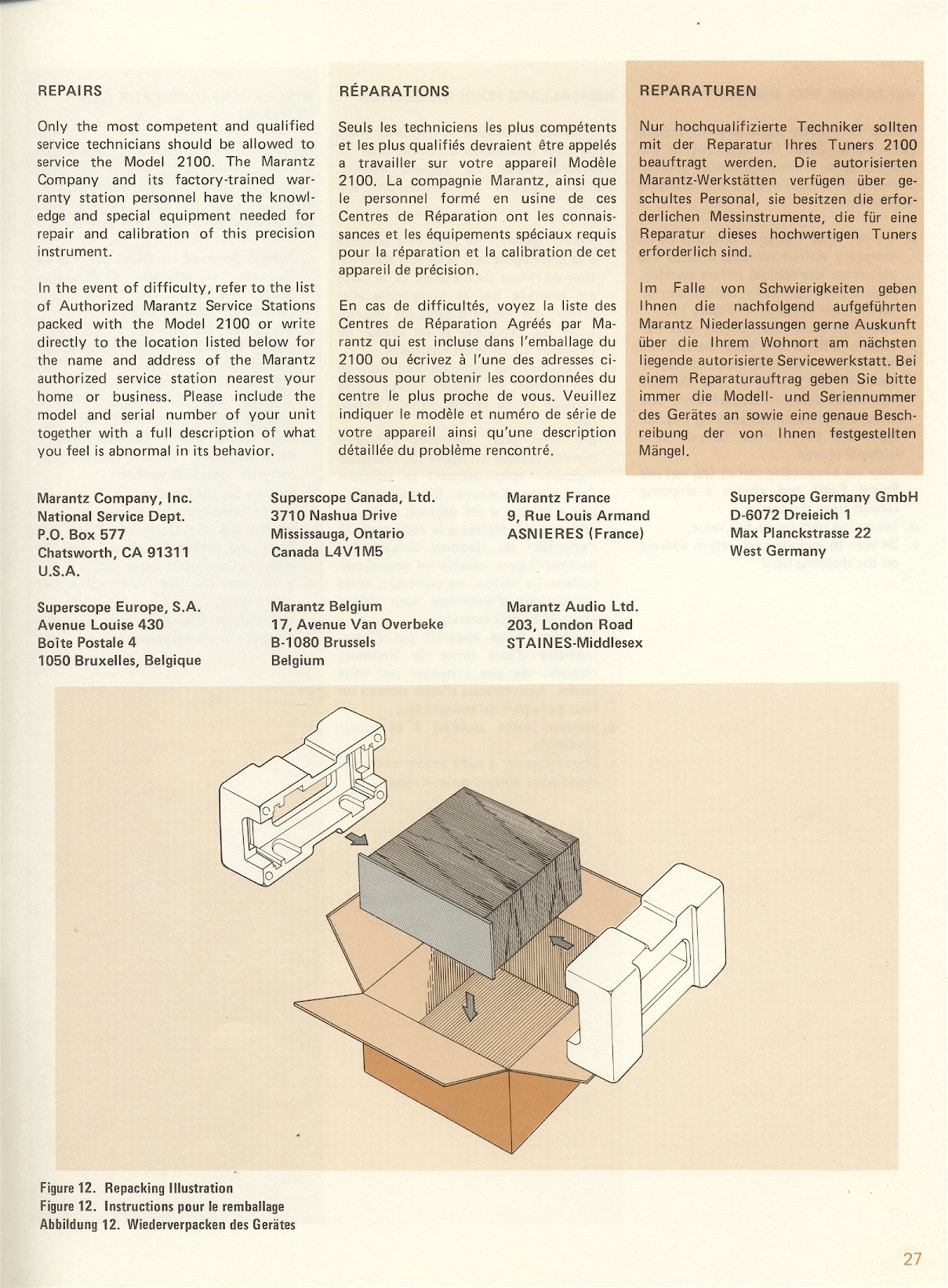
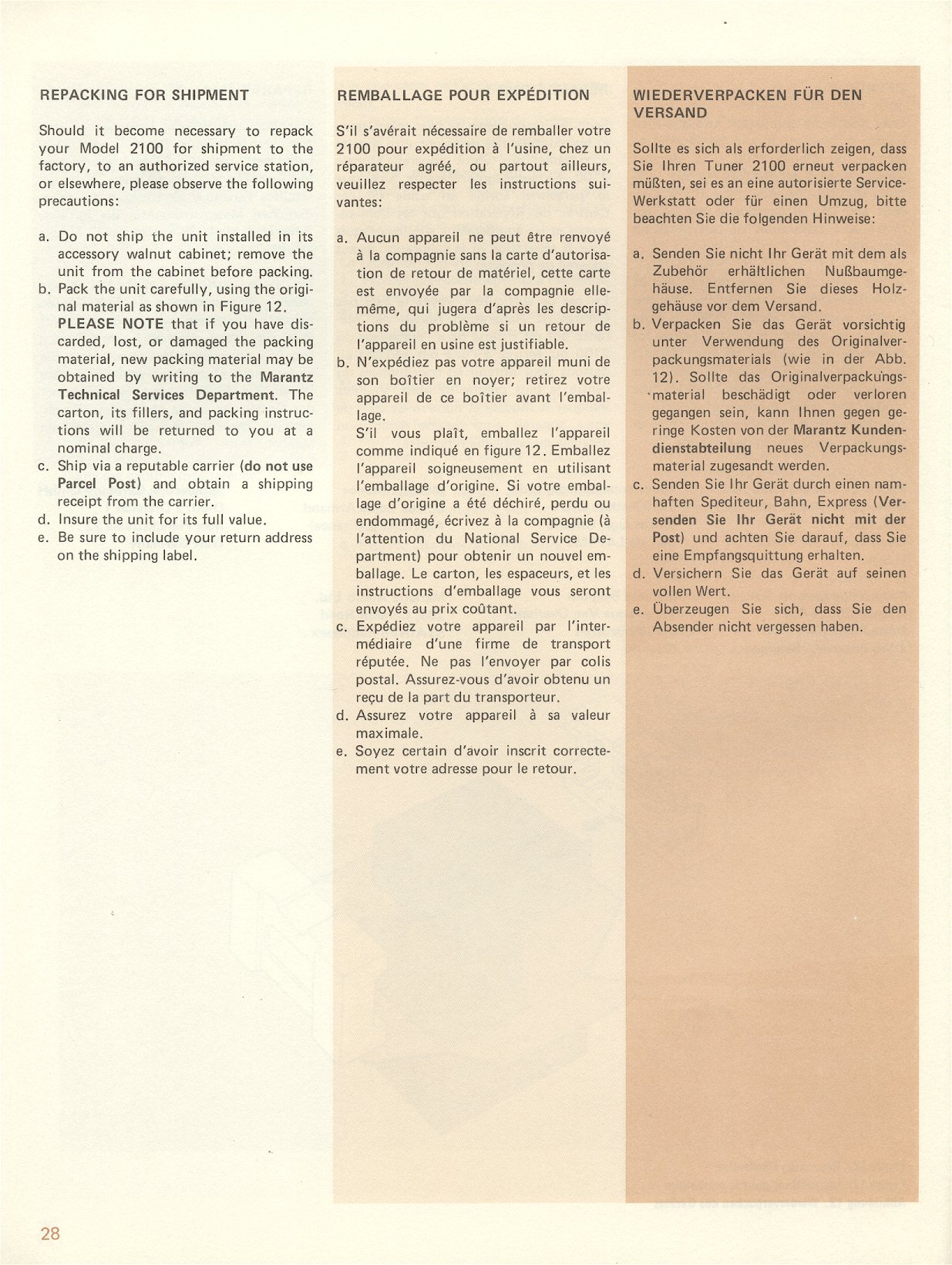
In May 2009 I scanned the 2100 FM Tuner manual so a collector in Germany could download the following images. WARNING -- Clicking the images will popup enlargements that have an average size of about 500KB and dimensions of about 1200x1600 pixels.


Collecting a Recording Studio

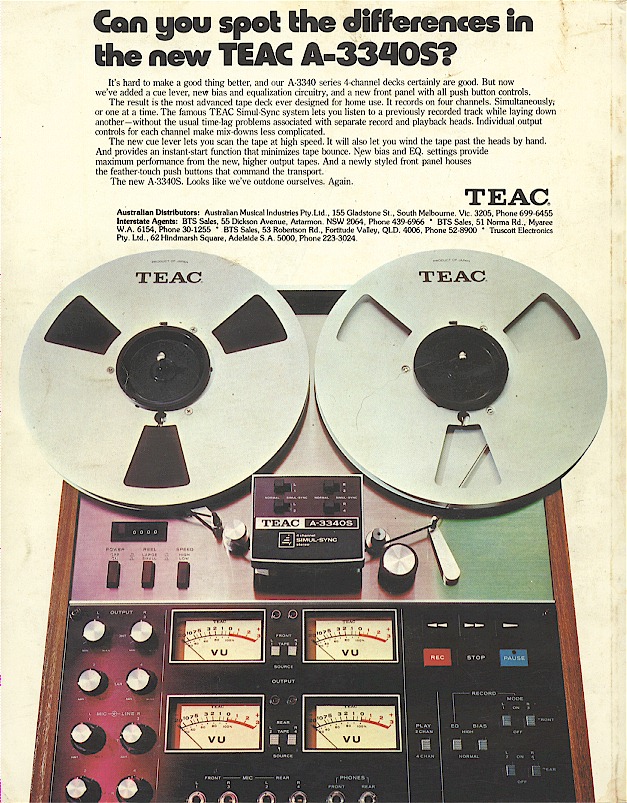
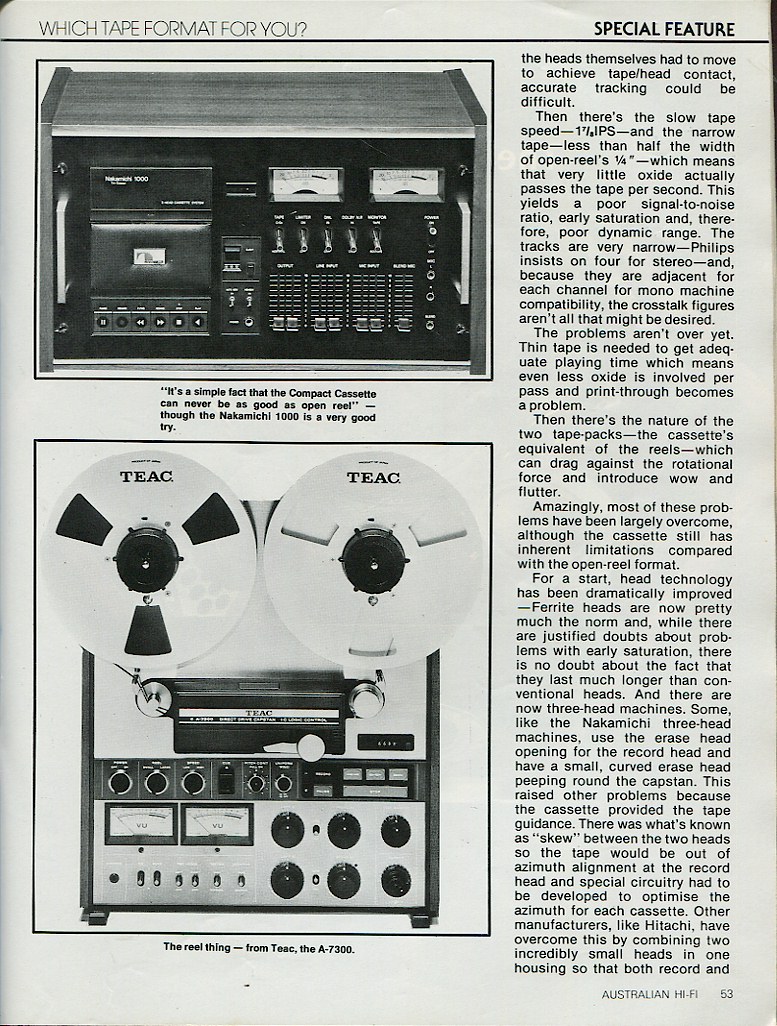
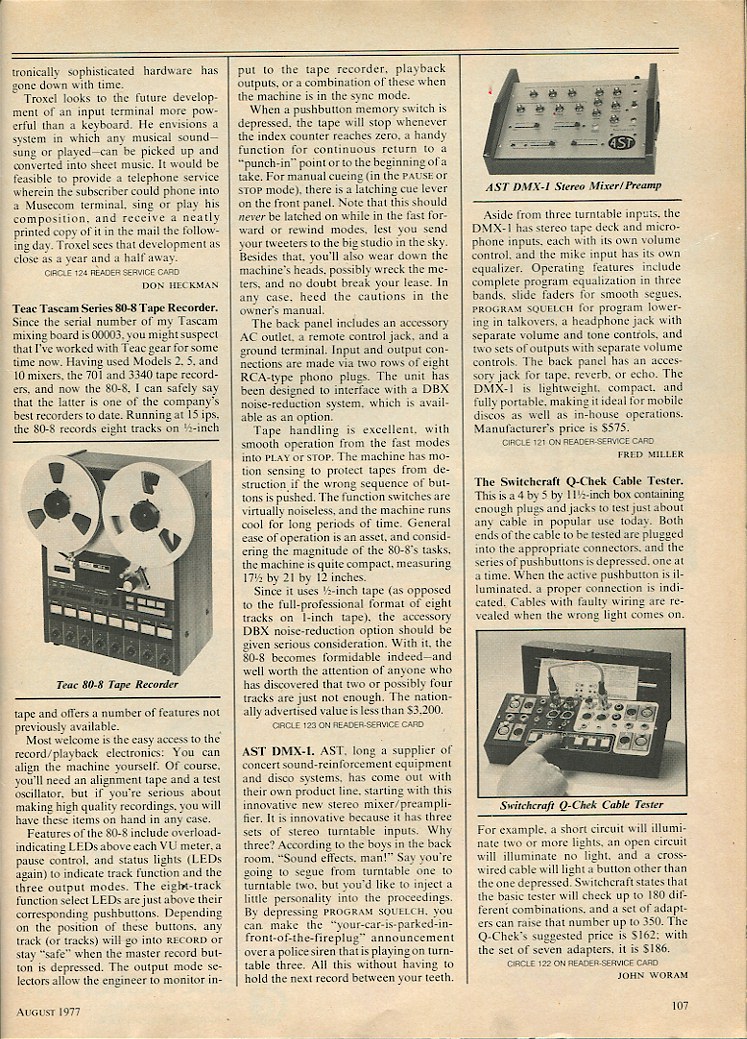
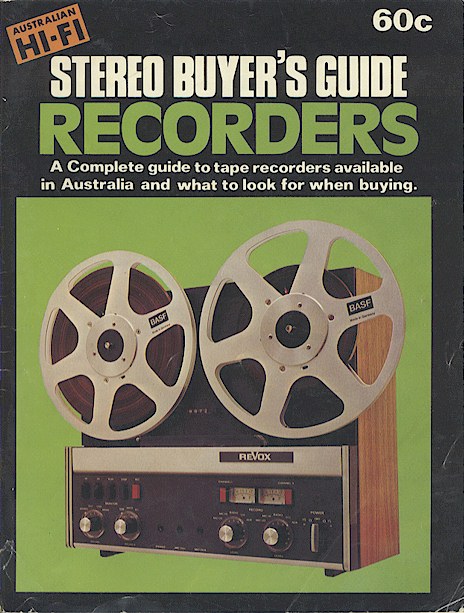
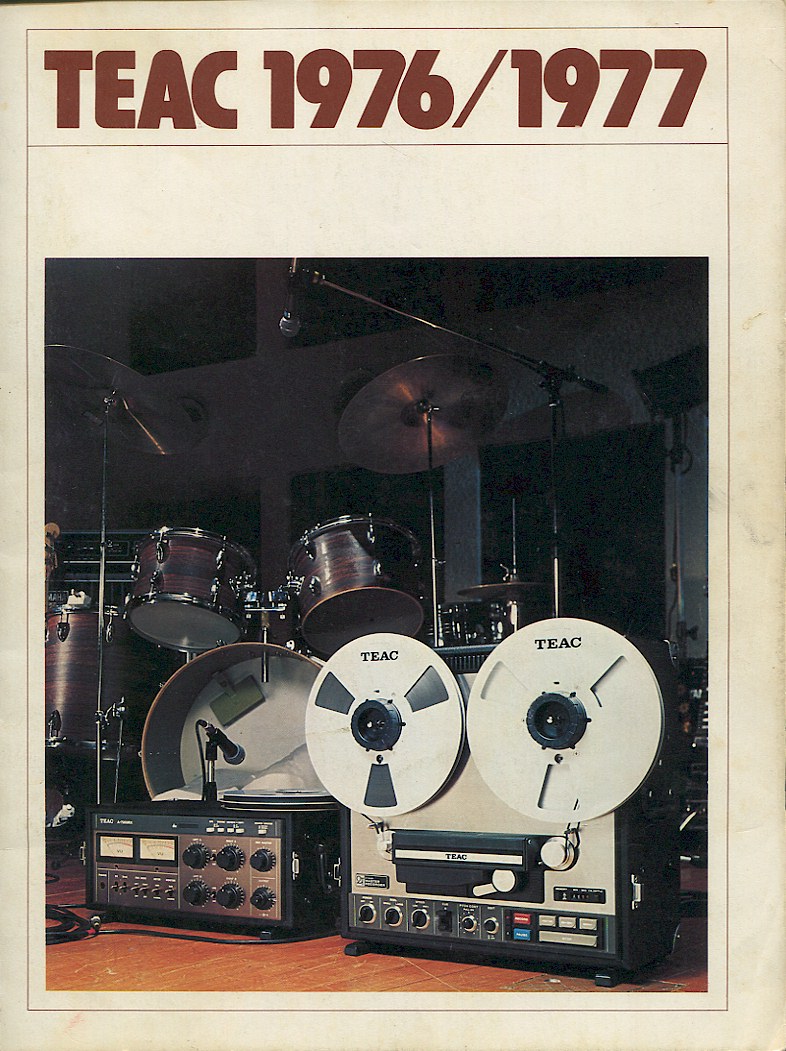
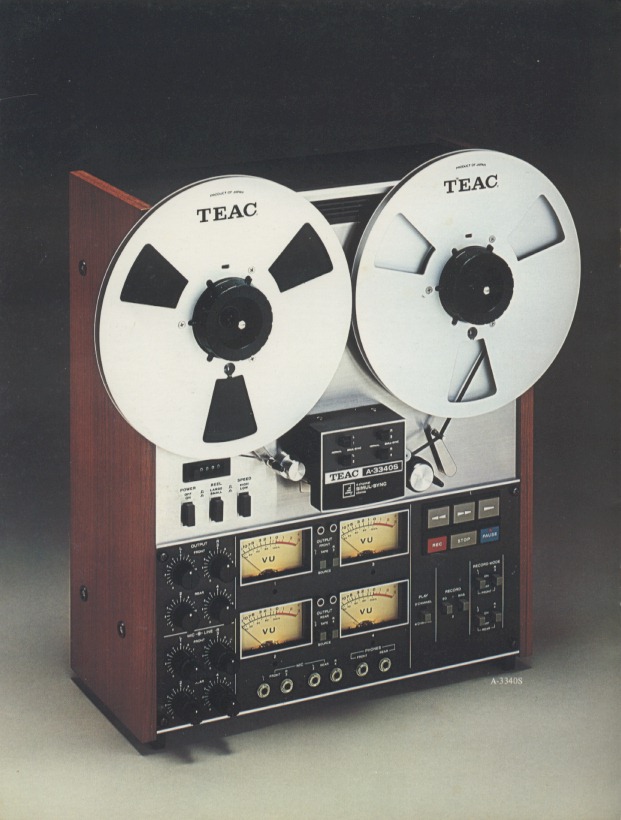
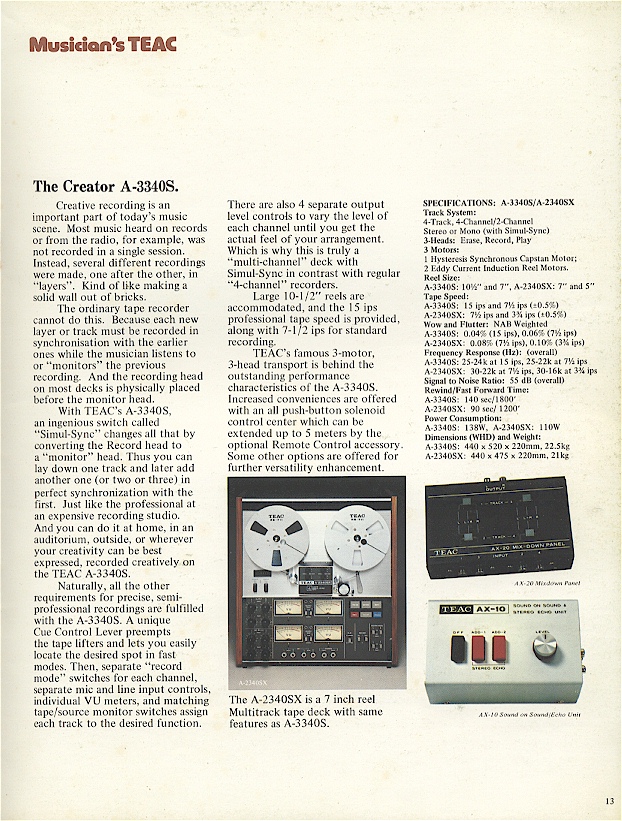
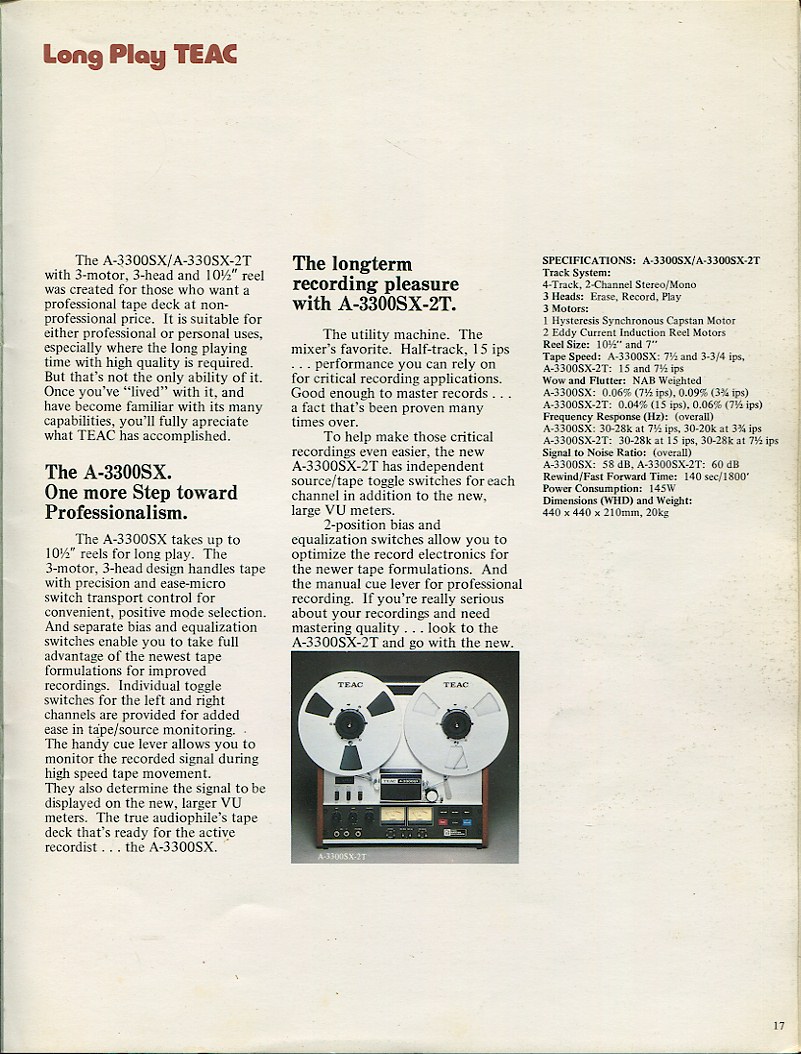
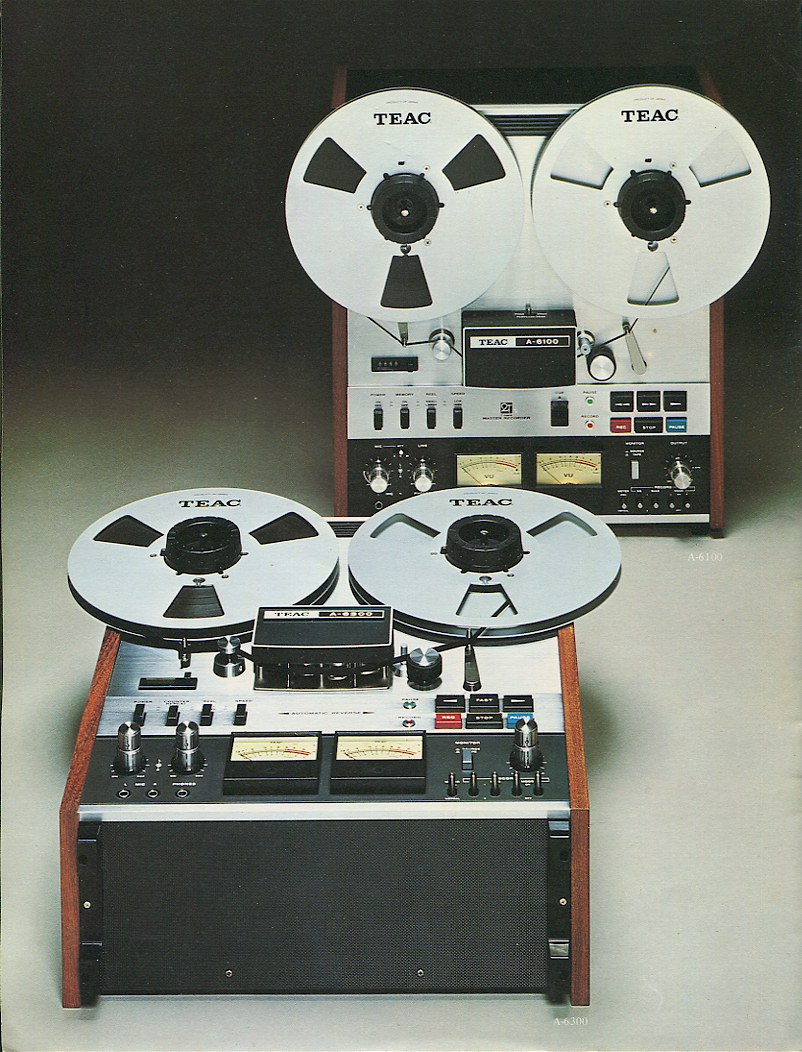
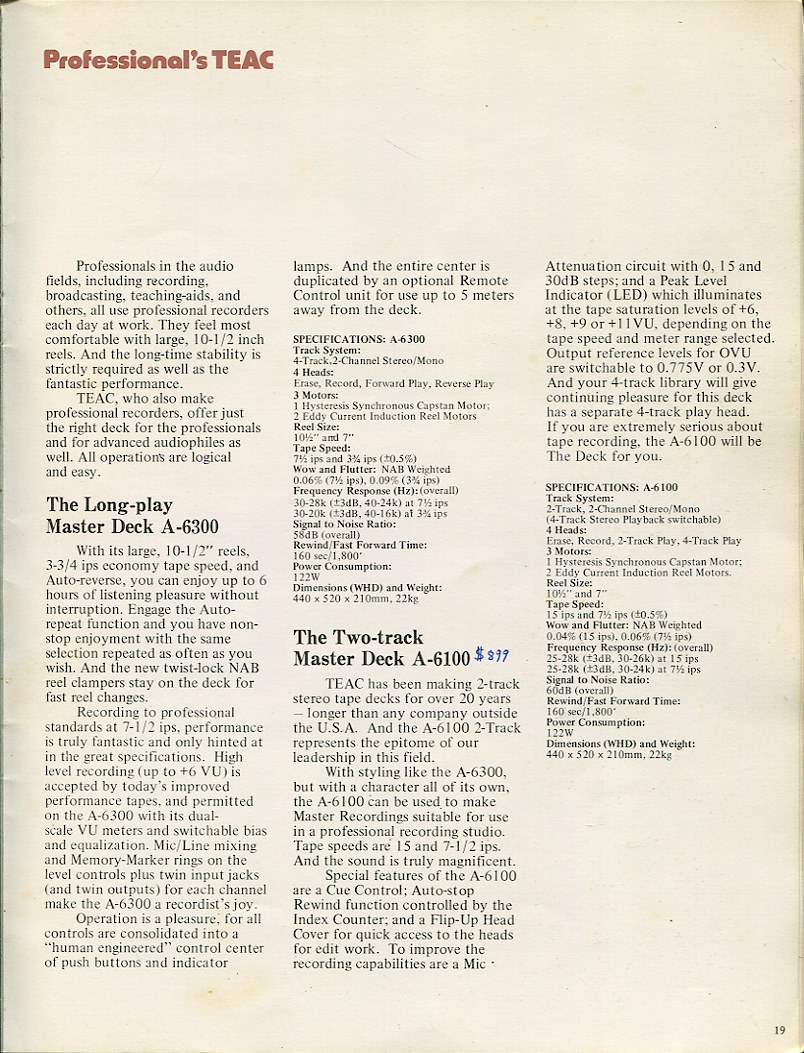
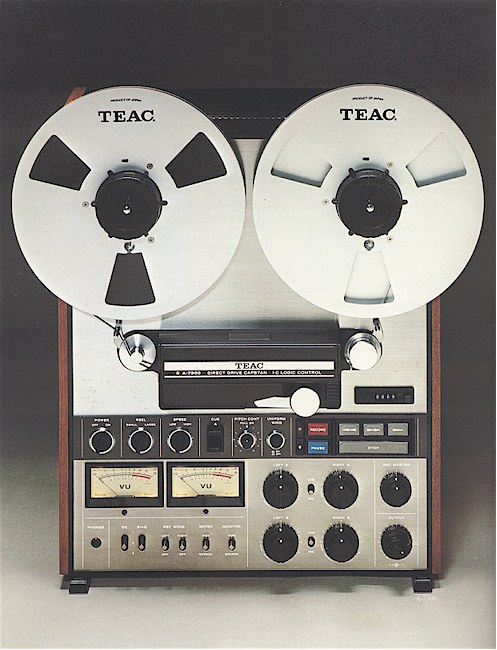
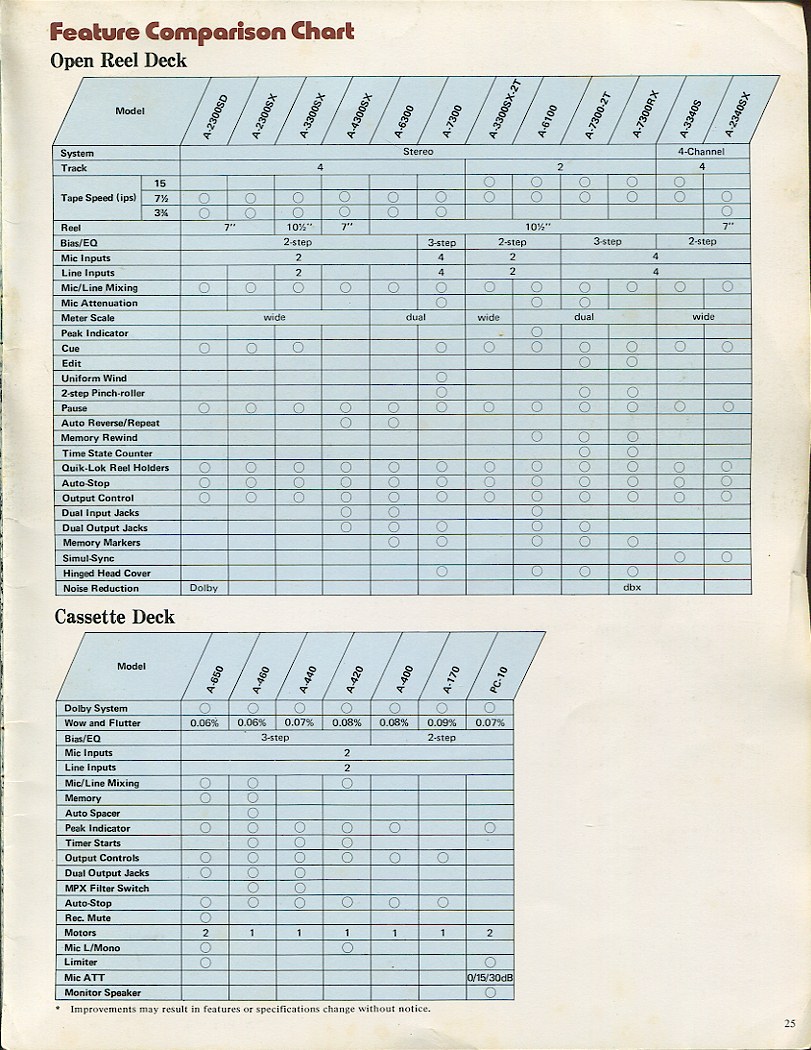
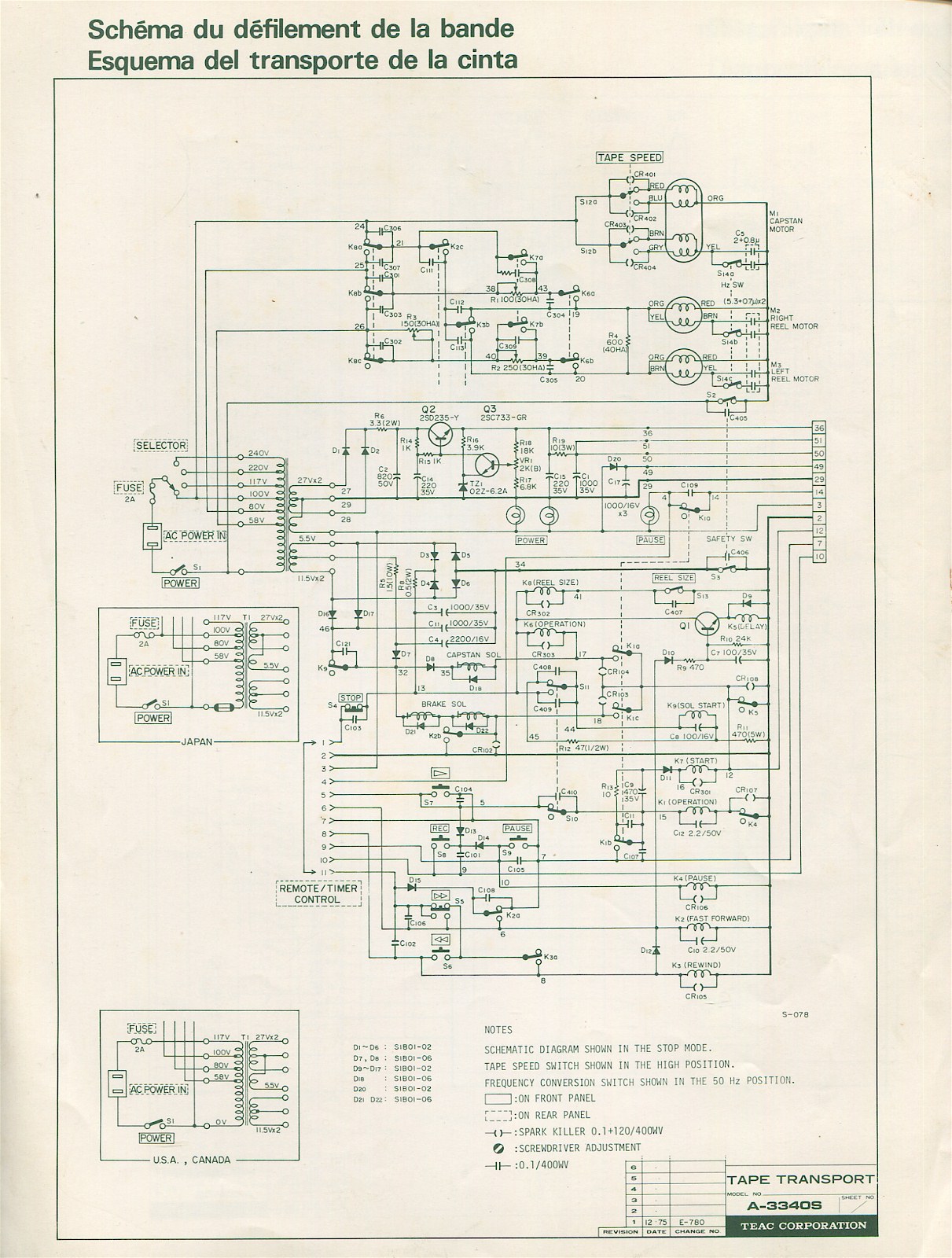
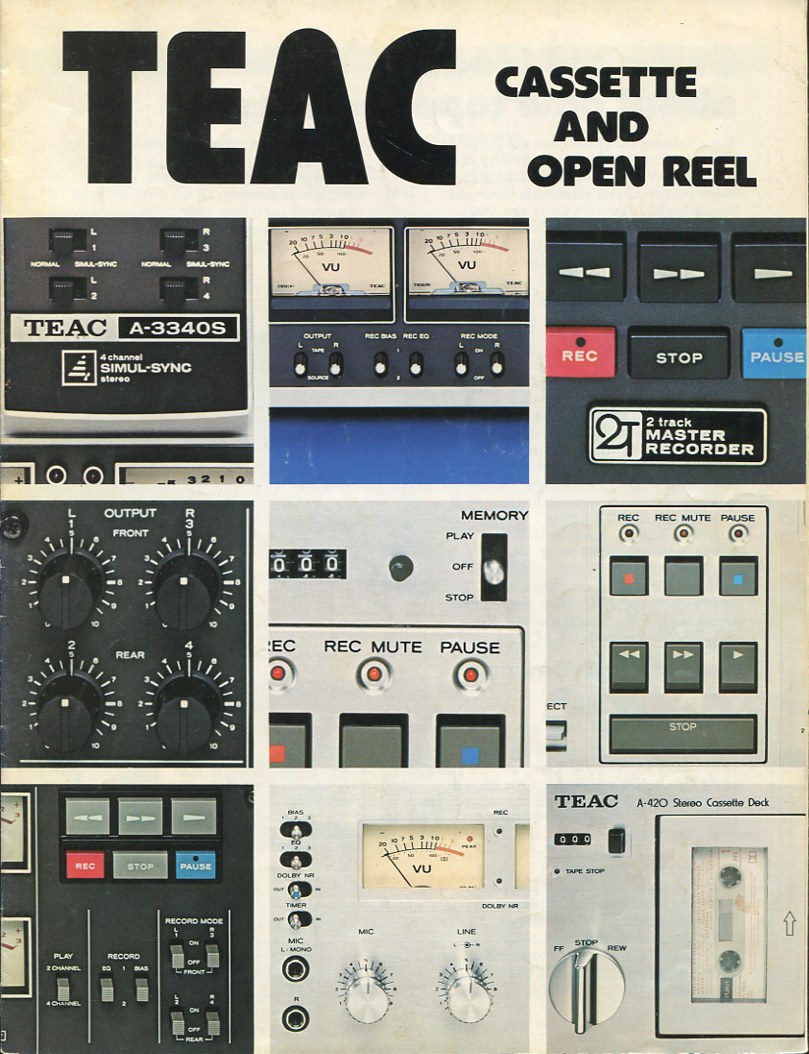
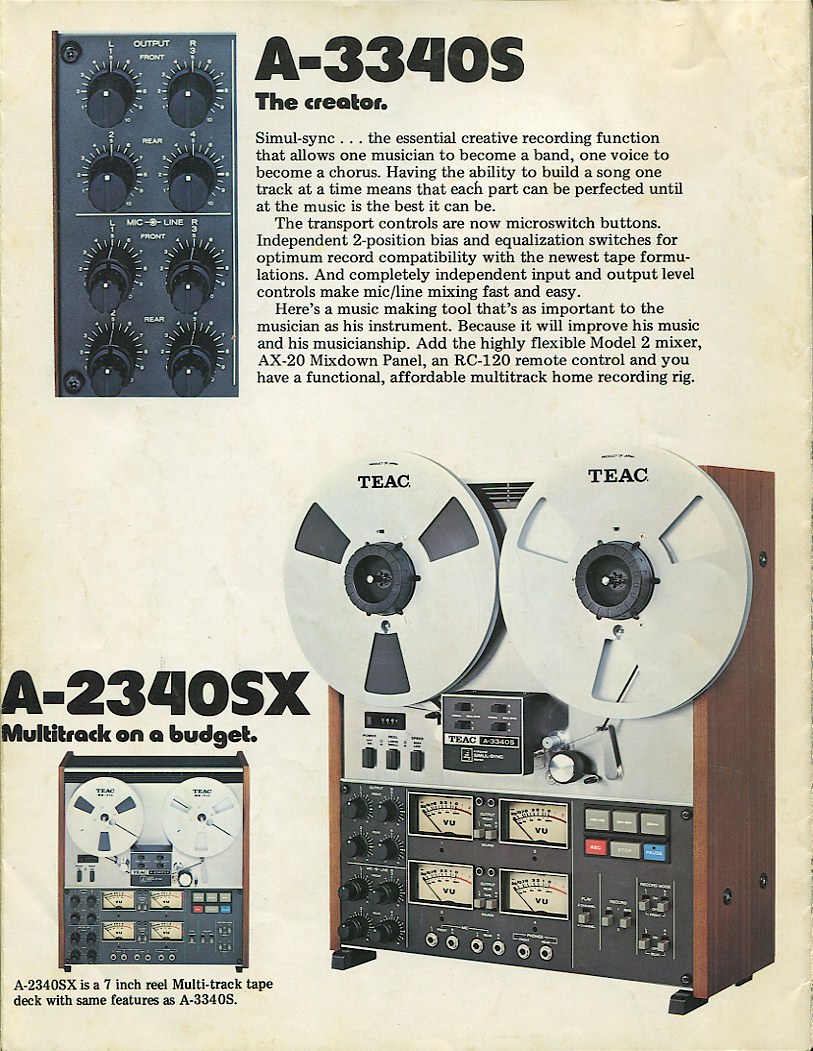
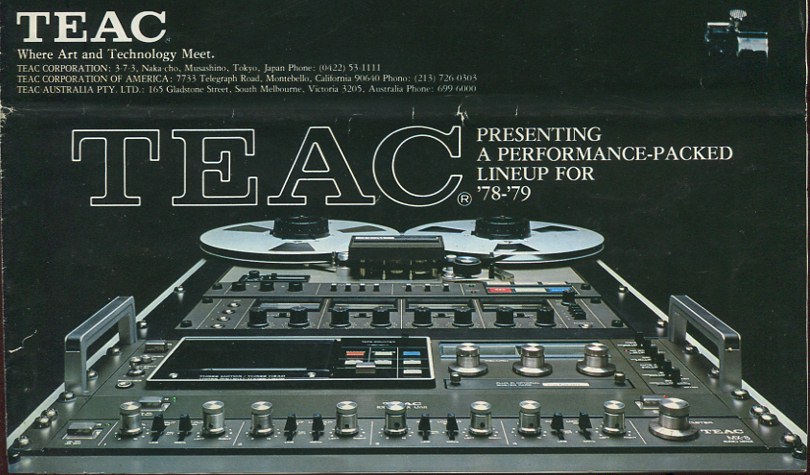
Parallel to assembling a Hi-Fi system was the selection of components for a hobby home recording studio. Teac were the considered to be the Rolls Royce of home recording equipment at the time, so it wasn't difficult to pick the Teac A3340-S 4-track tape deck as the centre-piece of the home studio. The A3340-S was capable of simultaneous record/playback on any of the 4 channels in any combination required. By carefully recording, then mixing-down and combining previous tracks it was possible to turn myself into a one-man-band. The A3340-S cost about $1100 in late 1977 and it's a most impressive machine, so heavy that a grown man has to brace his back to lift it. Most of the weight is in the powerful and finely tuned motors that drive the reels. Watching the large reels rewinding at full speed is quite a show.

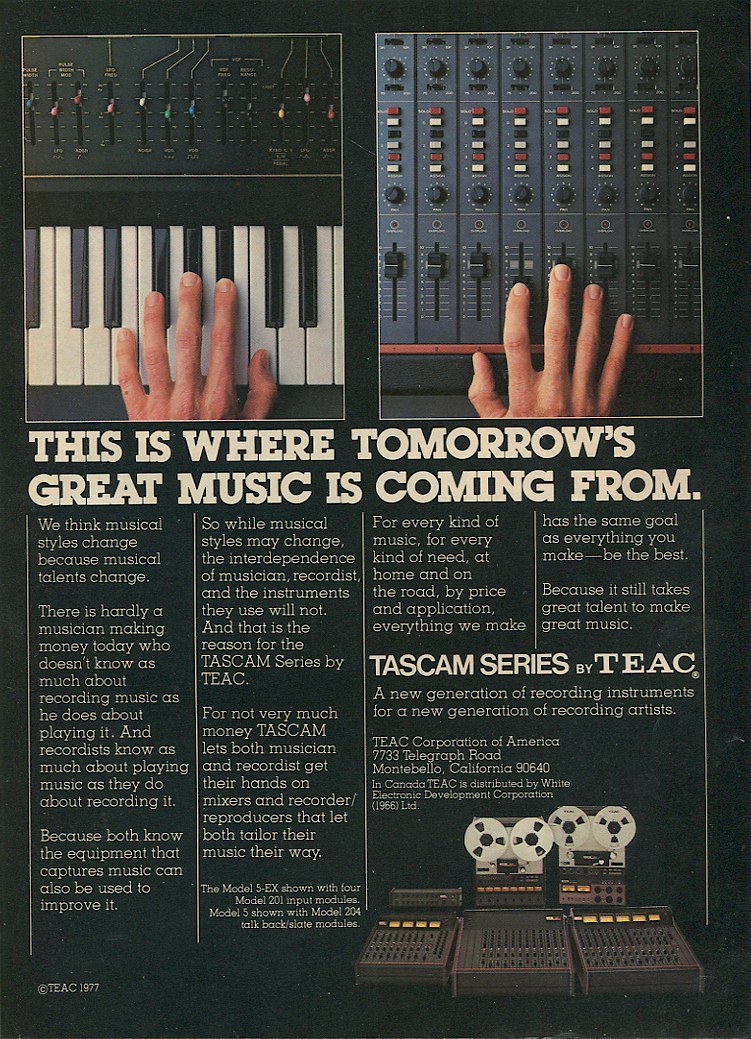
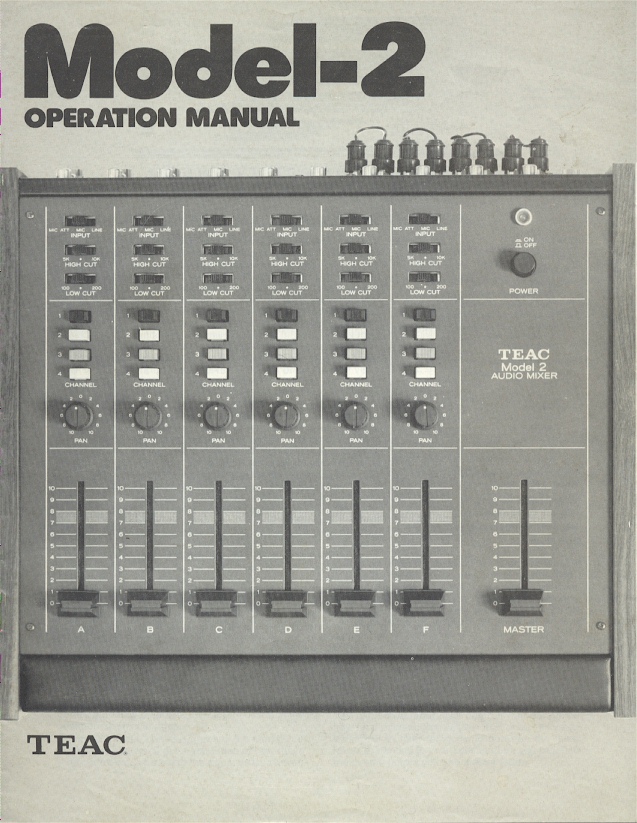
Teac also produced a range of mixing desks ranging from tiny ones for home use up to enormous professional studio equipment. The price accelerated rapidly with the mixer size, so I could only afford the second smallest one, the Model 2 Mixer. The Model 2 is a 6-in 4-out design with an amazing variety of filters and switching/patching connections. The Model 2 formed a perfect pair the A3340-S tape deck.

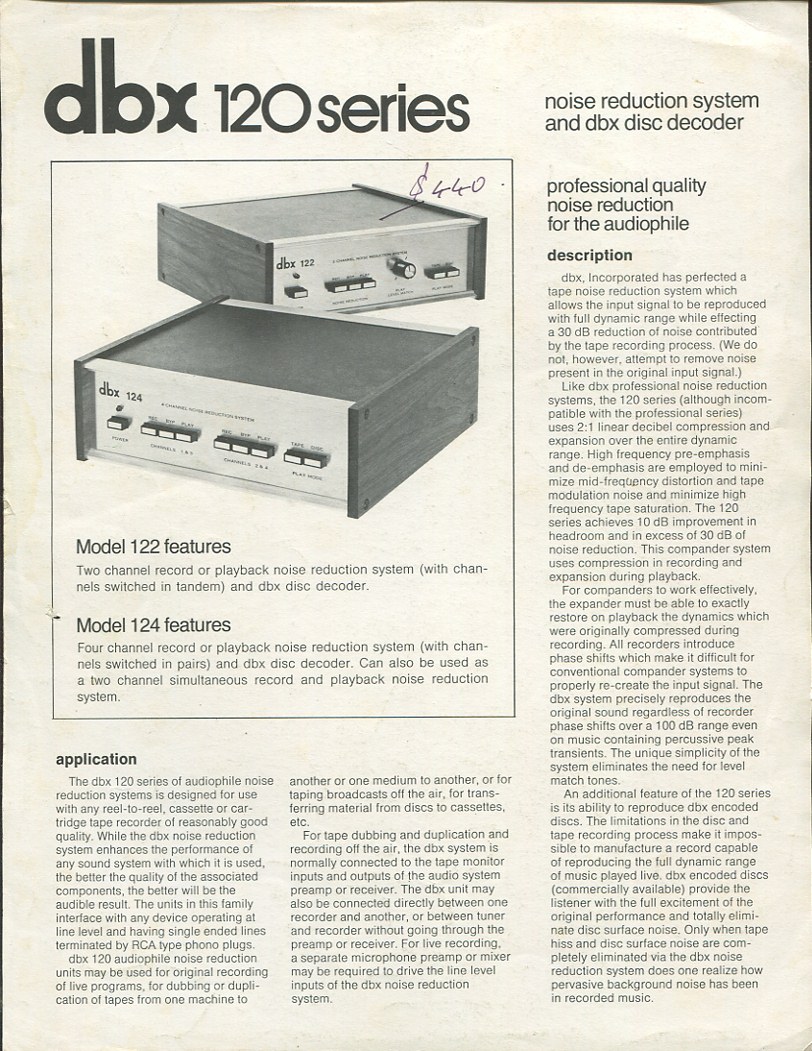
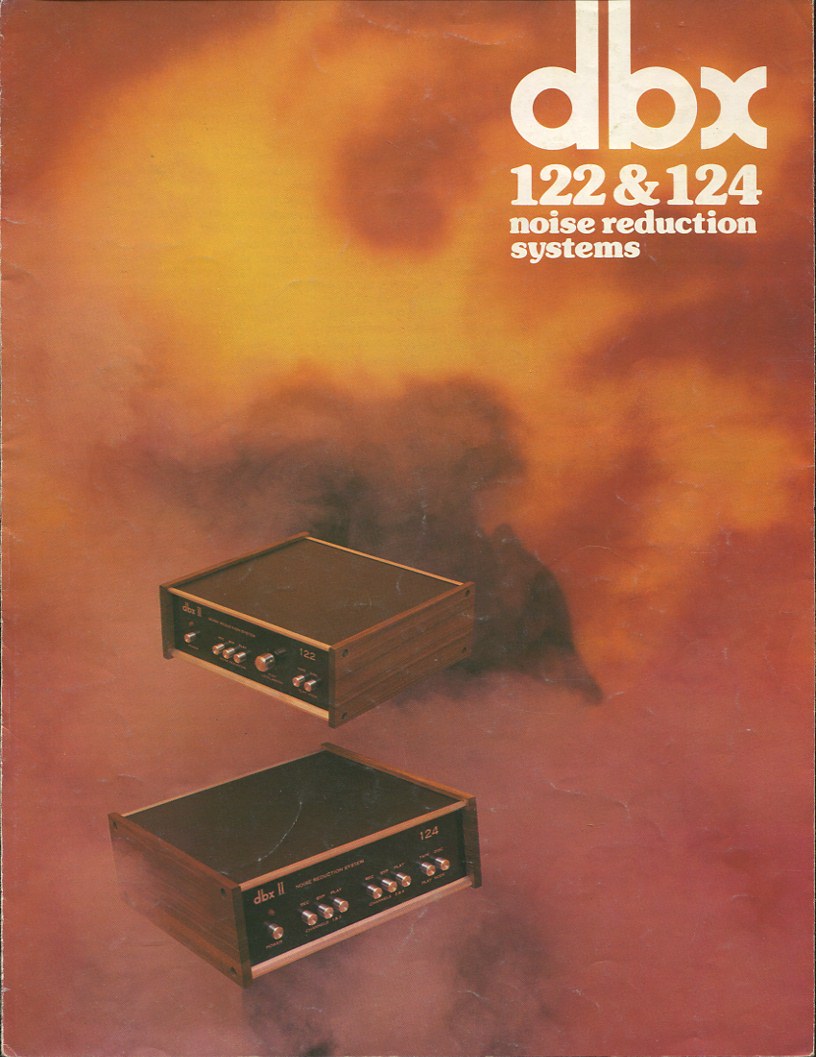
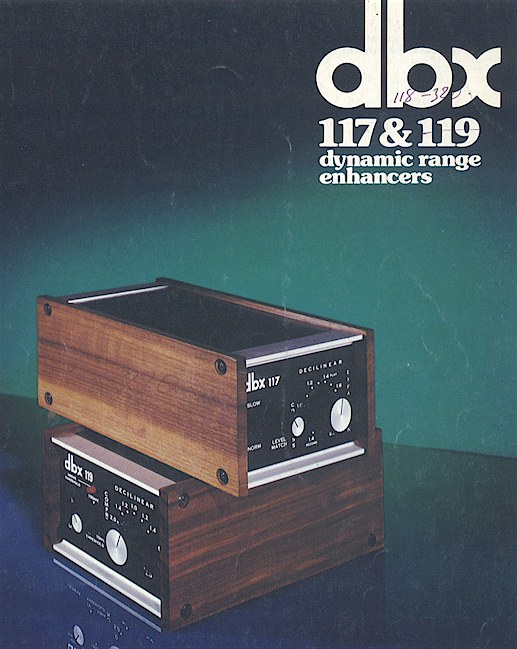
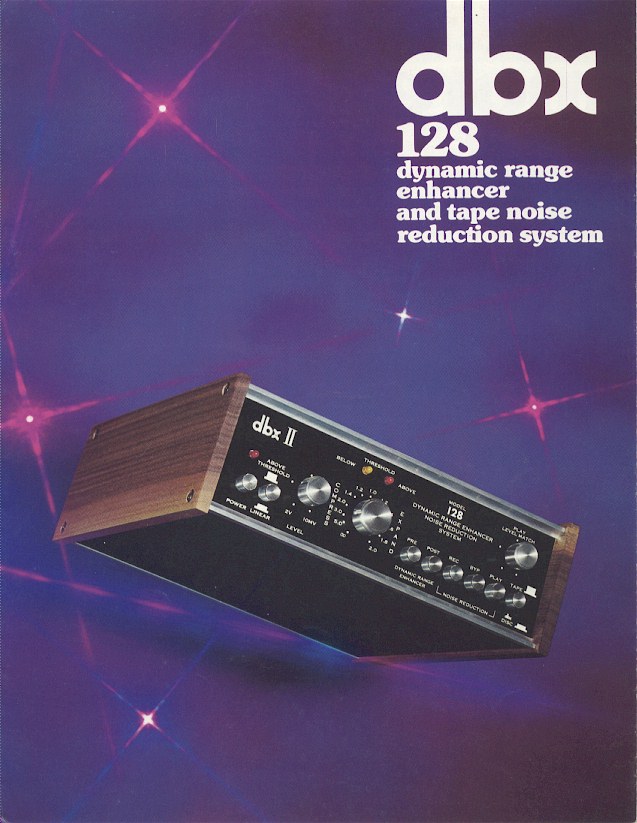
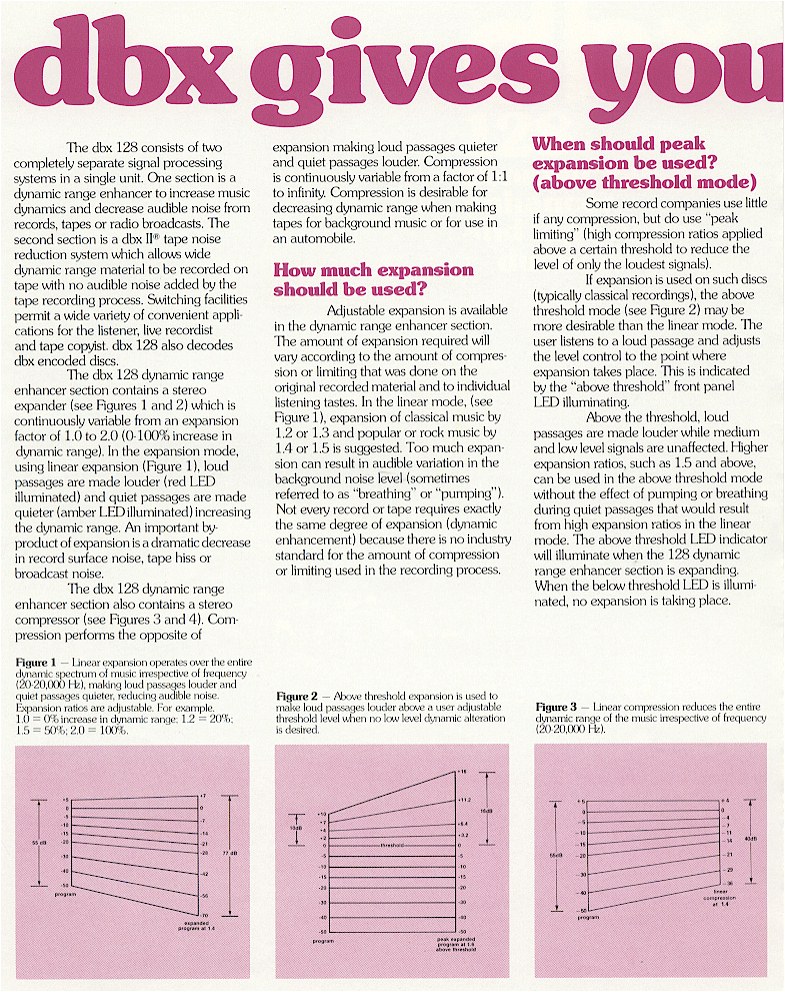
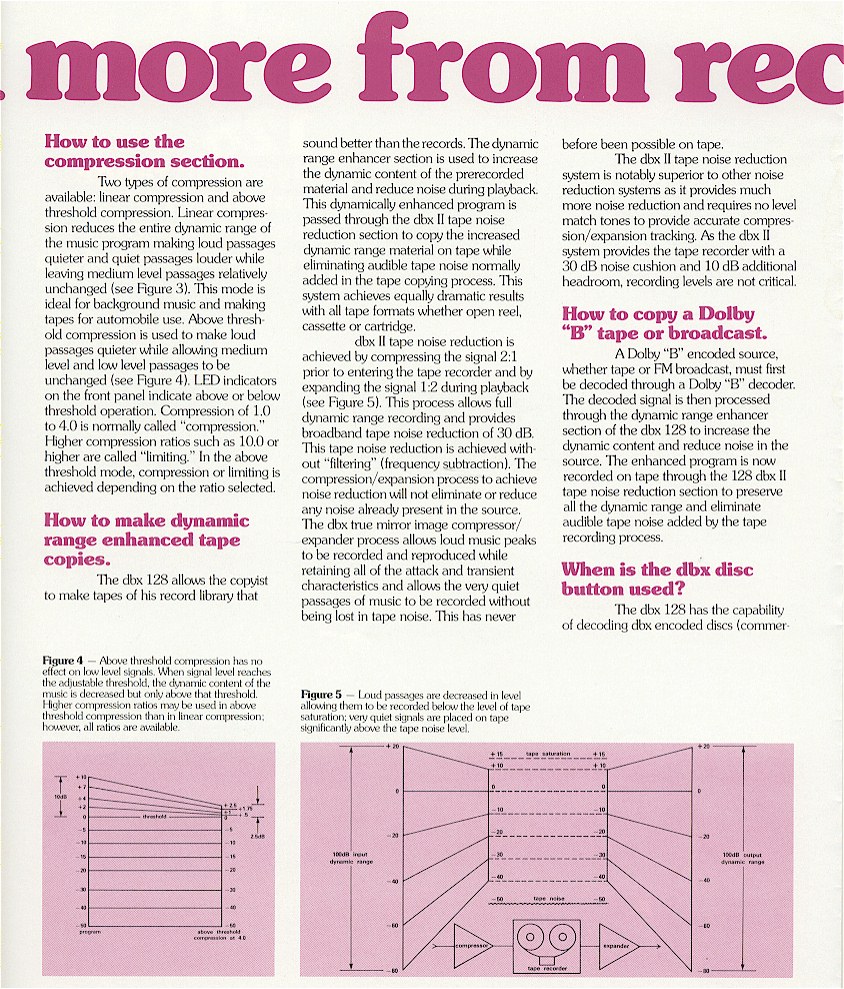
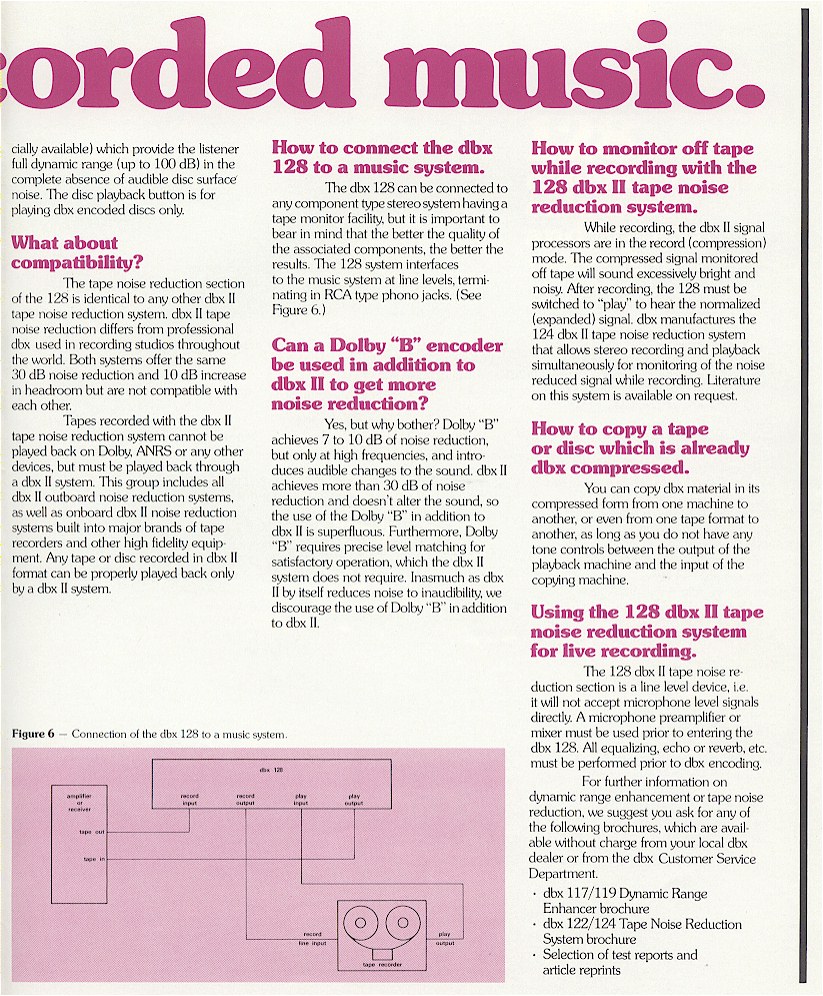
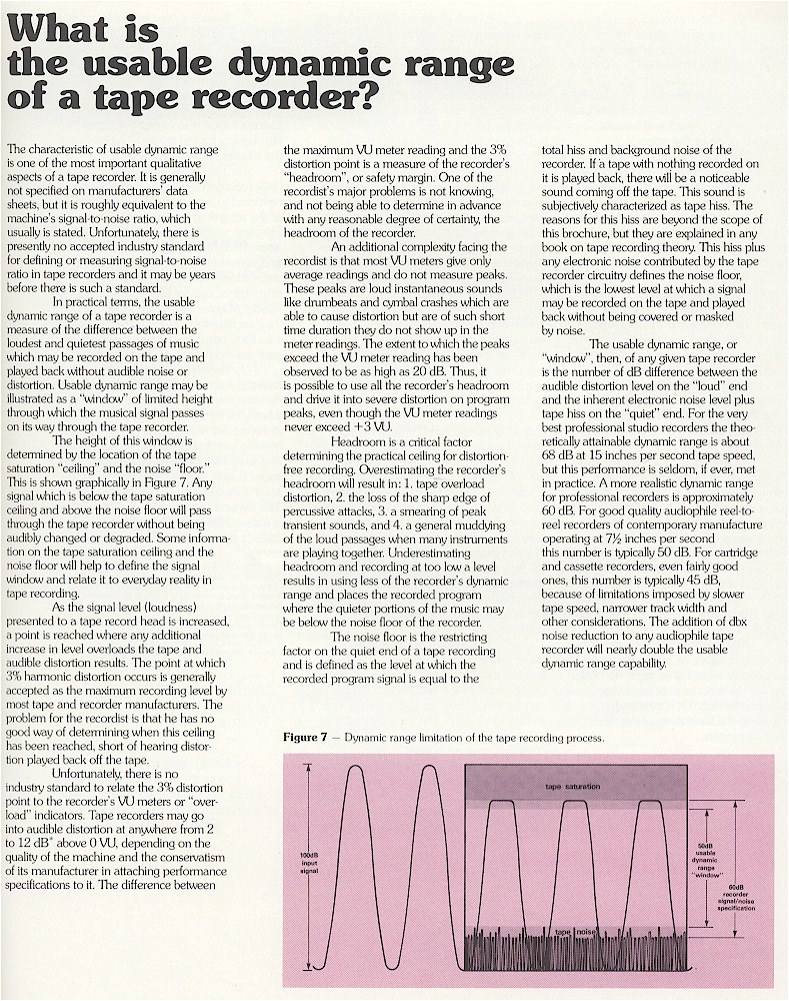
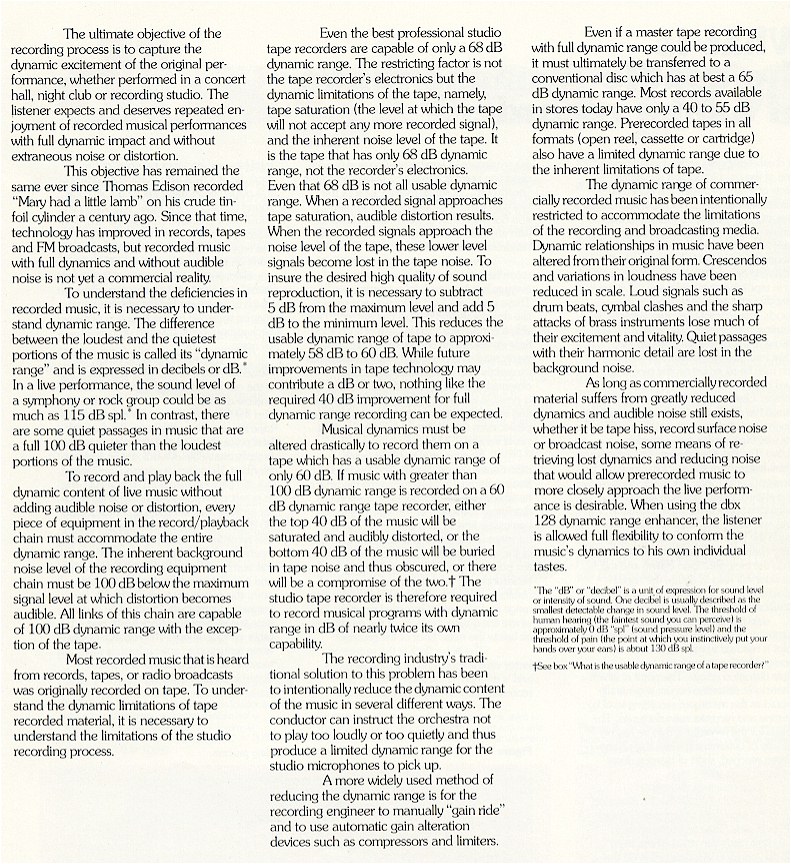
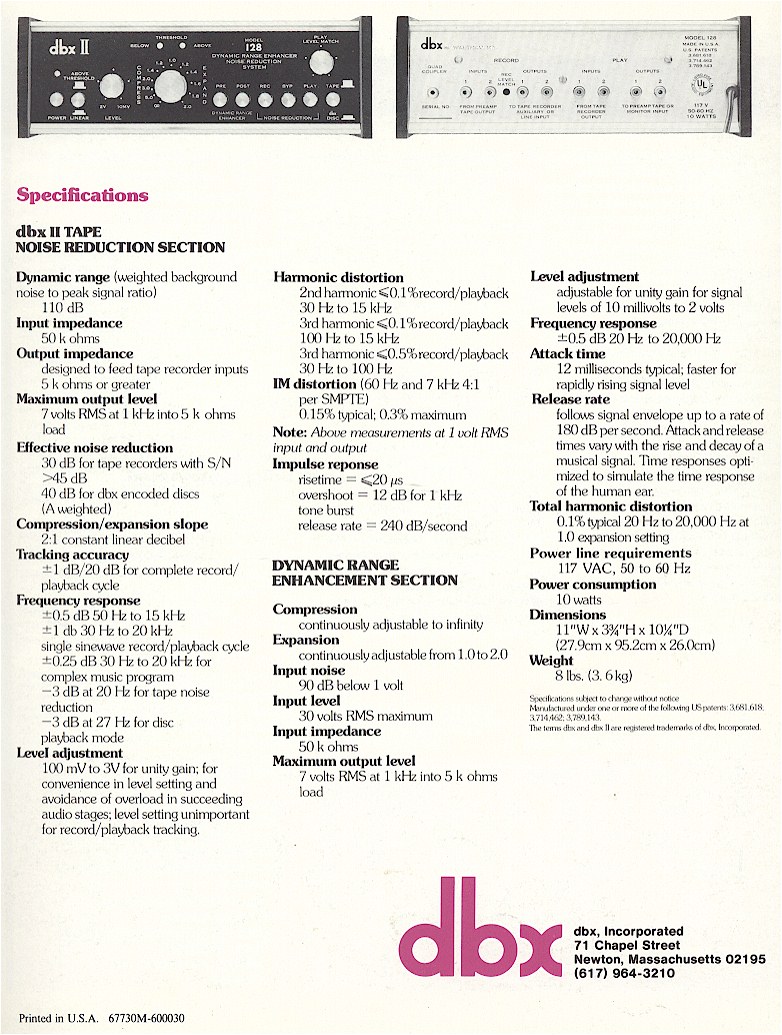
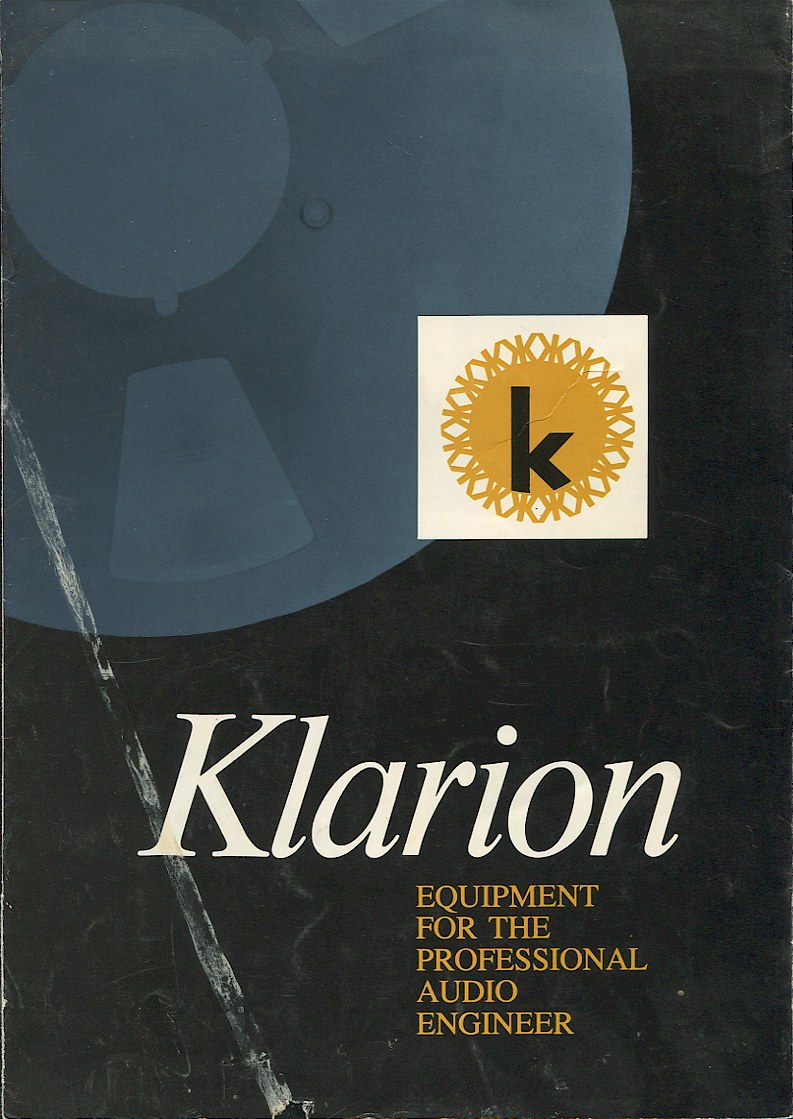
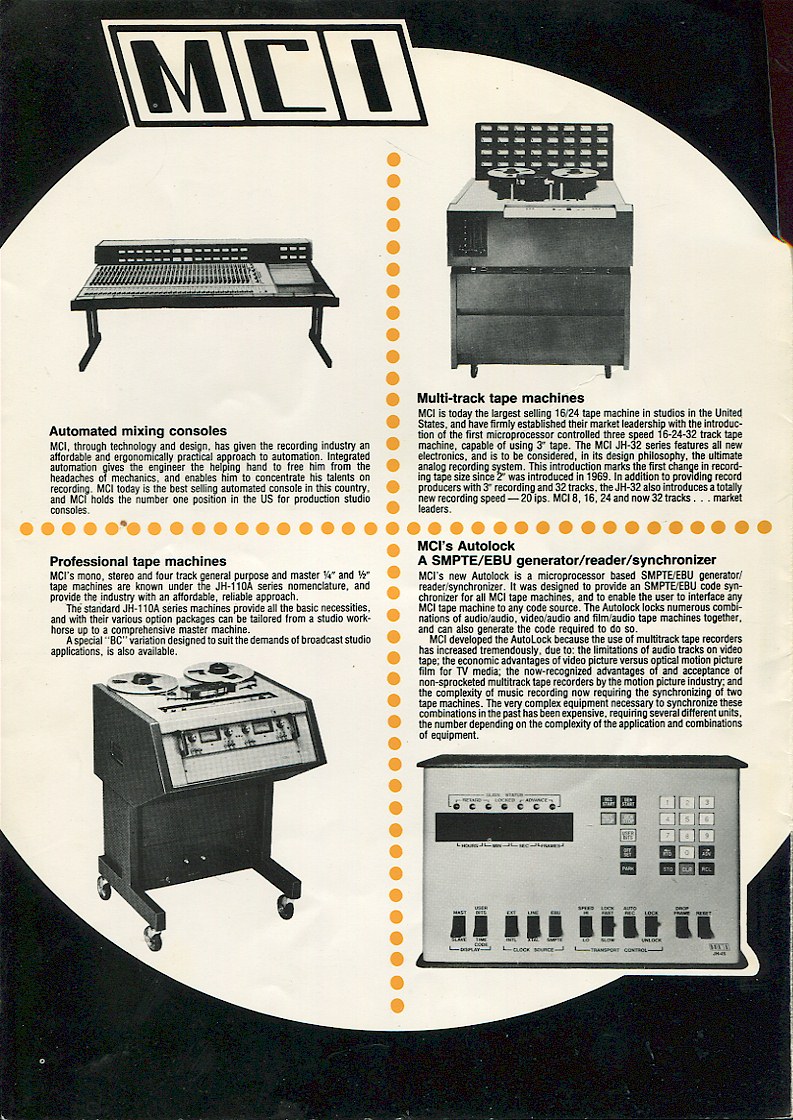
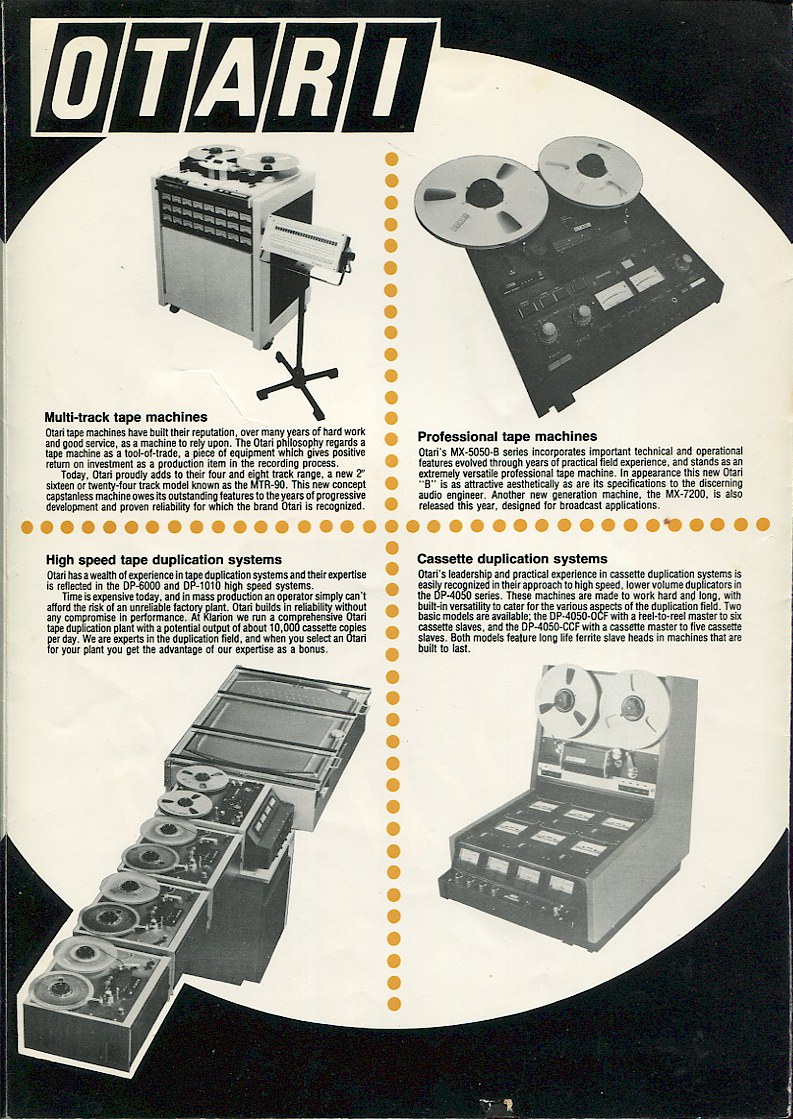
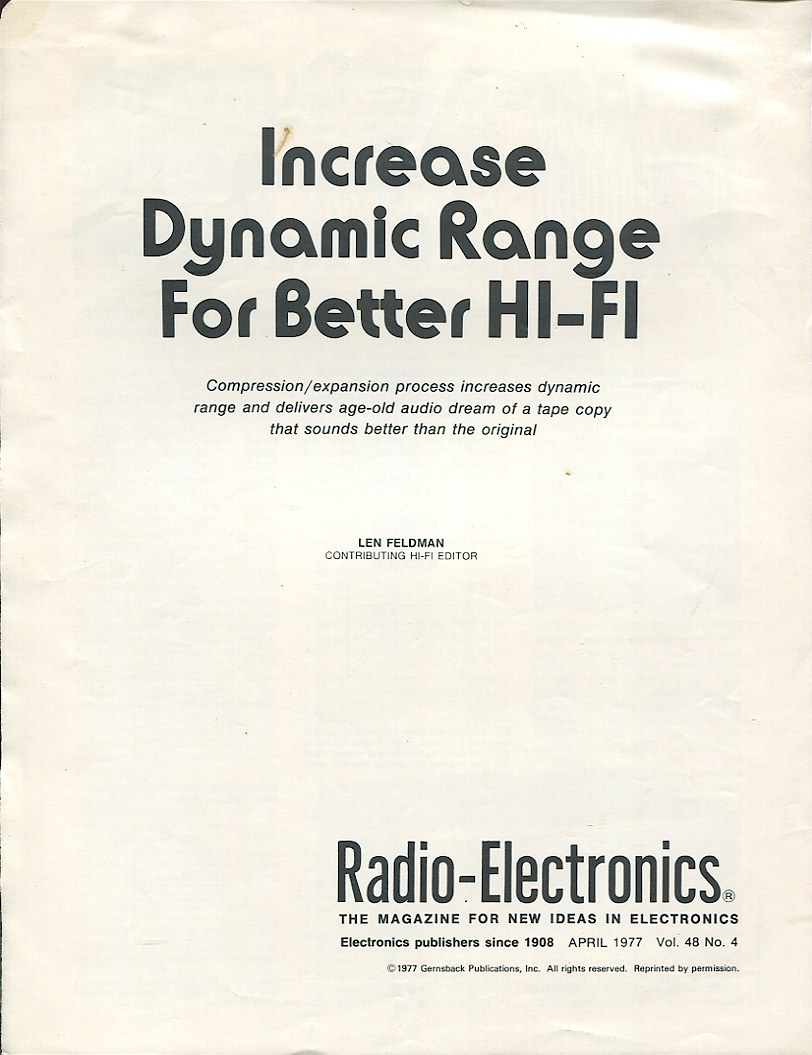
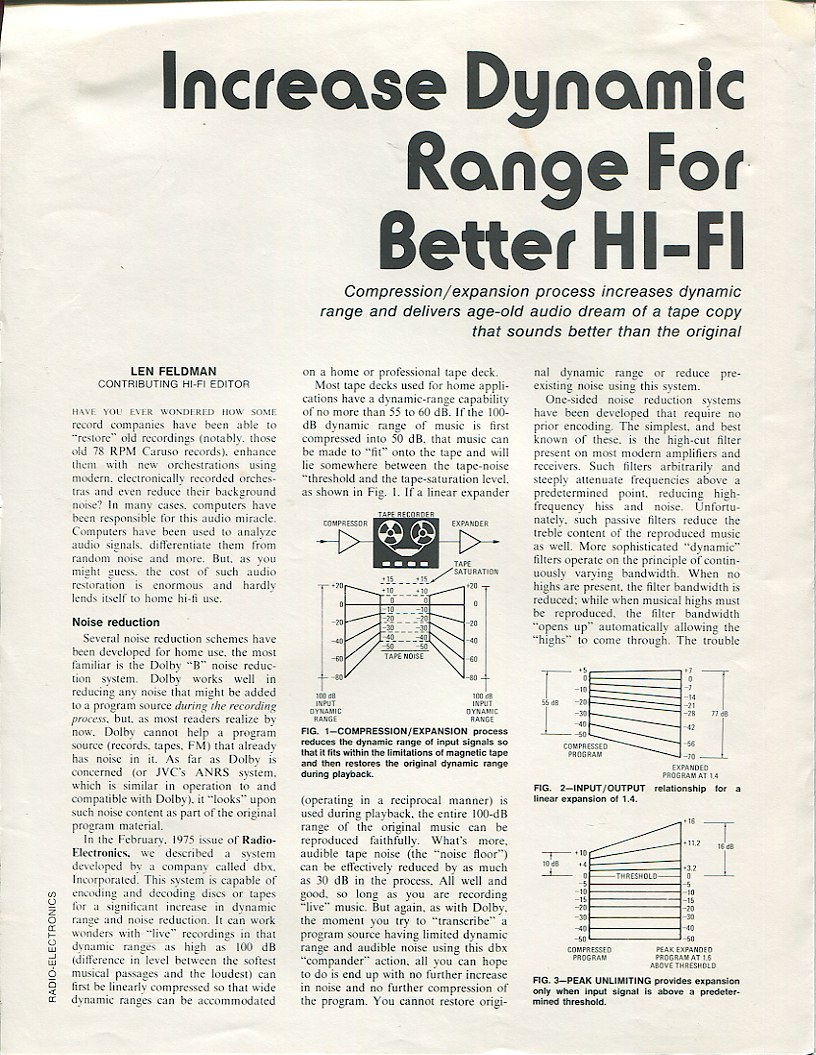
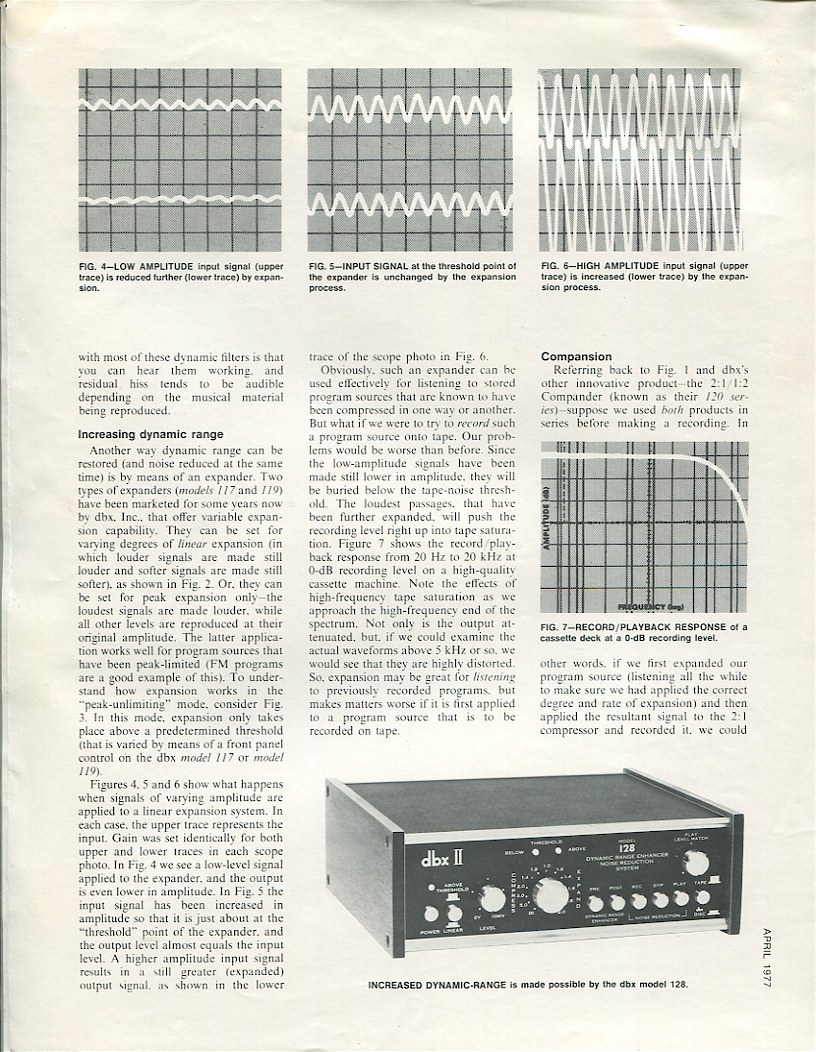
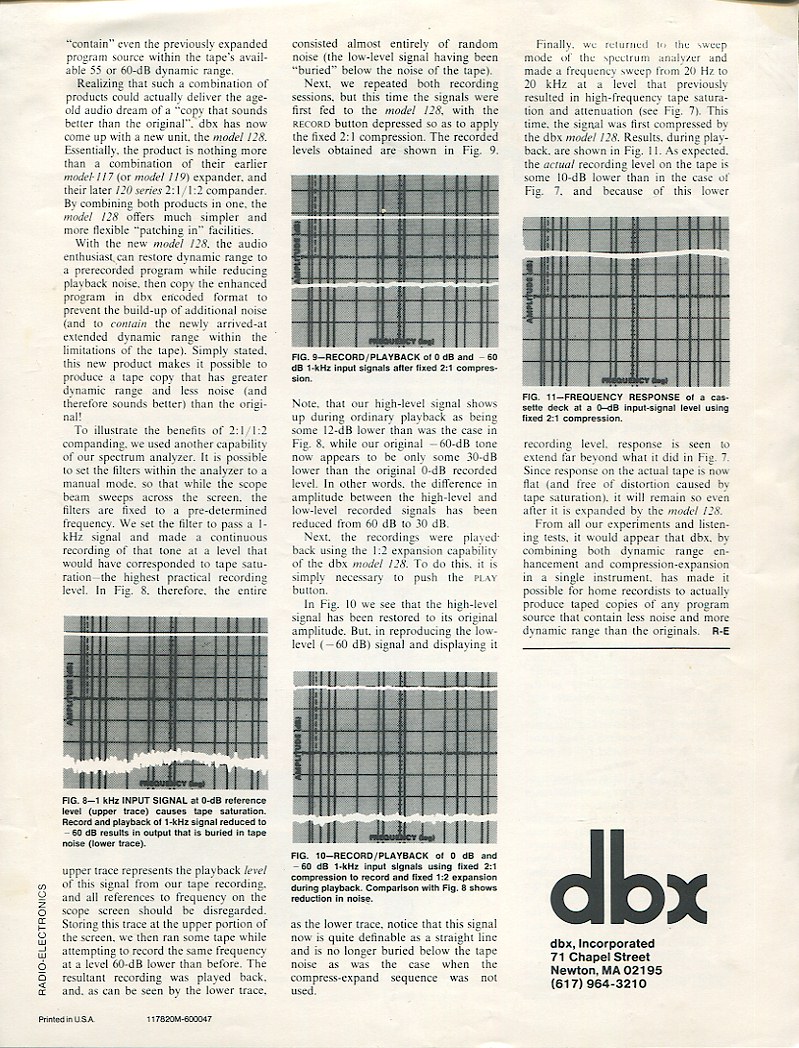
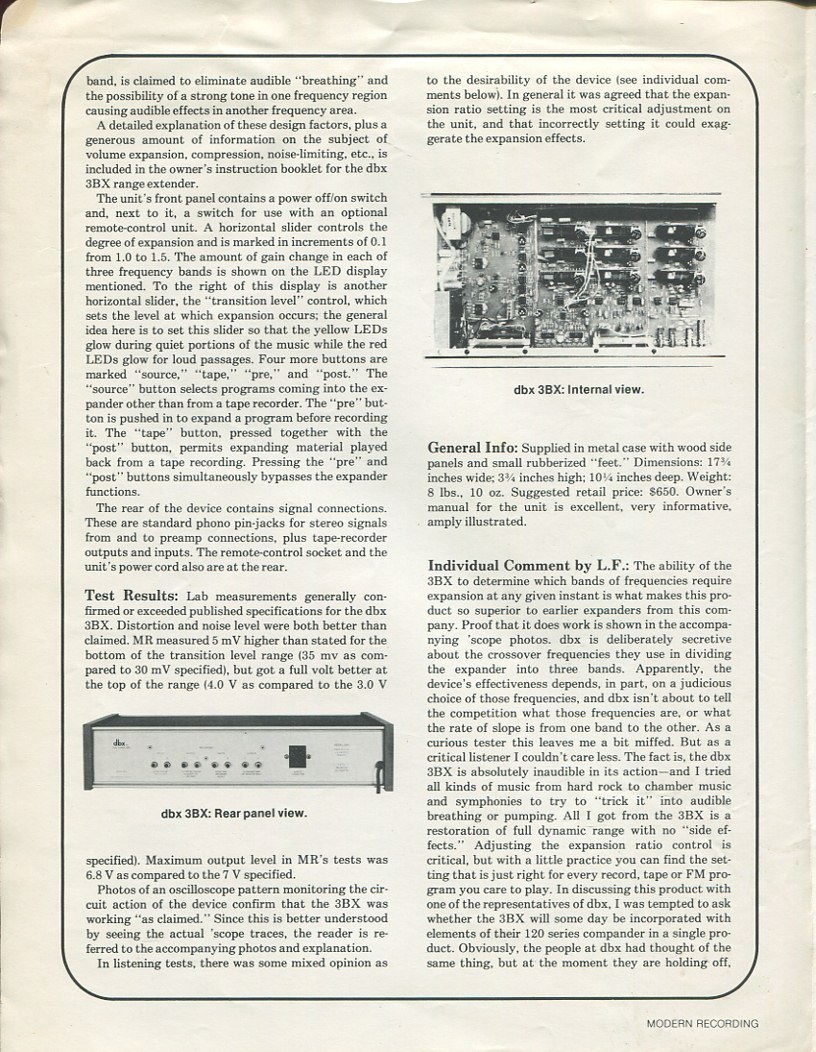
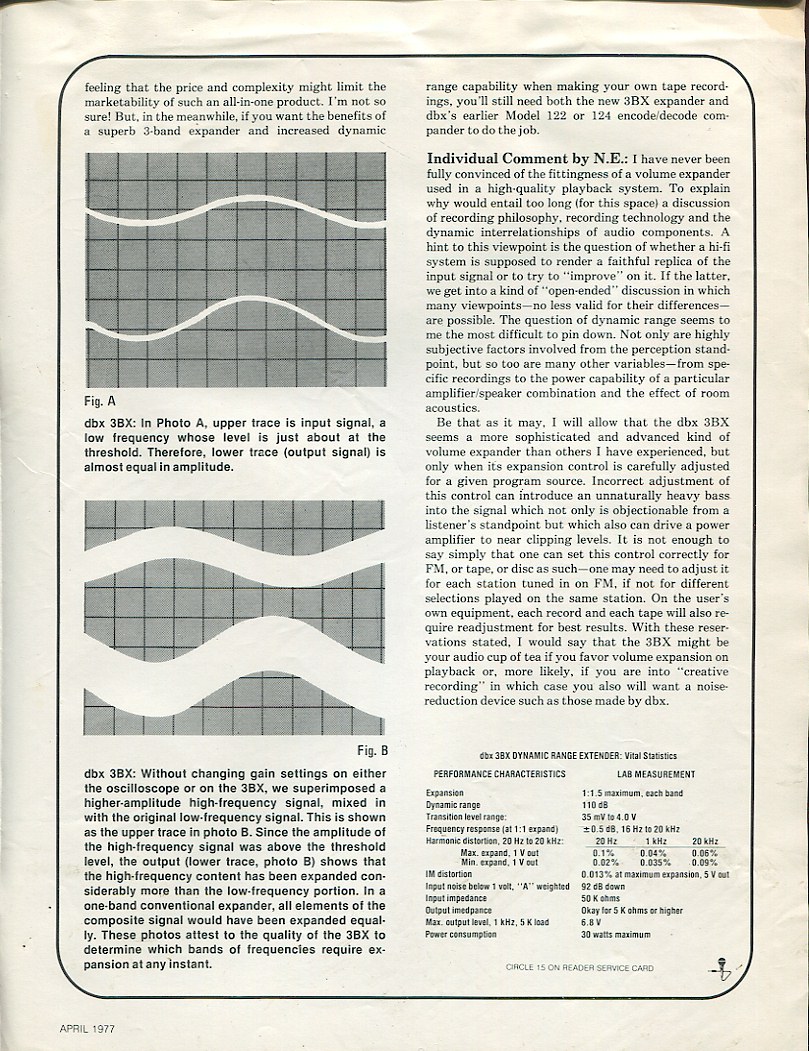
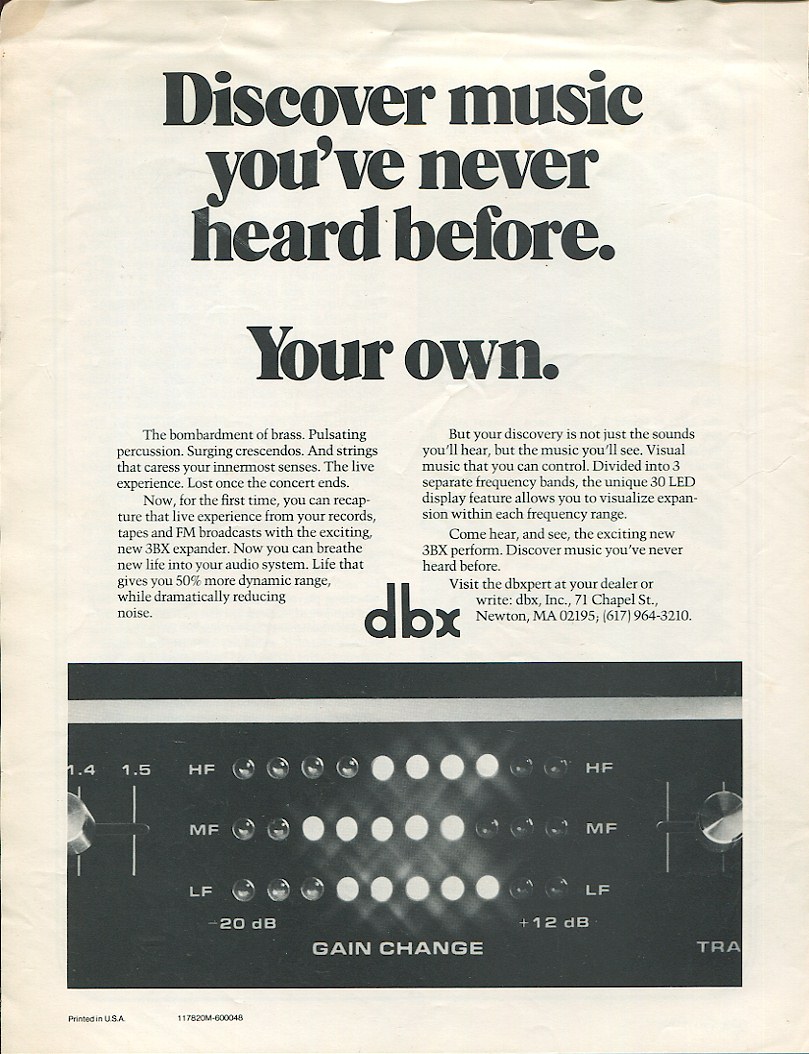
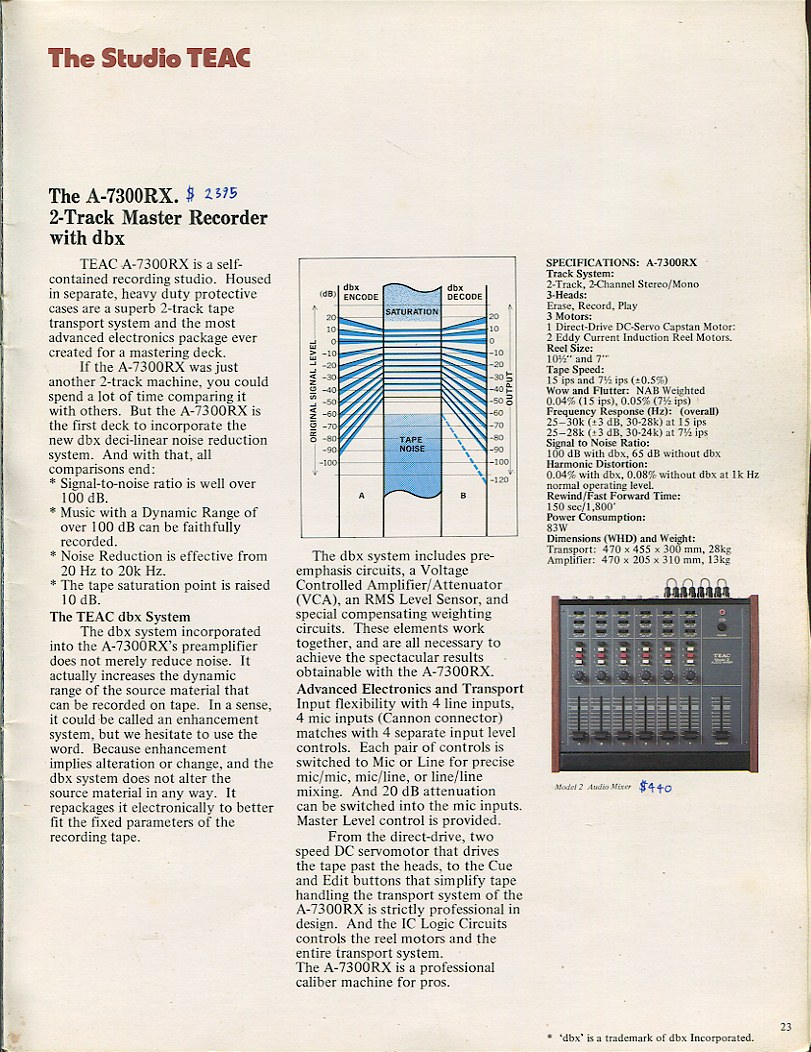
Recording experiments soon showed that after about 6 overdubs that the background tape hiss accumulated and seriously flawed the sound. Dolby noise-reduction was slowly being replaced by dbx technology in the late 1970s, where the dynamic range of the original input signal is compressed so that it fits witihin the limits of the tape. Click Pop-up Window to pop-up a diagram that shows how the dynamic range of a signal is compressed and decompressed via dbx. Some expensive tape recorders came with dbx built-in, and some dbx units were available as add-ons to a Hi-Fi system. Unfortunately, all of the dbx units I could find were simple stereo ones designed to enhance an existing tape or cassette deck. I wanted a 4-channel dbx unit, and all retail stores I visitied couldn't help me. Thanks to a clue from the sister of a friend of a friend I stumbled across Klarion recording studio suppliers in South Melbourne. From them I purchased a 4-track dbx unit for a hefty price of around $700. Interestingly, the dbx unit was manufactured in Massachusetts in the USA.

The Teac A3340-S tape deck, the Teac Model 2 Mixer and the 4-track dbx unit formed a beautiful combination for a simple home recording studio. The effects of the dbx noise-reduction were simply stunning: the unit literally sucked the noise out of tape recordings, allowing tracks to be overdubbed to amazing depths (I never got past 10). The dbx technology is now obsolete, replaced by digital recording in the home computer age. Additional equipment included 2 Akai ACM-200 microphones, a remote control for the A3340-S, a dozen reels of 12" Ampex tape, and a huge box of plugs and wires of various types.

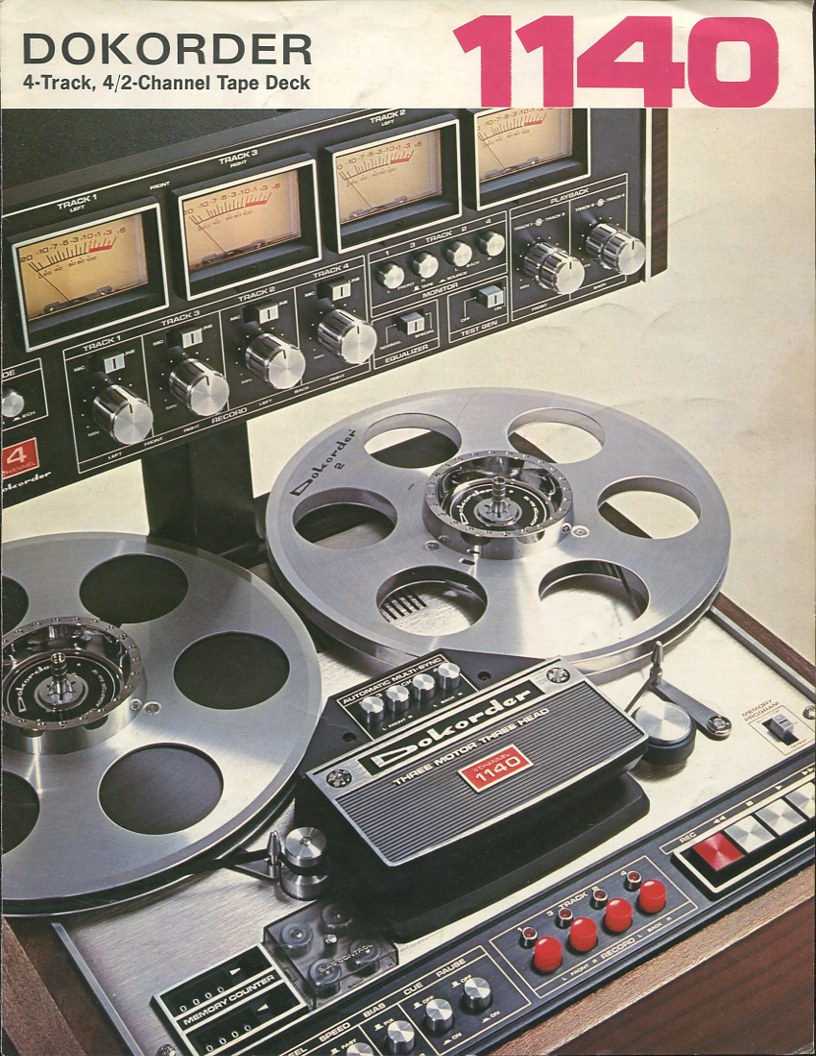
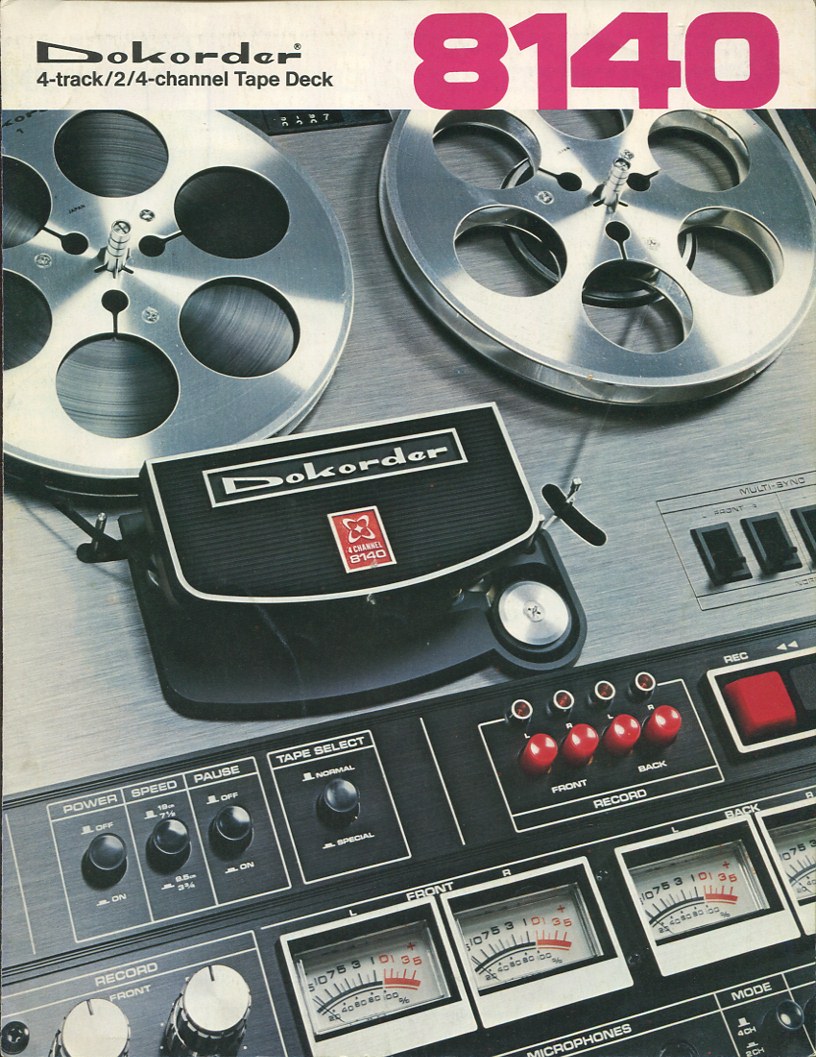
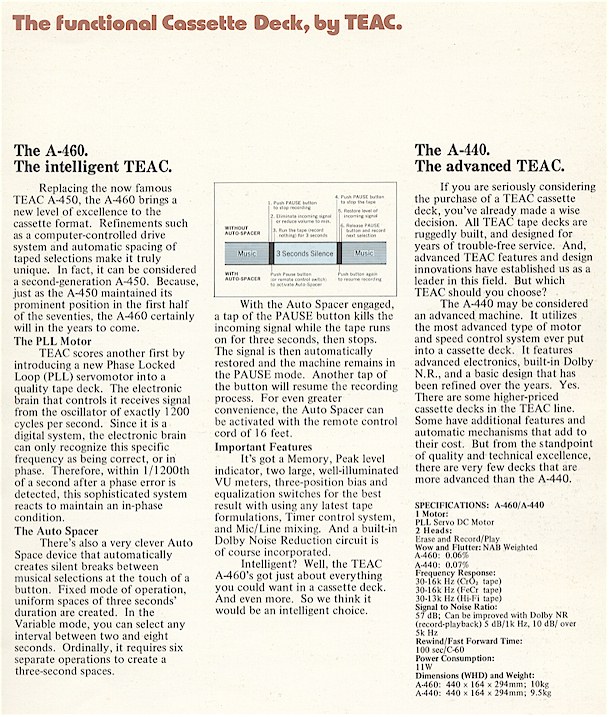
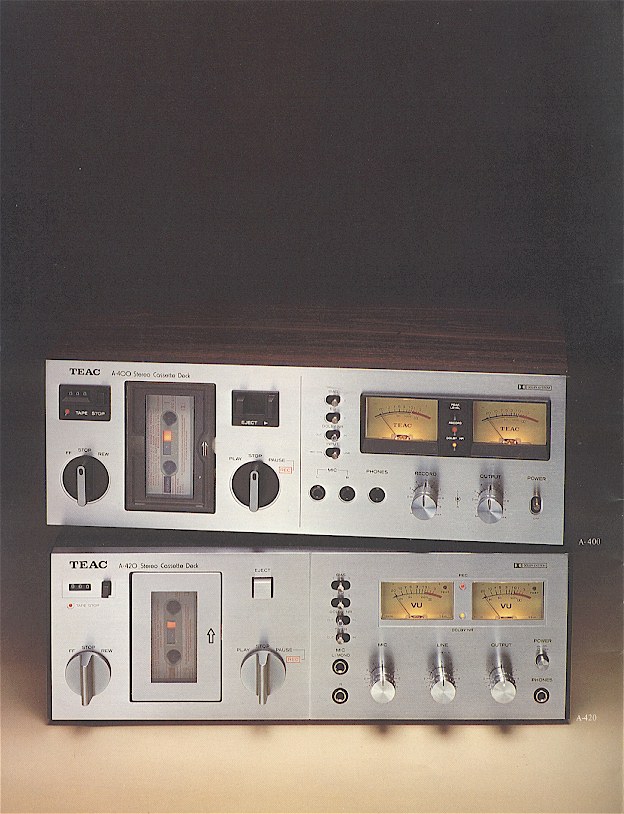
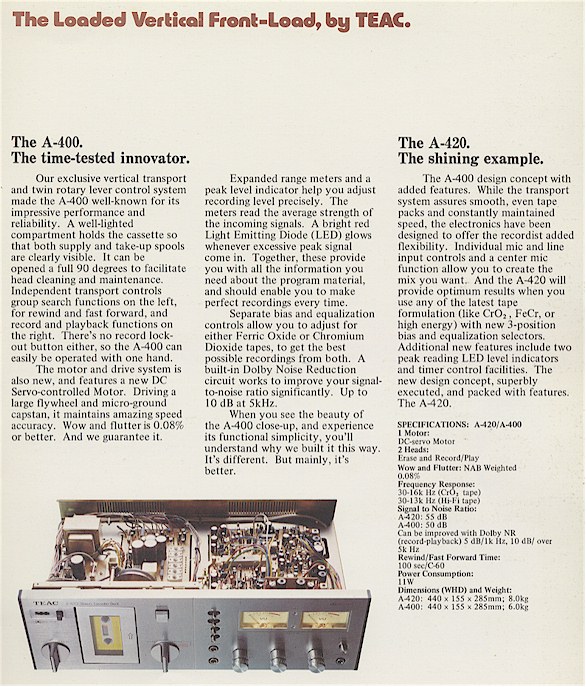
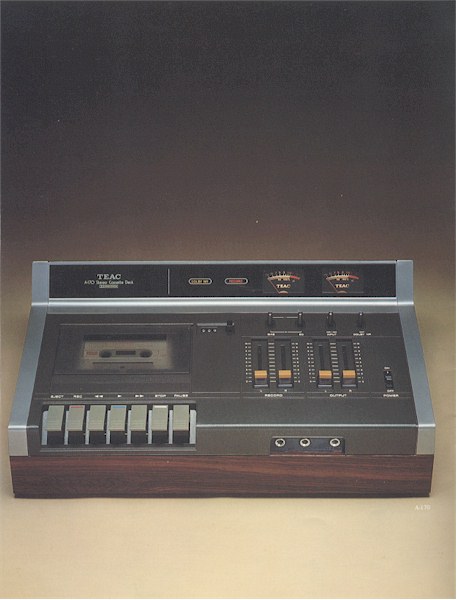
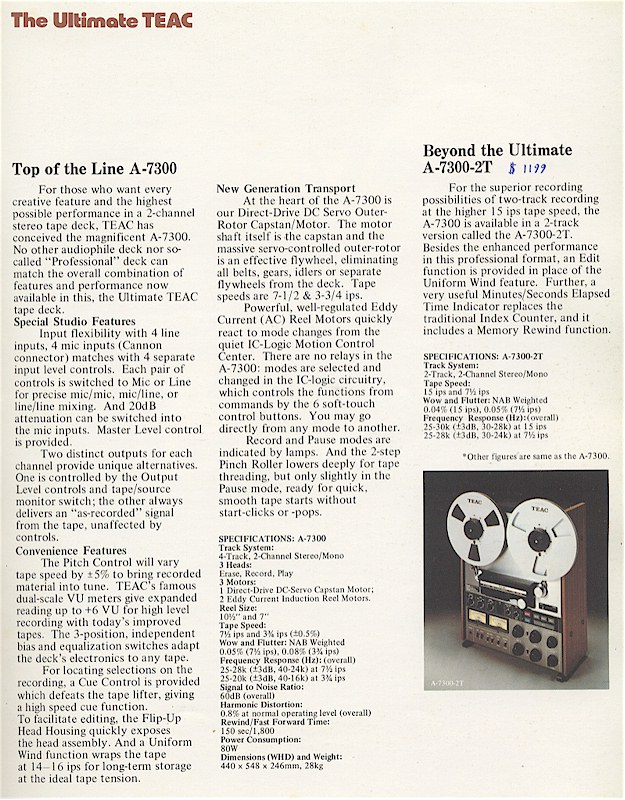
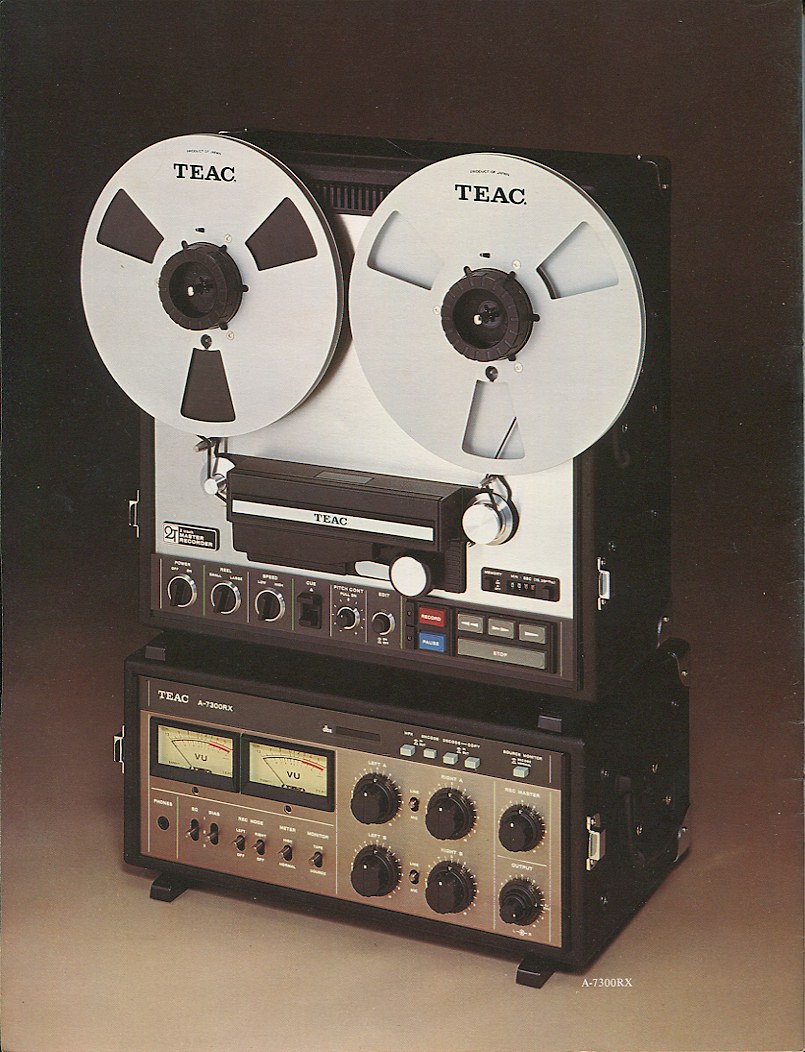
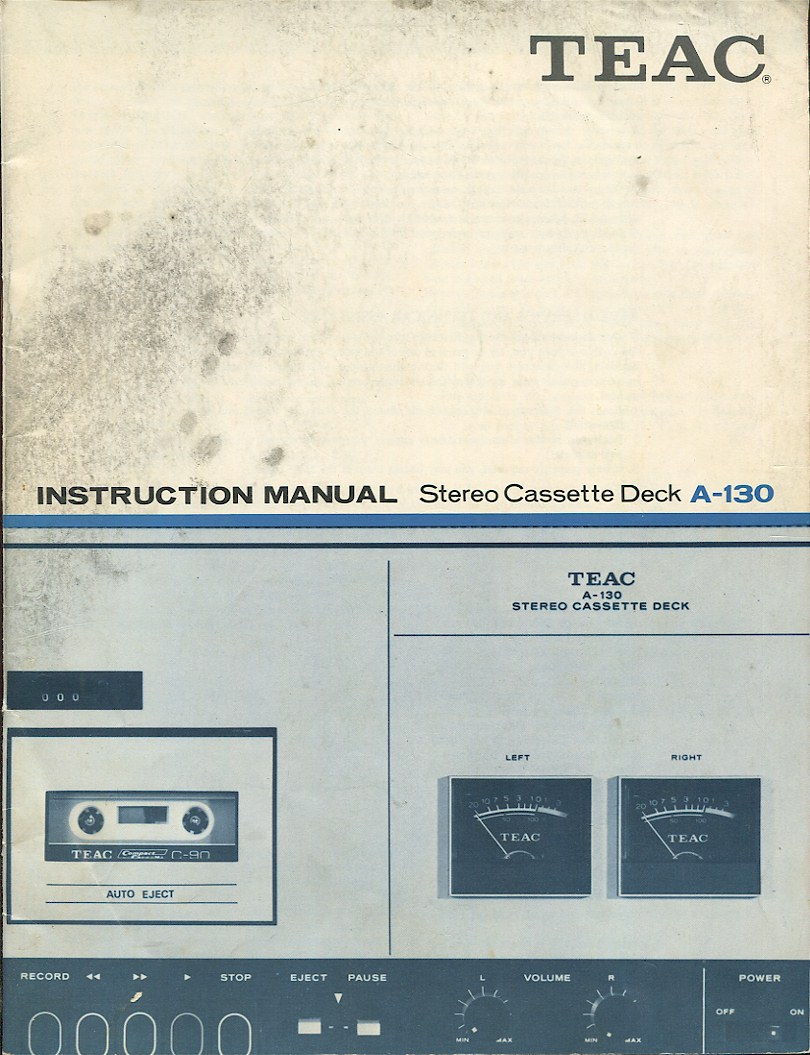
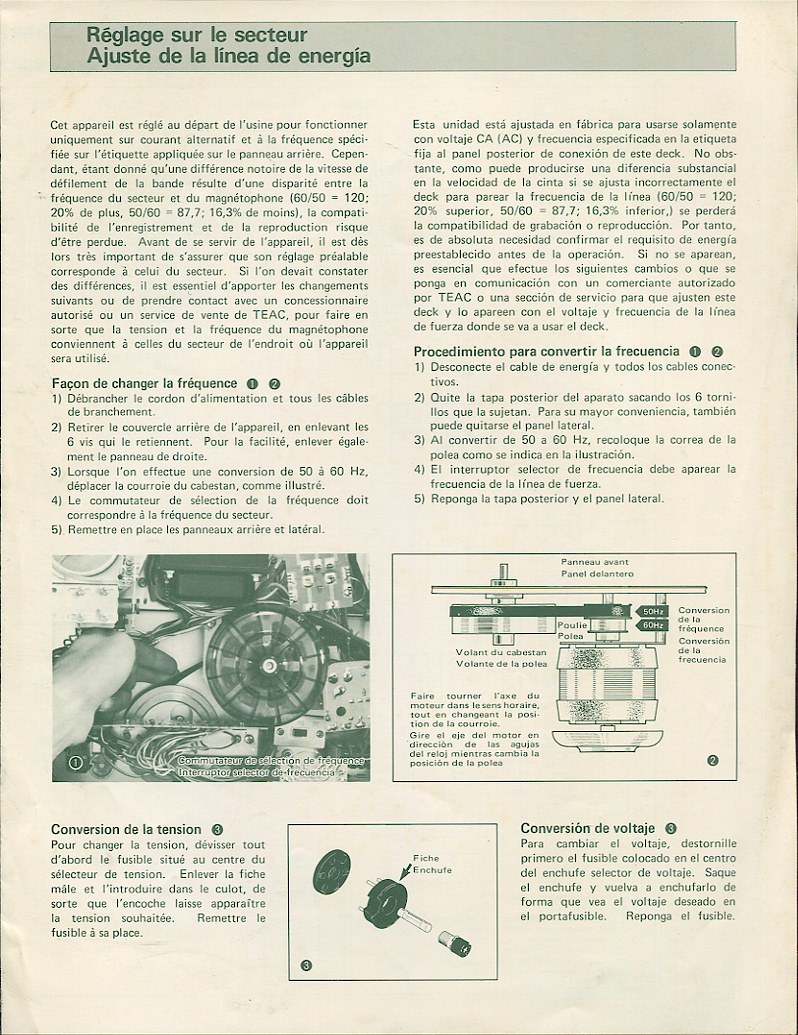
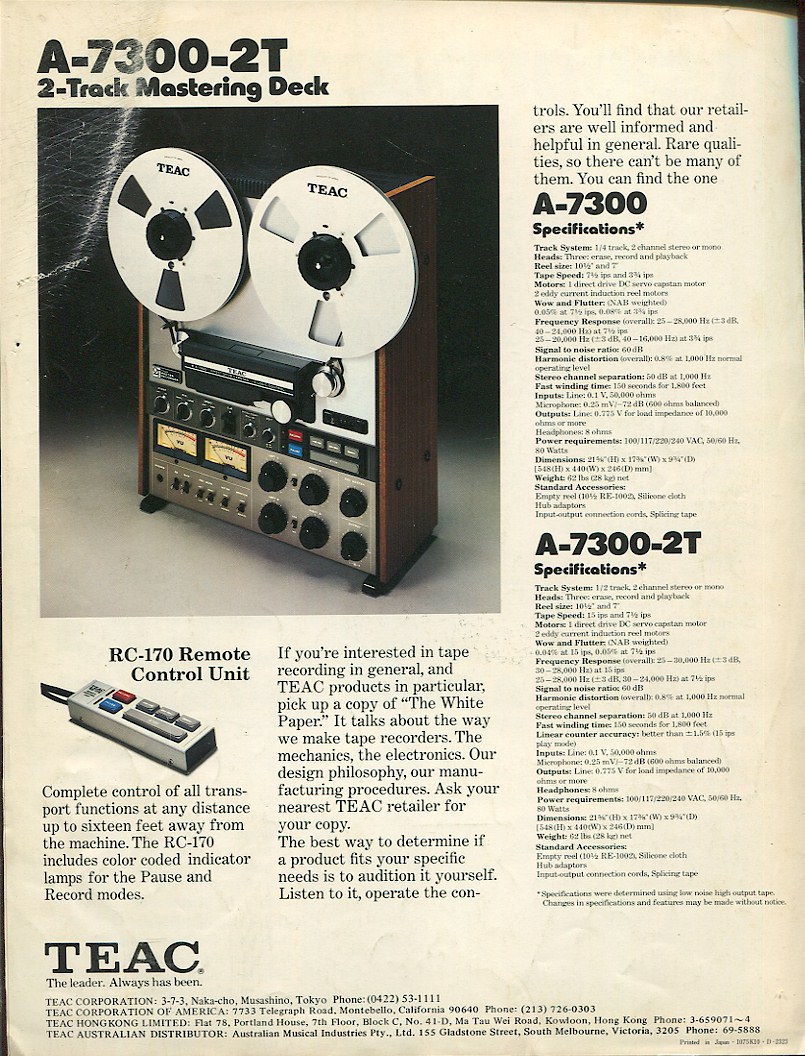
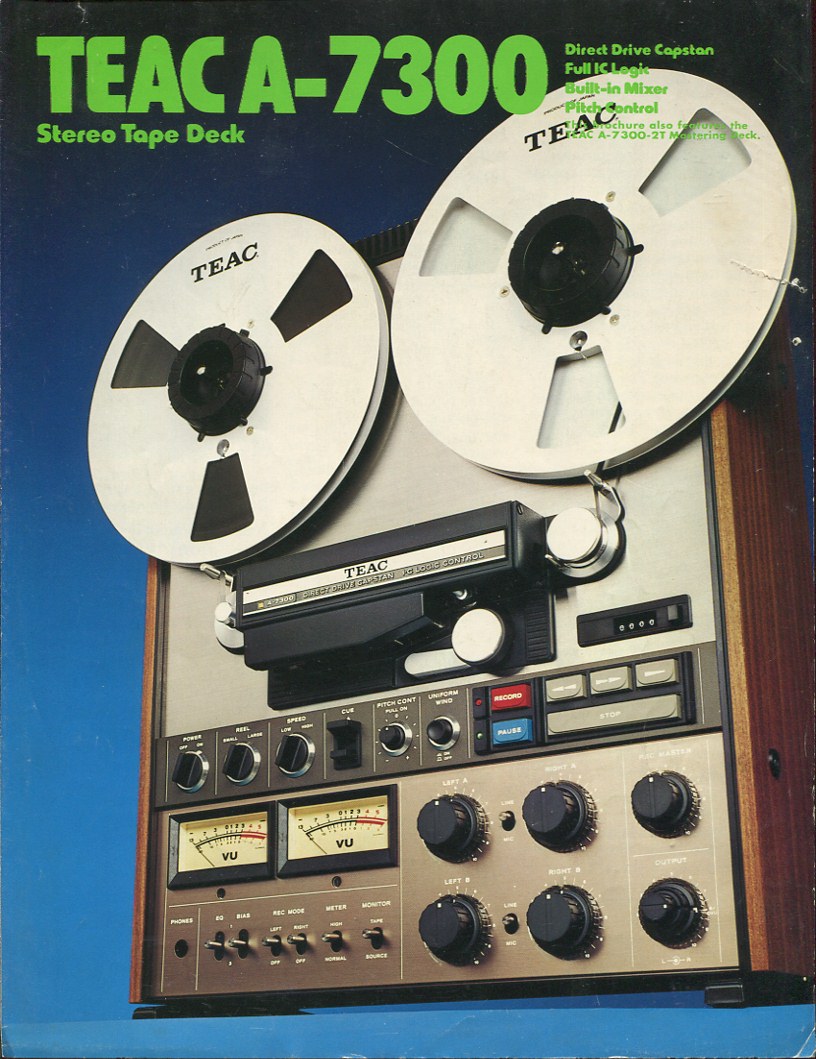
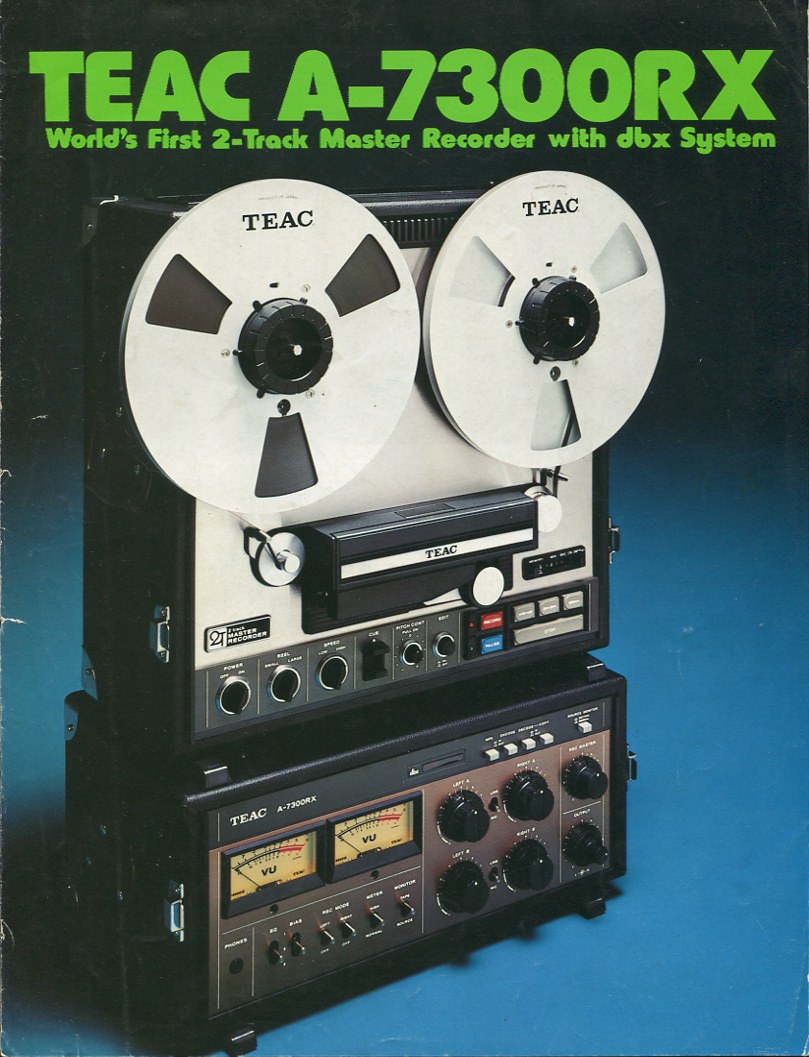
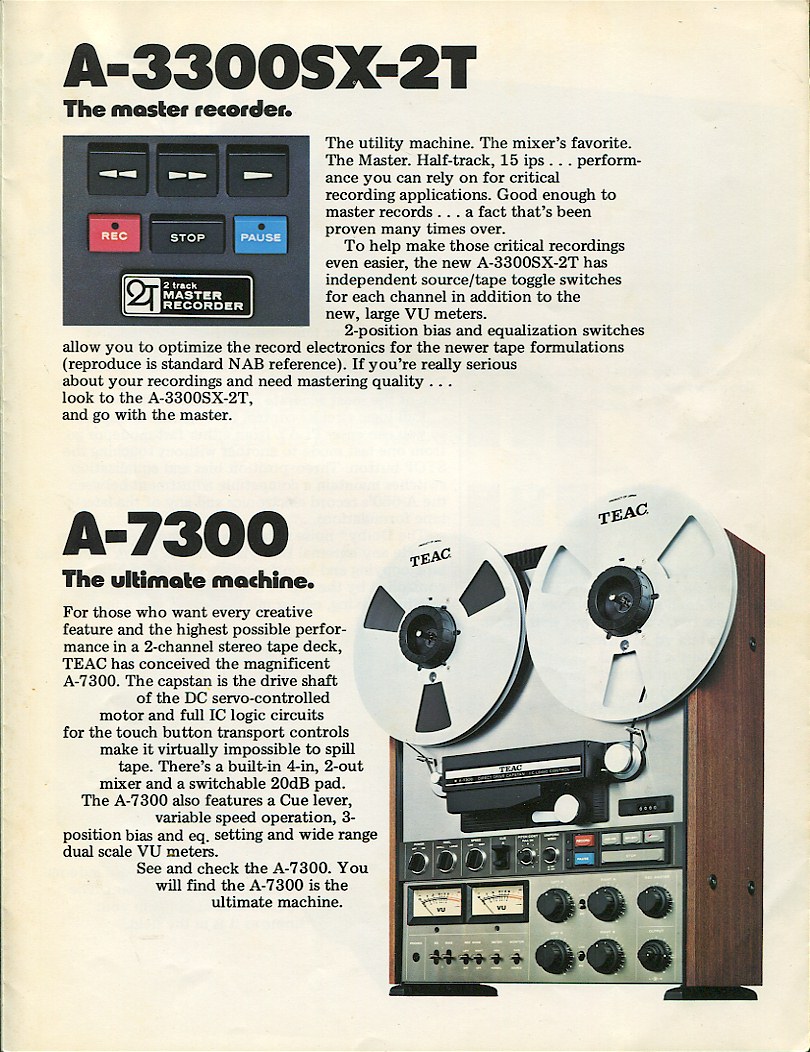
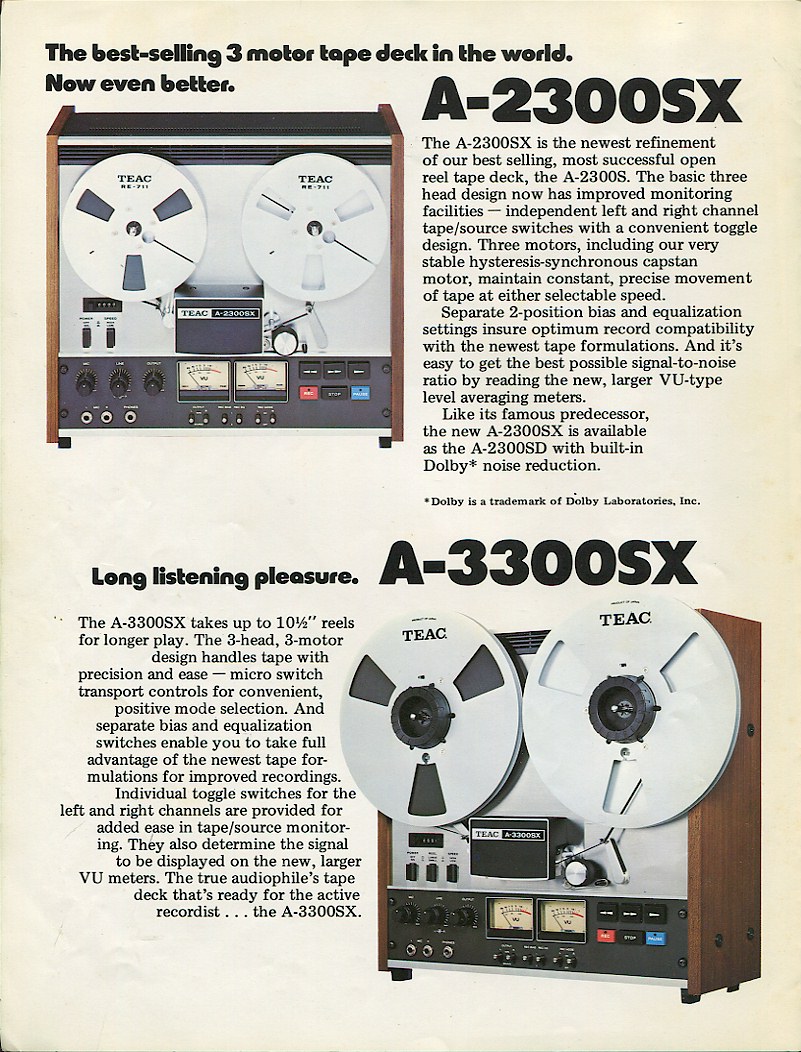
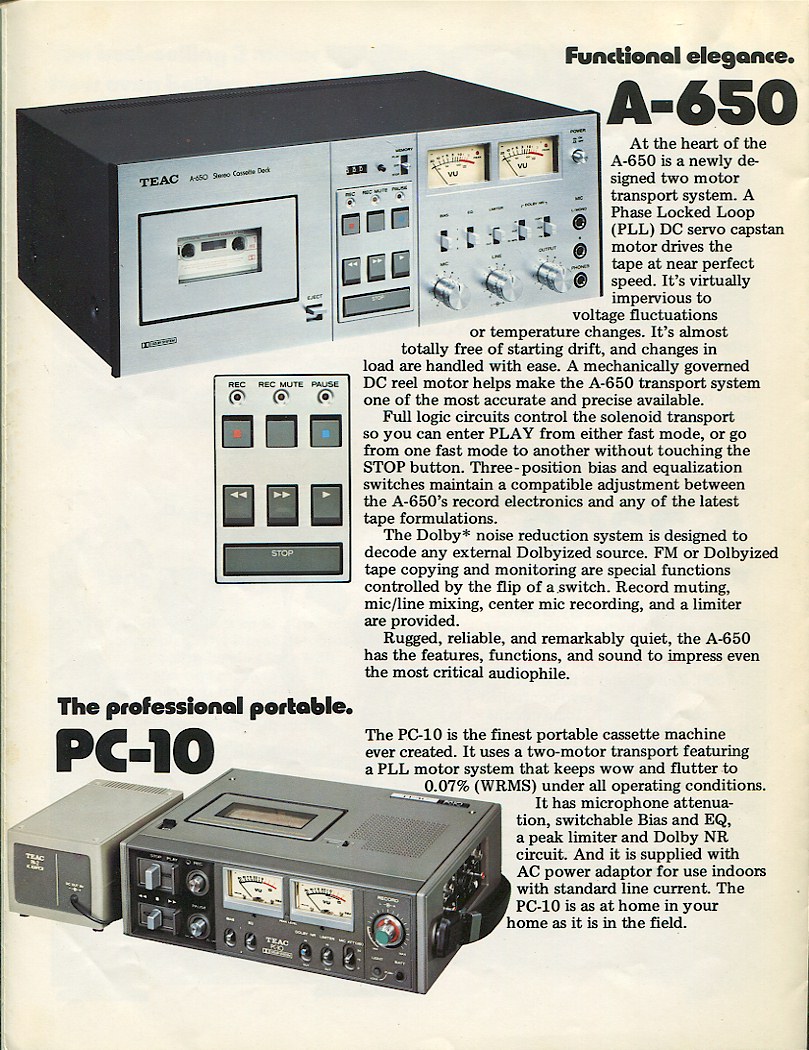
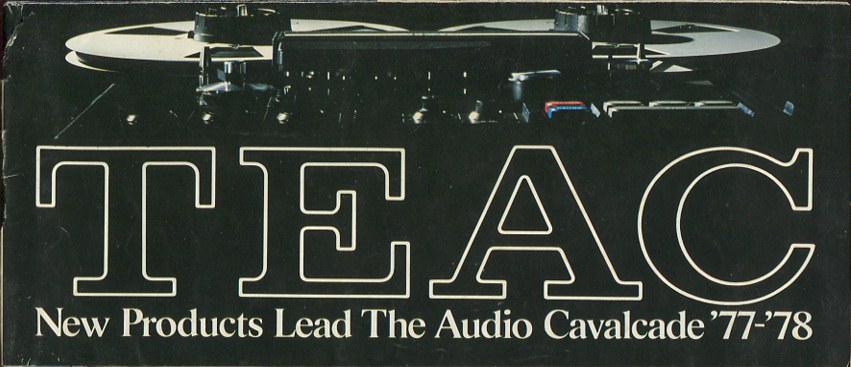
Following is a gallery of images from owner manuals and advertisements for the recording studio equipment (click to enlarge)


A 2-track version
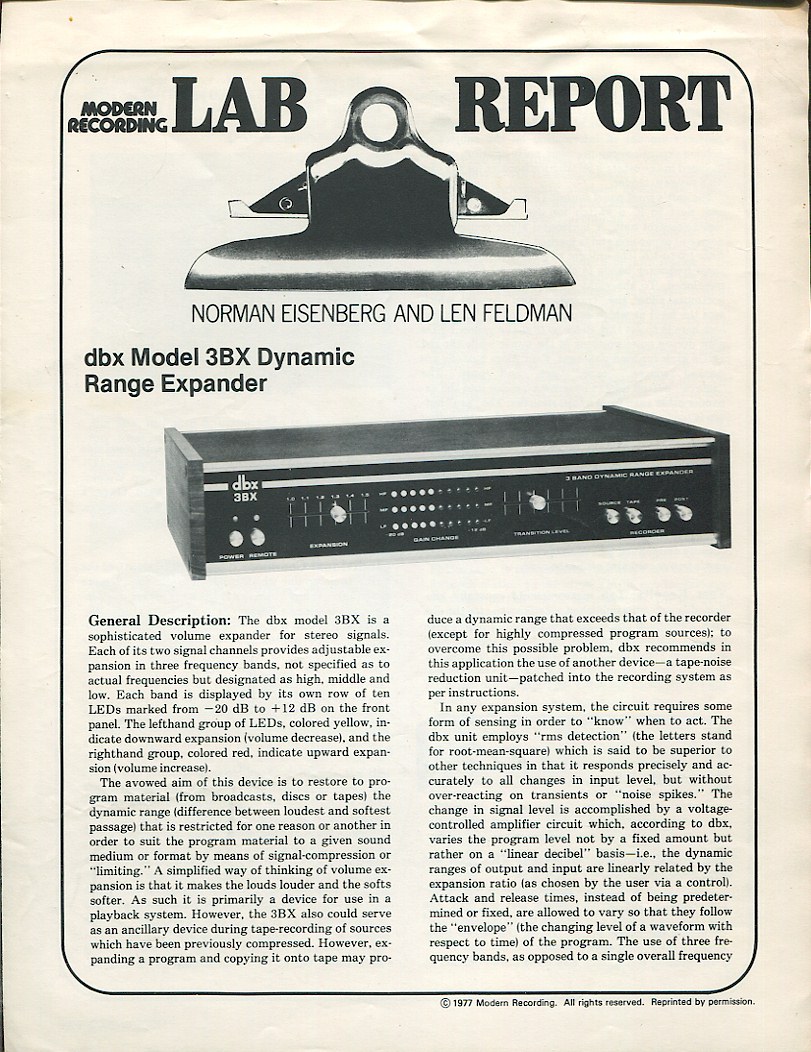
dbx 128

See also:

Gallery of
late 1970s
Hi-Fi Sales
Brochures

Mini-Gallery
of the dbx 128
sales brochure

Not mentioned in any of the previous discussions is the Kenwood DP-840 compact disc player which was found in a bulk discount store in 1984. I had no special requirements for a CD player, I just wanted it to play CDs. I discovered many years later that true audiophiles consider the choice of a CD play to be nowhere as trivial as I thought. I'm told that the quality of the DAC (digital to audio) circuitry is paramount, but to be honest, I don't think I'm capable of hearing the difference between the output of a mediocre or a superb CD player.


33 Years Later

Component Status Comment
Speakers Working (refurbished) By the late 1990s the paper cones in the Marantz HD-770 speaker woofers were crumbling and cracked and needed replacing. My thanks go to work colleague Rohan Smith who volunteered in 1998 to diagnose the speakers and replace the crumbling woofers with newly purchased carbon-fibre speakers, thereby restoring the speakers to a state that is probably better than they were when brand new.
Power Amp Dead The Model 170DC power amplifier made fizzing noises and the right channel died in December 2009.
Mixer Working The Teac Model 2 mixer is still working perfectly and in use 26 years after it was purchased. It's a vital part of the music system that links the computer and the Hi-Fi together.
Turntable Working The Akai AP-B1 turntable is working very well, despite the increasing difficulty of locating the RS-82 compatible stylus that it uses. I recently had to drive across town to get a replacement stylus.
Tuner Obsolete The Model 2100 tuner was working tolerably well, but the background noise was slowly growing. It became obsolete when the power amplifier died.
Preamp Obsolete In early 2001 the the main pot resistor on the Marantz preamp started to fail and cause random volume drop-outs. It has been determined that it is not cost effective to repair the unit. The preamp was being used only as a phono preamp with the signal being taken from the tape-out (which bypasses the main volume pot). It became obsolete when the power amplifier died.
CD Player Obsolete The Kenwood compact disc player was still working perfectly by early 2008, but the personal computer age has made it obsolete. I wrapped it in plastic and left it on the front fence with a note saying "1984 vintage working CD player. Please take if can put it to good use". It was gone after about 4 days. Who plays CDs anyway? They're now the LP of the 21st centrury. It's much easier to create a "juke box" of thousands of MP3s on the computer and create customised play lists. See: Music - Juke Box MP3 Library.
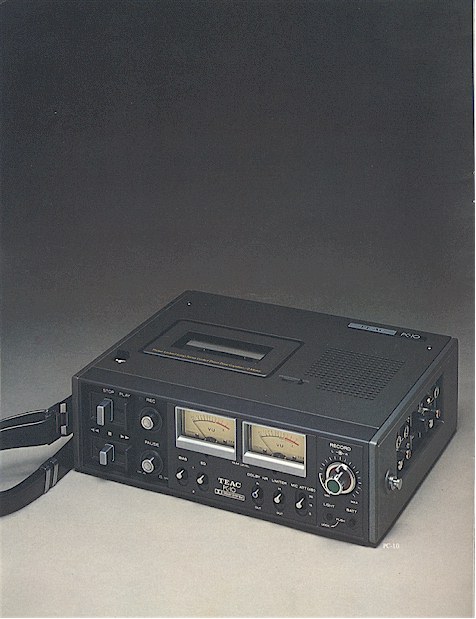
Cassette Deck Dead The cassette deck stopped working in 2002 and was thrown out with the garbage. It was last used from 1998 to 2000 when around 60 old cassette tapes were played and transferred to WAV files and then to compact discs and MP3 files for archiving. The personal computing revolution and digital recording have made the cassette tape totally obsolete (thank heavens!).
A3340-S Obsolete See details in the next section.
dbx Obsolete See details in the next section.

Following are some photos taken of the old Hi-Fi equipment in 2000-2001, just before the tape deck, dbx unit and cassette deck were archived in the garage.


On Sunday the 23rd of March 2003, Scott visits Nancy Street to pick-up the Teac A-3340S and the dbx. Scott found the vintage equipment listed in this web page and asked if he could purchase the items. As mentioned previously, the tape deck and dbx unit were of no practical use any more, so they were given to Scott for the swap of a bottle of nice champagne. Scott says a busted solenoid in the Teac has been fixed and he'll send some photos of its new home.


Archiving Reel-to-Reel Recordings


A 1978 vintage reel of 12" Ampex tape which cost ~$25. Click to open the box.

During 2000 I embarked upon a project to transfer 15 reels of 12 inch Sony and Ampex reel-to-reel tapes to compact disc for archiving. I estimate that the total working time for the project was about 100 hours spread out over a few months. The project was tediously long because the 25 year old tapes were crumbling and peeling so badly that the transport mechanism of the tape deck had to been cleaned every few minutes of play. The oxide would peel like pencil shavings and make the capstans and heads of the tape deck so dirty that they would squeek and shudder as the tape moved over them. Hundreds of cotton buds and a glass of metholated spirits were used up in the transfer process.

A side problem was trying to identify the contents of some of the tape reels. I had labelled about half of the tapes with meticulous care, but others only had scribbed notes or nothing at all. Due to the nature of sequential access media (like tapes), it's very tedious to search them and indentify the contents. Thank heavens for modern CDs, DVDs and hard drives that can be randomly accessed.

In early 2002 the Teac A3304-S and the dbx unit were sealed in plastic and stored in the garage, unlikey to be used again. These beautiful pieces of engineering and electronics now belong to the ages. This old equipment is now totally obsolete and has been replaced by PC recording studio software such as Triple-DAT and Cakewalk.

The reel-to-reel boxes are still sitting on the bottom of a bookshelf and it is unlikely they will ever be opened again. They may soon join the tape deck and dbx unit in the garage.


History

Sometime in the early 1970s I became fascinated by the recording technique of overdubbing (multitrack recording) in which multiple layers of music are recorded next to each other and can then be mixed down to a final result. I became aware that my favourite bands of the time, The Beatles, The Rolling Stones and The Beach Boys were all using overdubbing tricks in the studio. I learned decades later that legendary guitarist Les Paul is often regarded as the inventor of multitrack recording in the 1950s where he modified tape recorders and built special equipment to turn himself and his wife Mary into a band and chorus. Read an interview with Les at The Legend Plays On.


Samples

In this section I present some short samples of classic multitrack recordings. Special admiration must be reserved for groups and people like Todd Rundgren, Paul McCartney, Queen, 10cc, Joni Mitchell and Kirsty MacColl among countless others who are also masters of multitrack recording.

Les Paul & Mary Ford - How High The Moon - howhigh.mp3 [229KB]
Every guitar is played by Les and every voice is Mary.
See: The Legend Plays On
The Beach Boys - Add Some Music To Your Day - musicday.mp3 [257KB]
The five voices of the Wilson brothers have been multiplied into a chorus.
Godley & Creme - In The Cool Cool Cool of The Morning - coolcool.mp3 [234KB]
Kevin Godley and Lol Creme sing every vocal part and play every instrument.
The Singers Umlimited - Indian Summer - indiansummer.mp3 [377KB]
These three men and one woman took vocal multitracking to the limits in the 1970s.

Early Experiments

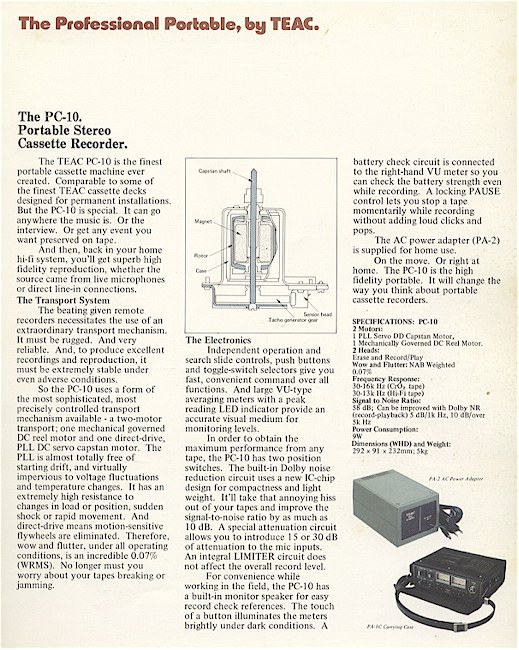
In 1973 I used a bit of trick wiring to feed the line-out of my portable Teac cassette deck plus the a microphone into the line-in of a friend's cassette player. By going back-and-forth a few times it was possible to create some very primitive multitrack recordings. Here are some very early and embarrassing examples.

Peace Like a River - peace73.mp3 [511KB] - Recorded in 1973 on two portable cassette decks in a neighbour's bedroom. I can't sing for peanuts, the teenage falsetto is painful, and the voices are aren't balanced, but the desired result was achieved and is technically interesting.
Heart of the Country - heart73.mp3 [488KB] - Two ukeleles, bass guitar and melodica overdubbed in late 1973 with my cassette deck and the help of my friend Peter whose father owned a reel-to-reel.
When Johnny Comes Marching Home - johnny74.mp3 [KB] - Recorded in early 1974, once again with the help of my friend Peter and his father's reel-to-reel. The better quality of the reel-to-reel allowed guitar, ukelele, melodica and 3 voices to be multitracked. You can hear Peter's father cough at the start of recording.

During 1974, my friend John Middleton and I recorded around 18 songs using multitrack tricks with my Teac cassette deck and his old reel-to-reel deck. Without John's explicit permission to publish these old recordings I will go no further than to reproduce some tiny snippets.

Around The Bay - aroundbay74.mp3 [237KB] - Recorded in 1974 in John's bedroom
Roll Over Beethoven - rollover74.mp3 [706KB] - Bass, rhythm, lead and 3 voices multitracked.

Later Experiments

Excerpts from multitrack recordings made in the late 70s with the Teac tape deck and mixer. Only a few samples used the dbx noise reduction unit. Some tracks utilise a very primitive drum machine that I borrowed from my father-in-law. Most of the recordings are simply experiments and background riffs used for improvisation. Sadly, no recordings remain of serious jam sessions with friends, or of a recording I made of students of the Victorian College of The Arts in 1979.

Amazing Grace - grace78.mp3 [2.3MB] - Full piece arranged and recorded by Greg in his bedroom in 1978 with bass, guitar, 3 french horns and 2 organs. I discovered it was very difficult to play and multitrack the french horn (and brass intruments in general) in the home.
Jolly Riff in D major - jollyriff78.mp3 [681KB] - Excerpt of a riff with two acoustic guitars, bass and organ recorded around 1978. Listen for the fluffed notes. The bass lower string has been tuned down to a D.
Hypnoriff in E minor - hypnoriff78.mp3 [1.2MB] - Excerpt of a piece with 4 Acoustic guitars, bass and 2 organs recorded around 1978. Two of the guitars were recorded at half-speed to create a mandolin effect.
You'll Never Walk Alone - walkalone78.mp3 [1.7MB] - Full piece arranged by Greg for 3 electric guitars and bass. It may sound rather rough, but it was very difficult to play cleanly, and without a rhythm section it was even harder to keep correct timing.
Rock Riff & Drums - rockriff78.mp3 [487KB] - Excerpt of some riff with bass, 2 guitars and drum machine from around 1978.
Quo Riff in A - quoriff78.mp3 [512KB] - Excerpt of a fun riff that was inspired by Status Quo with bass and 4 guitars.

Contact Information | PGP Keys | Site Map | What's New | Visitor Book
Last Updated: 21-Jan-2010 17:19
Copyright © 1999-2007 Orthogonal Programming